
The Secret Kingdom – The Automotive Empire of Hassanal Bolkiah
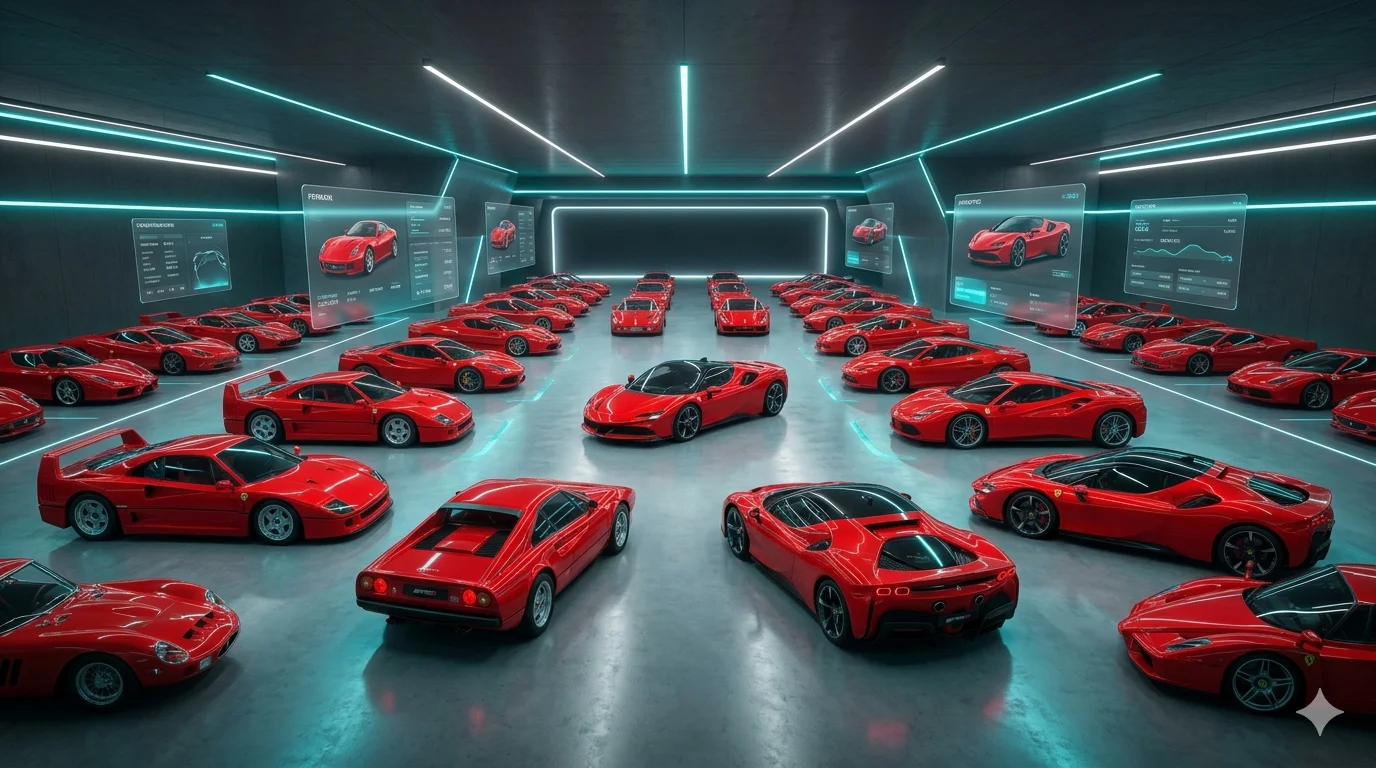
The Italian brand from Maranello has always been synonymous with exclusivity, high performance, and limited production runs. However, there is one person whose financial resources allowed him not just to buy standard production supercars, but to commission unique vehicles built in a single copy. The largest private collection of Ferrari cars in the world belongs to the 29th Sultan of Brunei – Hassanal Bolkiah and his brother Prince Jefri. According to various estimates by experts and analysts who investigated the closed hangars in Bandar Seri Begawan, during the peak of the collection, the number of Italian horses there exceeded 450 units.
These cars have never appeared at public auto shows or official Ferrari events. Most of them were designed and built in complete secrecy thanks to close cooperation between the Brunei royal family, Ferrari management, and the iconic Italian design house Pininfarina. The Sultan spent hundreds of millions of dollars not just on expensive toys, but on creating entirely new body styles and vehicle types that never existed in the brand’s official catalog.
Unique Modifications and Secret Pininfarina Projects
The greatest value in this collection comes from the so-called special projects. While ordinary billionaires stood in lines for standard models, the Sultan of Brunei was buying unique engineering solutions. Among the most famous exclusives, information about which leaked into the automotive media, several unique families of supercars stand out.
- Ferrari 456 GT Venice – a full-fledged five-door station wagon based on the front-engine 456 GT coupe. The Sultan ordered seven of these cars, each costing around 1.5 million USD. Pininfarina completely redesigned the rear of the body, lengthened the wheelbase, and added passenger doors. Six cars went to Brunei, while one remained in Europe.
- Ferrari F90 – a supercar built in 1988 on the chassis of the legendary Testarossa. The design was created by Enrico Fumia. Only six units were produced, featuring a completely original futuristic body and a removable top. Ferrari itself officially confirmed the existence of this project only in 2005.
- Ferrari FX – a mid-engine supercar developed in 1995 based on the 512 M model. The main technical feature was a sequential seven-speed transmission by Prodrive, operated by buttons on the steering wheel – long before automated manual gearboxes became mainstream. The Sultan ordered seven units, but a financial crisis prevented him from buying the last car.
- Ferrari Mythos – a 1989 concept car that was originally created as a show car with no intention for production or sale. However, an exception was made for Hassanal Bolkiah, and Pininfarina built two fully functional units based on the Testarossa.
Scale of Orders and Technical Specifications of the Fleet
In addition to unique concept cars, the Sultan of Brunei mass-purchased the brand’s flagship supercars. His garages housed dozens of units of the Ferrari F40, F50, and Enzo. Moreover, they were not bought individually, but in batches. For instance, multiple F40 examples were purchased in various custom exterior colors and with unique interior trims, even though the factory officially released this model exclusively in Rosso Corsa red with minimalist racing seats.
A separate area of customization involved right-hand drive modifications. Since Brunei has left-hand traffic, Italian engineers had to completely redesign steering systems, climate control units, and firewalls for supercars that were originally never intended to be built with right-hand drive configurations. This doubled or tripled the final cost of each vehicle.
Current Condition of the Collection and Preservation Issues
The fate of this unique automotive collection currently remains tragic. In the late 1990s, Brunei was hit by the Asian financial crisis, and the activities of Prince Jefri, who was responsible for finance and most car orders, led to legal disputes and asset freezes. Funding for the massive garage complex was practically stopped.
According to the testimonies of a few technical specialists who managed to visit the facilities in the 2000s, a significant part of the cars fell into disrepair due to the tropical climate. High humidity, constant heat, and lack of maintenance caused the destruction of leather interior trim, corrosion, and failure of complex electronics. Only a small number of cars kept in a separate air-conditioned hangar remained in collectible condition. From time to time, individual Ferrari cars with Brunei roots appear at closed European auctions, causing a stir among collectors, as these vehicles have minimal mileage but require complete and thorough restoration.



0 Comments