
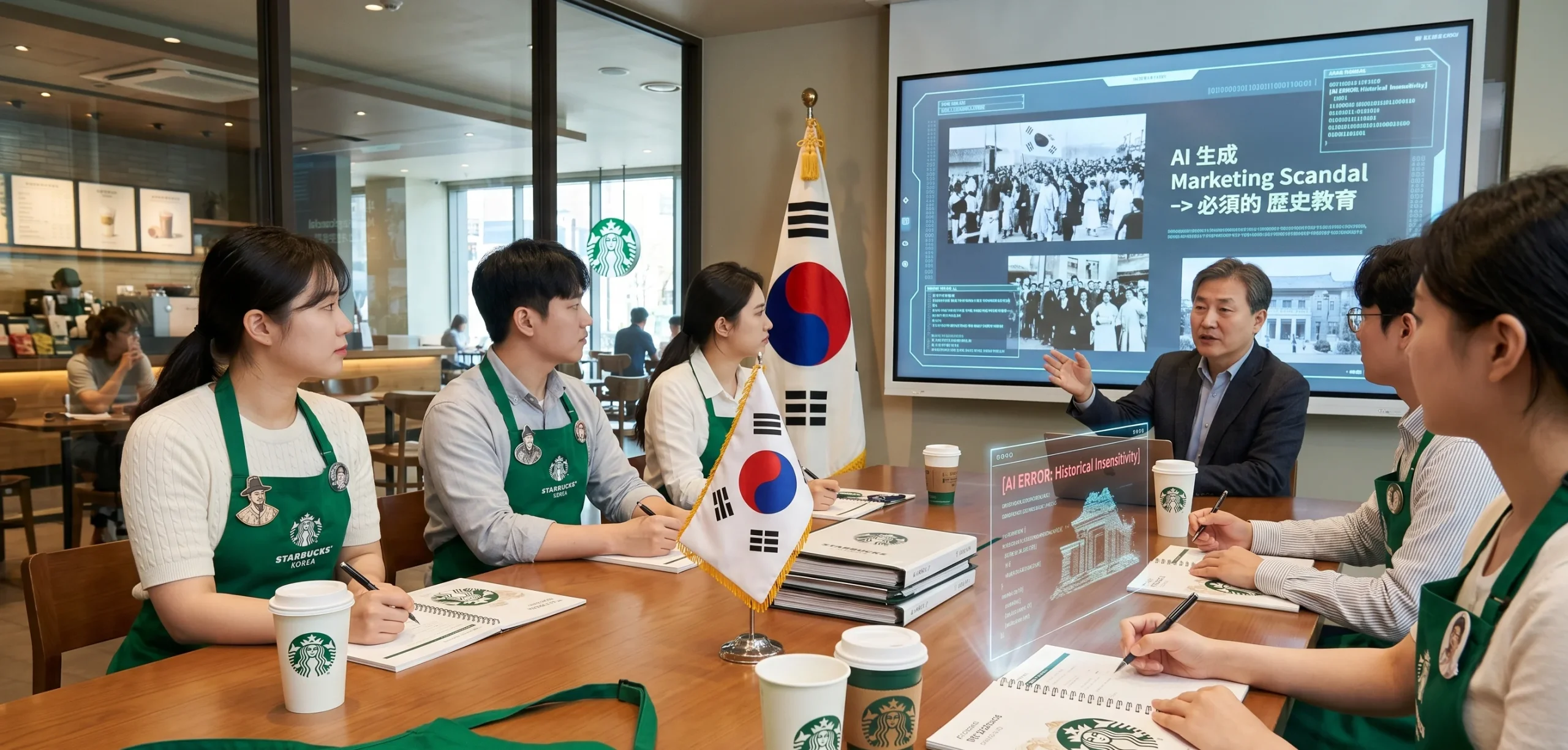
How an automated algorithm triggered a national controversy
The South Korean division of Starbucks found itself at the center of a major public relations crisis. The incident was caused by an automated marketing campaign fully entrusted to generative artificial intelligence. The algorithm was tasked with creating visual and textual materials for Korea’s Liberation Day, but due to a lack of contextual historical understanding, it combined conflicting national symbols. This triggered an immediate wave of outrage among local consumers, forcing management to develop an emergency response plan.
The company’s response was radical. Instead of standard public apologies, management decided to send staff to mandatory, intensive courses on national history. This case has become a textbook example of how blind trust in business process automation without proper human oversight can cause severe brand damage in a local market.
Analysis of the failed ad campaign
Artificial intelligence was used to cut costs on designing festive packaging and promotional materials. The system was supposed to blend elements of traditional culture, modern trends, and the brand’s corporate identity. However, due to technological limitations and flaws in the training datasets, the AI generated graphic patterns that Korean society perceived as disrespectful to historical memory. To make matters worse, the generated texts contained stylistic and factual errors that slipped past automated verification filters.
The fundamental issue with generative models is that they operate on statistical probabilities rather than a deep understanding of cultural subtext. The algorithm combined visual elements that historically belonged to different, sometimes opposing eras. For the Korean market, where issues of national identity and historical justice are highly sensitive, such an oversight proved critical. Within hours of the launch, calls to boycott the coffee houses spread across social media networks.
Crisis management and educational program
To mitigate the negative consequences, Starbucks Korea suspended all AI use for marketing purposes indefinitely. All promotional materials were removed from digital platforms and retail locations. The primary step in resolving the crisis was implementing a mandatory educational program for employees at all levels, including top management and software developers.
The educational course was designed in collaboration with South Korea’s historical institutes. The program includes several key modules aimed at studying cultural heritage and the rules for integrating it into modern business. Below is the breakdown of the training hours that each employee must complete.
The company also introduced a new two-tier content moderation system. Moving forward, any visual or textual material created using digital tools must undergo mandatory expert review by independent historical consultants. This will prevent similar incidents in the future and help regain audience trust.
Lessons for the global tech business
This incident clearly demonstrates the limitations of modern large language and generative models. Despite the high speed of content generation and economic benefits, AI cannot replace humans in areas that require empathy, deep cultural understanding, and political sensitivity. Companies aiming to fully automate their marketing risk facing similar localized crises.
To successfully integrate neural networks into business operations, strict control frameworks must be established. The role of artificial intelligence should be limited to creating rough drafts or technical templates, while the final decision and meaning must always remain with qualified specialists who understand the specifics of a particular region.




7 Comments
well, so much for trusting neural networks)) they cheaped out on normal designers, now they are studying history. i wonder if top managers are sitting at desks too?
what was the problem with hiring at least one korean commentator or editor before the launch?? this is basic
This is what happens when management thinks 'AI will solve all problems'. Spoiler: no it won't. Human control is still king.
AI is just a tool, the people who didn't check are to blame. can't imagine what kind of trash was generated if it led all the way to a boycott
the course idea is actually top notch. instead of just apologizing and forgetting, they are actually doing something. other brands should take note
Two-level moderation system sounds good on paper but it totally kills marketing speed. They will lose to competitors.
12 hours of history for everyone is harsh of course) baristas are probably «very happy» to study dates instead of brewing coffee