
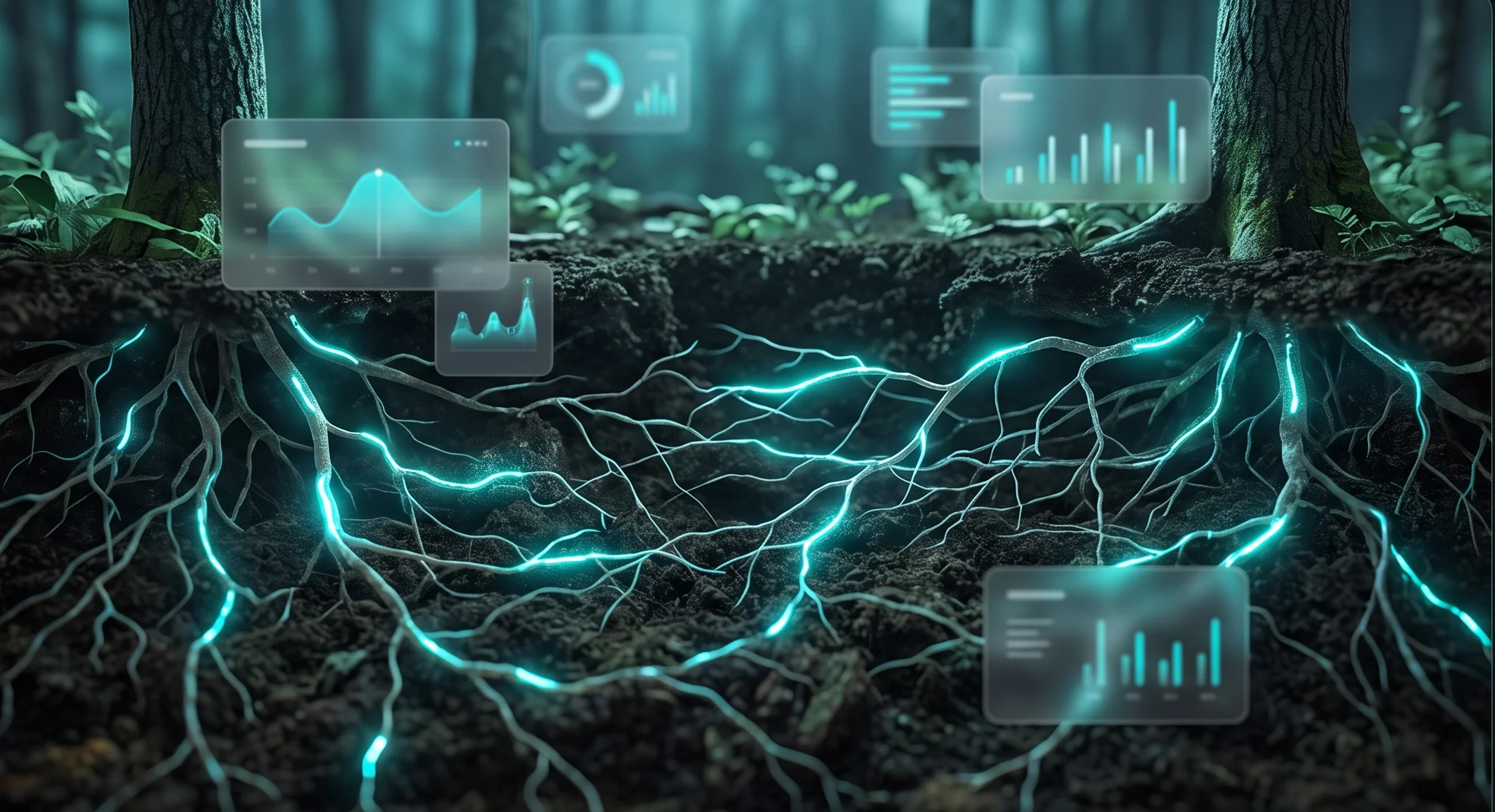
The hidden infrastructure of the planet beneath our feet
Mycorrhizal fungi form gigantic underground networks that connect plant root systems and function as a resource distribution system. For a long time, researchers understood the importance of this symbiosis but lacked a clear picture of its scale on a global level. A international group of scientists has successfully systematized the data and created the first global model of underground fungal communications.
These structures play a critical role in the survival of forest ecosystems, as trees exchange carbon, phosphorus, nitrogen, and water through them. The study shows that the stability of this system directly depends on climatic conditions, and its disruption could accelerate global warming due to the massive release of carbon stored in the soil.
Types of mycorrhiza and their global distribution
During the large scale study, scientists focused on analyzing three main types of underground symbiotic systems. Each type has unique mechanisms of interaction with plants and responds differently to temperature fluctuations and soil moisture levels.
Arbuscular mycorrhiza
This type of fungal network is the most evolutionarily ancient. They penetrate directly into the cells of the plant root. Arbuscular fungi dominate in warm tropical regions and are characteristic of most herbaceous plants, as well as many tree species in temperate latitudes. They provide rapid nutrient cycling but store less carbon in the soil itself compared to other types.
Ectomycorrhiza
Ectomycorrhizal fungi form a dense network around plant roots without penetrating the cells themselves. They are predominant in cooler regions, particularly in the taiga, coniferous, and mixed forests of the temperate zone. These fungi form huge underground carbon sinks, slowing its return to the atmosphere. They lock a significant portion of organic compounds in the upper soil layers.
Ericoid mycorrhiza
This type is specific to plants of the Ericaceae family and is found mainly in extreme environments with nutrient poor soils, such as tundra or peatlands. They help plants absorb nitrogen under low temperature conditions.
How the first global map was created
To build the detailed model, researchers from the Global Forest Biodiversity Initiative consortium used massive databases containing information on millions of trees across more than 70 countries. The scientists analyzed local ecological algorithms of interaction between specific tree species and their fungal partners.
The discovered patterns were processed using machine learning algorithms. This allowed scientists to extrapolate local data to the entire surface of the planet, taking into account climatic factors, soil types, and precipitation levels. The result of the work is a detailed map demonstrating the density and types of mycorrhizal networks at any point on the globe.
The impact of climate change on the underground ecosystem
Global temperature rise is significantly altering the structure of underground networks. The study shows that if current warming trends continue, ectomycorrhizal fungi will rapidly lose ground, giving way to arbuscular species.
This process poses a threat to the stability of the carbon balance. Since ectomycorrhizal networks store vast amounts of carbon in the cool soil of northern hemisphere forests, their destruction will lead to additional CO2 emissions into the atmosphere. Scientists estimate potential soil carbon losses in billions of tons, which could create a feedback loop where climate change destroys fungi, and the loss of fungi further accelerates climate change.
In addition to the temperature factor, intensive agriculture and deforestation exert a negative impact. The use of chemical fertilizers disrupts the natural connection between plants and fungi, making ecosystems more vulnerable to droughts and diseases. Protecting underground networks must become an essential part of modern biodiversity conservation strategies.




0 Comments