
Official Launch of the New Mobile Platform
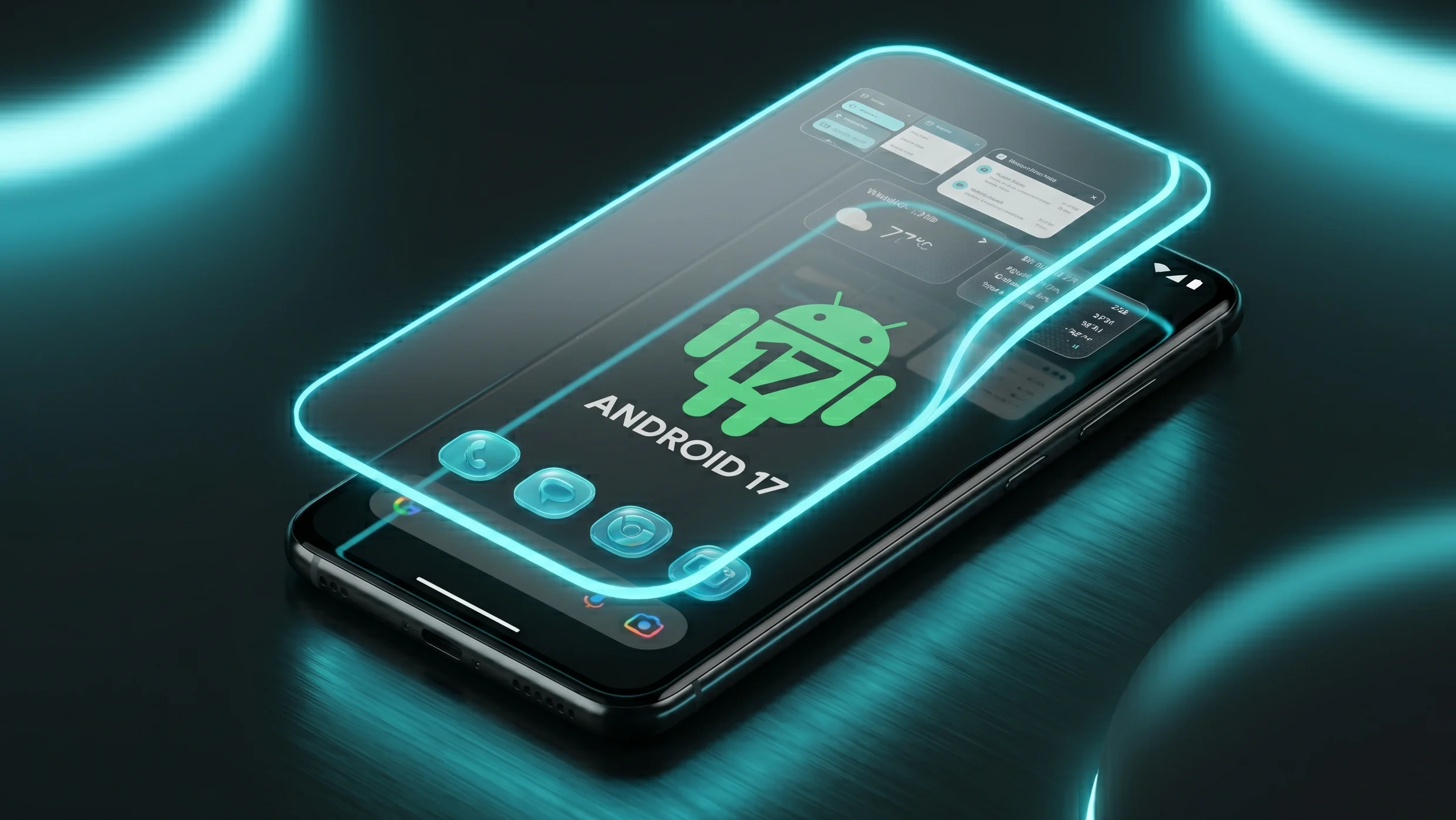
Google has announced the official rollout of the stable Android 17 release for its branded Pixel smartphones. This year, the developers altered the traditional release schedule, shifting the major OS launch to early summer. The main focus of this update is centered on a deep paradigm shift in multitasking, codebase optimization for foldable form factors, and expanding on-device artificial intelligence processing capabilities.
The new iteration of the platform continues the traditional confectionery codenaming internally, but the key architectural transformations aim at strict professional utility. Thanks to core system optimizations, cold start speeds for heavy applications have increased by 12%, while overall background power consumption has decreased by 8% compared to the previous version.
The New Floating UI Multitasking Framework
The primary visual and functional innovation in Android 17 is a completely redesigned window management subsystem. Replacing the classic split-screen mode, which offered limited workspace flexibility, Google implemented a full freeform window positioning environment known as Floating UI.
Users can now transform any compatible application into a floating window, resize it using gestures, and move it freely across the display area. This function proves exceptionally effective on tablets and foldable devices. A user can pin a media player or a messenger window on top of a working document, adjusting the transparency level to minimize interface clipping and content overlapping.
Interface Performance Metrics
To ensure fluid animations while managing multiple concurrent windows, the graphical rendering engine received a substantial upgrade. The updated dynamic refresh rate management system reduces interface response latency to 4 ms during window scaling gesture handling.
Deep On-Device AI Integration
Android 17 integrates an upgraded artificial intelligence core subsystem, allowing generative analysis tasks to run directly on the smartphone CPU and NPU without sending requests to remote servers. This architecture significantly enhances user privacy and accelerates text processing workflows.
A new contextual screen analysis feature enables the system assistant to read data across all open floating windows simultaneously. Users can instruct the AI to compare technical specifications of two products opened in separate browser windows, or summarize a long email thread without manually switching between applications.
Security Upgrades and the New Find Hub
Privacy concerns received considerable priority in this release cycle. Google introduced a centralized security interface called Find Hub, which unifies device tracking utilities, local folder encryption management, and network activity monitoring for all installed software packages.
The operating system can now analyze background application behavior to detect unauthorized biometric data scanning or clipboard access attempts. If a utility tries to read a copied password string, Android 17 automatically substitutes the clipboard data with a randomized character string and fires a real-time warning notification to the user.
Foldable Display Optimization and Technical Metrics
Special engineering attention was dedicated to devices with non-standard form factors. Foldable smartphones benefit from enhanced seamless app continuity when transitioning from the outer cover screen to the main internal panel. Interface redraw latency during device unfolding has been reduced to absolute minimums, eliminating black frames or graphical stutters.
For a clear evaluation of system performance metrics and requirements, a technical data comparison table is provided below.
Update Availability and Hardware Compatibility
During the initial rollout phase, the stable Android 17 build is available for download on Google Pixel devices, starting from the seventh-generation models. Other major smartphone vendors, including Samsung, Xiaomi, OnePlus, and Motorola, have already launched their respective beta testing tracks for custom UI skins built on top of the new OS. Broad deployment for third-party flagship devices is scheduled to commence over the coming months.
For application developers, Google has unlocked full access to new APIs governing floating windows and local AI endpoints, allowing third-party software creators to fully adapt their products to the new operating system standards before the end of the calendar year.




0 Comments