
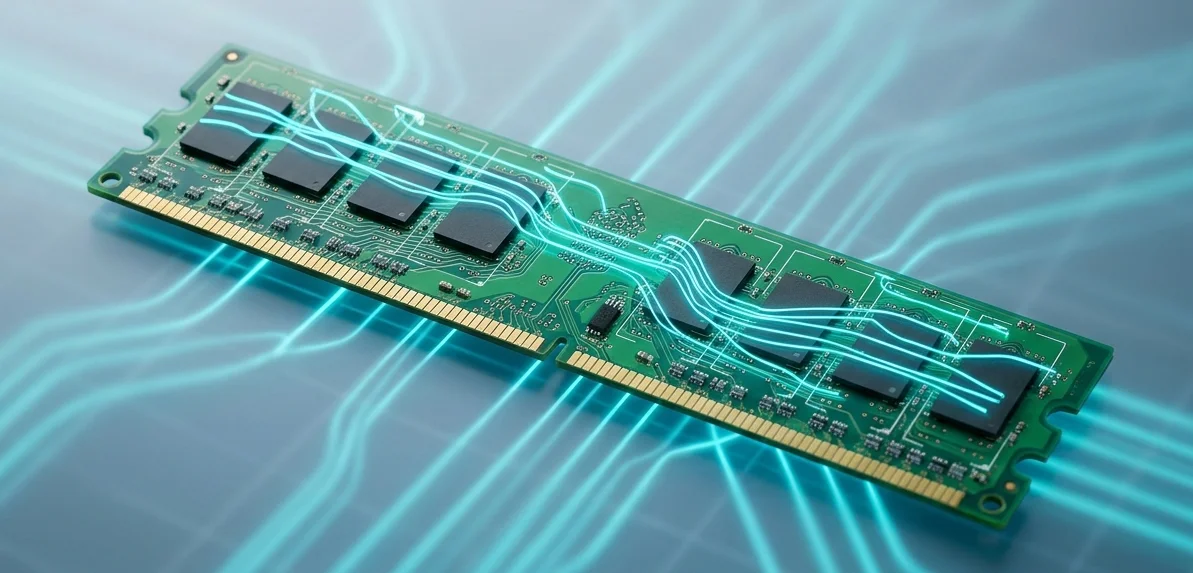
Why a Decades-Old Memory Standard is Facing Shortages
The global boom in artificial intelligence technologies has created an unprecedented anomaly in the semiconductor market. Major memory manufacturers, including Samsung Electronics and SK Hynix, are aggressively shifting their production capacities toward high-bandwidth memory (HBM) and advanced server DRAM. This strategic realignment has severely restricted the fabrication lines dedicated to legacy consumer memory generations.
Market research from TrendForce indicates that the silicon wafer shortage has expanded far beyond modern hardware, hitting legacy standards like DDR3 and DDR2, which were introduced over two decades ago. Manufacturers of networking equipment, telecommunications systems, automotive computing, and embedded systems are facing acute component shortages, forcing them to rapidly deplete remaining low-density chip inventories.
Contract Price Dynamics for Legacy DRAM
In the second quarter of 2026, contract prices for older memory types experienced a massive surge. System integrators relying on 512 Mb and 1 Gb density chips found themselves with almost no alternative suppliers. Since Tier-1 semiconductor fabs allocate their primary equipment to maximize high-margin AI orders, legacy wafer production has been relegated to a residual priority.
Analytical data shows that the DDR2 segment took the hardest hit. Because only a small number of secondary fabrication facilities still support these legacy manufacturing processes, any slight upward movement in demand triggers an immediate supply deficit at distributor levels.
Causes and Consequences of Industrial Downgrading
Many developers of industrial and networking hardware have historically favored DDR2 due to its low cost and proven long-term reliability in System-on-Chip configurations. Due to initial shortages in newer DDR3 and DDR4 lines earlier this year, some enterprises intentionally downgraded their hardware platforms to maintain low retail margins. This tactical shift placed immense, unexpected pressure on the legacy DRAM supply chain.
Impact on Consumer Goods and Infrastructure
While mainstream PC users migrated to DDR4 and DDR5 long ago and will not see a direct impact on retail component pricing, this crisis affects other consumer and enterprise technology domains. Price increases are projected across several hardware segments
- Budget routers, modems, and network switches
- Set-top boxes, media players, and smart home hubs
- Industrial controllers and automotive infotainment systems
- Point-of-sale terminals and self-service kiosks
Furthermore, enterprises handling long-term maintenance for medical or aerospace infrastructure must now overpay for component replacements. Upgrading the underlying hardware architectures to modern standards is often economically non-viable for these certified systems.
Market Stabilization Outlook
According to current TrendForce reports, the upward price trajectory is projected to last at least through the end of the third quarter of 2026. Taiwanese and South Korean memory foundries have no plans to expand legacy manufacturing lines, given that the profit margins for AI hardware accelerators remain incomparably higher. Component buyers must either absorb the elevated contract prices or invest significant capital into redesigning their circuit board architectures to fit modern, active memory standards.


0 Comments