
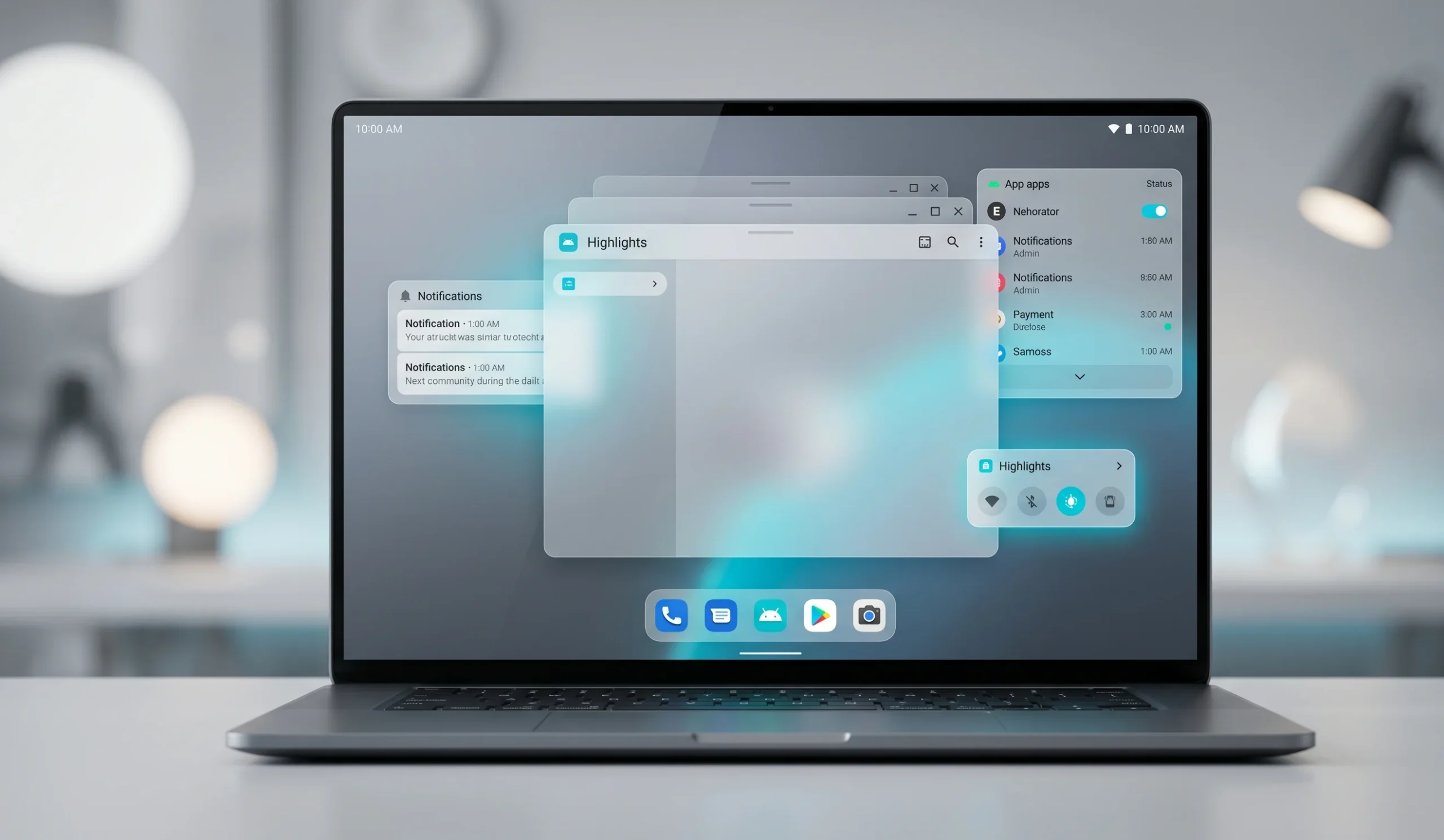
Technical Evolution of Android Towards Desktop Solutions
Over the past decade, the boundary between mobile and desktop operating systems has gradually blurred. However, Google’s recent actions indicate that the company is moving from experimentation to forming a clear vector for developing Android as a full-fledged system for laptops. This is not just an interface adaptation, but a deep restructuring of the kernel and interaction methods with hardware that traditionally belonged to the PC world.
Architectural Changes and Multitasking Support
One of the key barriers to using Android on large screens has always been limited multitasking. In recent updates, developers have focused on improving the free-form window scaling mode. Now the system is capable of correctly handling app resizing in real-time, which previously caused critical errors in many programs. This became possible thanks to updated Jetpack Compose libraries, which allow developers to create adaptive interfaces with minimal effort.
An important stage was the optimization of physical keyboards and trackpads. Google has added support for over 60 new key combinations that are standard for desktop systems. Now switching languages, managing windows, and navigating the system are as intuitive as in ChromeOS or Windows. Special attention was paid to cursor positioning accuracy and support for touchpad gestures, which is critical for productive work.
Android Ecosystem and Challenges for Developers
The transition of Android to laptops requires software developers to rethink their approach to design. Google is actively encouraging the creation of apps that work equally effectively on smartphones with 6-inch screens and laptops with 14-16 inch diagonals. The main focus is on having apps automatically switch between mobile and desktop modes when connecting an external monitor or opening the device lid.
For the corporate sector, this opens up new opportunities. Companies can use a single set of apps for their entire fleet of devices. This significantly reduces IT infrastructure support and deployment costs. For example, the average cost of licensing and maintaining a workstation based on an Android laptop can be 20-30% lower compared to traditional solutions, saving thousands of $ per month for large enterprises.
Hardware Base and Integration with Manufacturers
Google is working closely with chipset manufacturers like Qualcomm and MediaTek to optimize Android performance on ARM processors designed for laptops. New generations of Snapdragon X Elite series processors demonstrate that ARM architecture is capable of providing high power with low energy consumption. This allows for the creation of thin and light devices with an autonomy of over 15 hours of active work.
In addition to autonomy, built-in support for 5G and Wi-Fi 7 becomes an important advantage. Unlike traditional laptops, where communication modules are often optional or expensive add-ons, Android devices are oriented towards constant network connection by default. This makes them ideal tools for remote work and cloud services.
Prospects of Competition with Desktop OS
Can Android displace Windows or macOS? This is unlikely to happen in the segment of professional video editing or complex 3D modeling in the coming years. However, for 80% of users whose tasks are limited to browsing, messaging, word processing, and simple graphic tools, an Android laptop becomes a rational choice. Google’s main trump card is the huge base of existing apps in Google Play, which are now receiving a ‘second life’ on large screens.
The cost factor should also be considered. A high-quality Android laptop with 16 GB of RAM and a fast drive can cost between $400-600, making it attractive for the education sector and emerging economies. Google is effectively creating a new niche where the line between a 2-in-1 tablet and a classic laptop finally disappears.
Conclusions and Future Vectors
Official recognition of laptops as a target platform for Android signals a paradigm shift for Google. The company is no longer trying to force users to choose between ChromeOS and Android, but instead integrates the best features of both worlds. In future versions of the system, we will see even more tools for professional work, improved virtualization for running complex software, and seamless synchronization across all ecosystem devices.


0 Comments