
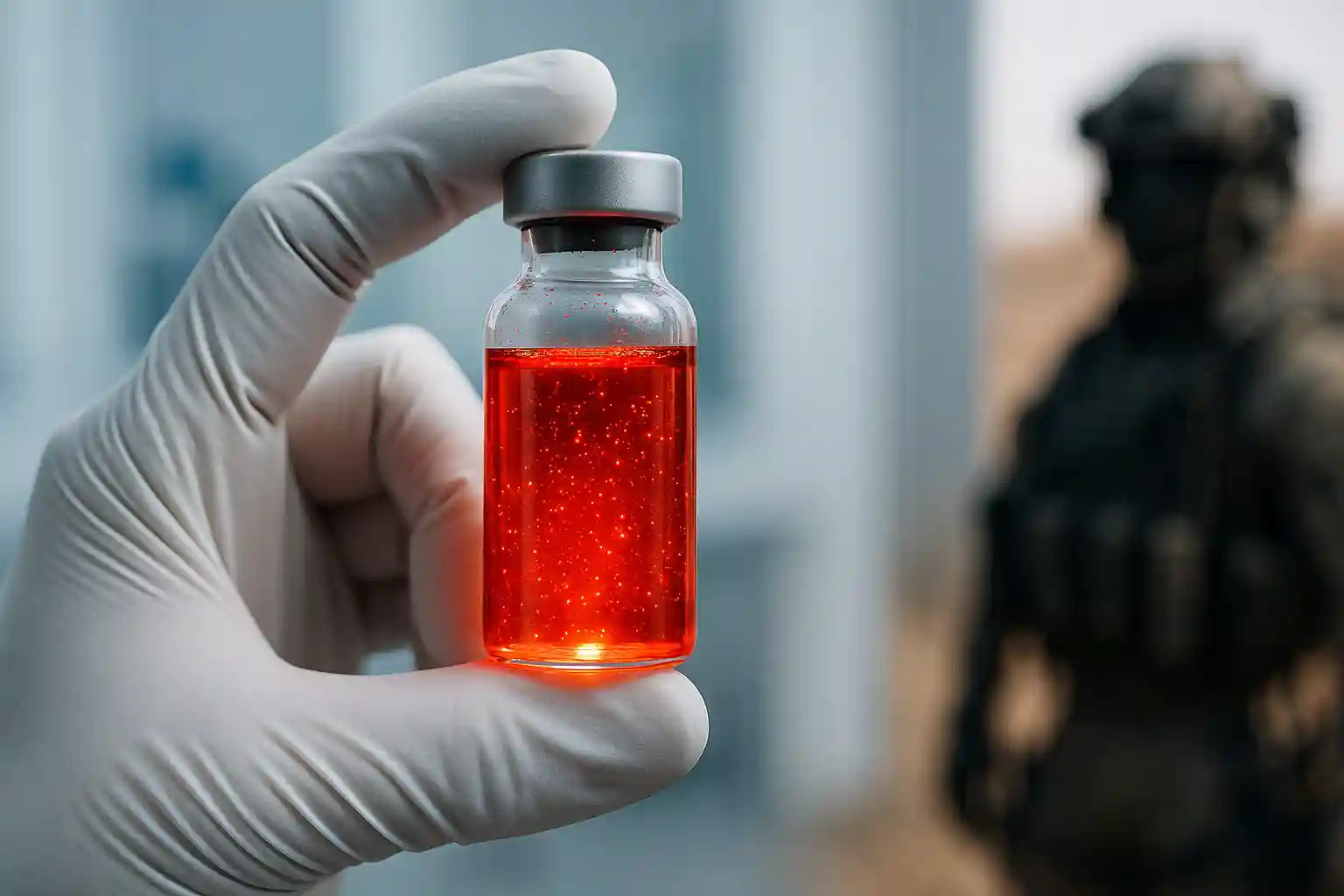
Military medicine has always been a driving force for innovation. The majority of battlefield deaths are caused not by bullet wounds, but by critical blood loss. In conditions where time is precious and access to real blood is often lacking, military agencies are seeking revolutionary solutions. That’s why the Pentagon, through its research arm, DARPA, is funding the development of technologies that could change the situation. This includes the creation of synthetic blood and other means for providing emergency care in extreme conditions.
Synthetic Blood: The Technology of the Future
A key area of research is the creation of a fully functional blood substitute. The main problem with traditional donor components is that they must be stored under strict temperature conditions, and blood types must be compatible. The synthetic blood being developed aims to overcome these obstacles. It requires no refrigeration and can be universally applicable. This will allow battlefield medics to quickly stabilize the wounded, buying precious time for evacuation.
Some of these developments are based on hemoglobin-containing oxygen carriers, which can effectively transport oxygen throughout the body, temporarily replacing the function of red blood cells. Research also includes experiments with materials that can quickly adapt to the body’s conditions, maintaining life support until qualified assistance is received. These are medical innovations for combat-ready technologies.
Hemostatics and nanomedicine: stopping invisible bleeding.
In addition to external bleeding, which can be stopped with a tourniquet, there is the problem of internal bleeding. This is why DARPA is investing in the development of injectable hemostatic agents. These are specialized materials that are injected directly into the circulatory system and can quickly form clots, blocking damaged vessels. Typically available as a powder or liquid, they can stop bleeding that would previously be fatal.
Some of these hemostatic agents are already being tested, showing impressive results. Furthermore, nanomedicine is emerging as another important area. Scientists are working to create tiny, invisible nanoparticles that can detect damage to internal organs and tissues and deliver drugs or coagulants precisely where needed. These nanotechnologies are one of the most promising areas in military medical science.
Civilian use: from the battlefield to hospitals
Although these Pentagon developments are intended for combat situations, their potential for civilian medicine is enormous. Synthetic blood could be a real lifesaver during natural disasters, accidents, or other catastrophes where rapid blood delivery is impossible. In urban areas, hemostatic agents could be used in ambulances to provide immediate treatment to patients with internal bleeding.
Nanomedicine research will also have a wide range of applications, from precision diagnostics to targeted drug delivery. Therefore, although these projects are funded by the military, their results could benefit all of human civilization. This is a shining example of how military technology can have humanitarian impact.
Conclusions: Medicine at the forefront of science
The development of intelligent blood and similar technologies under DARPA’s leadership isn’t science fiction, but real work addressing critical problems. These medical innovations aim not only to improve soldier survival but also to lay the foundation for new treatments in the future. This further demonstrates that military science is a catalyst for scientific and technological progress that benefits all of society.
Key technologies:
- Blood substitutes: Universal synthetic blood that does not require cold storage.
- Hemostatics: Injectable agents that can stop internal bleeding.
- Nanomedicine: Use of nanoparticles for diagnostics and drug delivery.
- Pentagon: DARPA is the driving force behind this research.
- Combat technologies: Developments are designed to save lives in extreme conditions.




0 Comments