
How the source code breach exposed Suno’s training methods
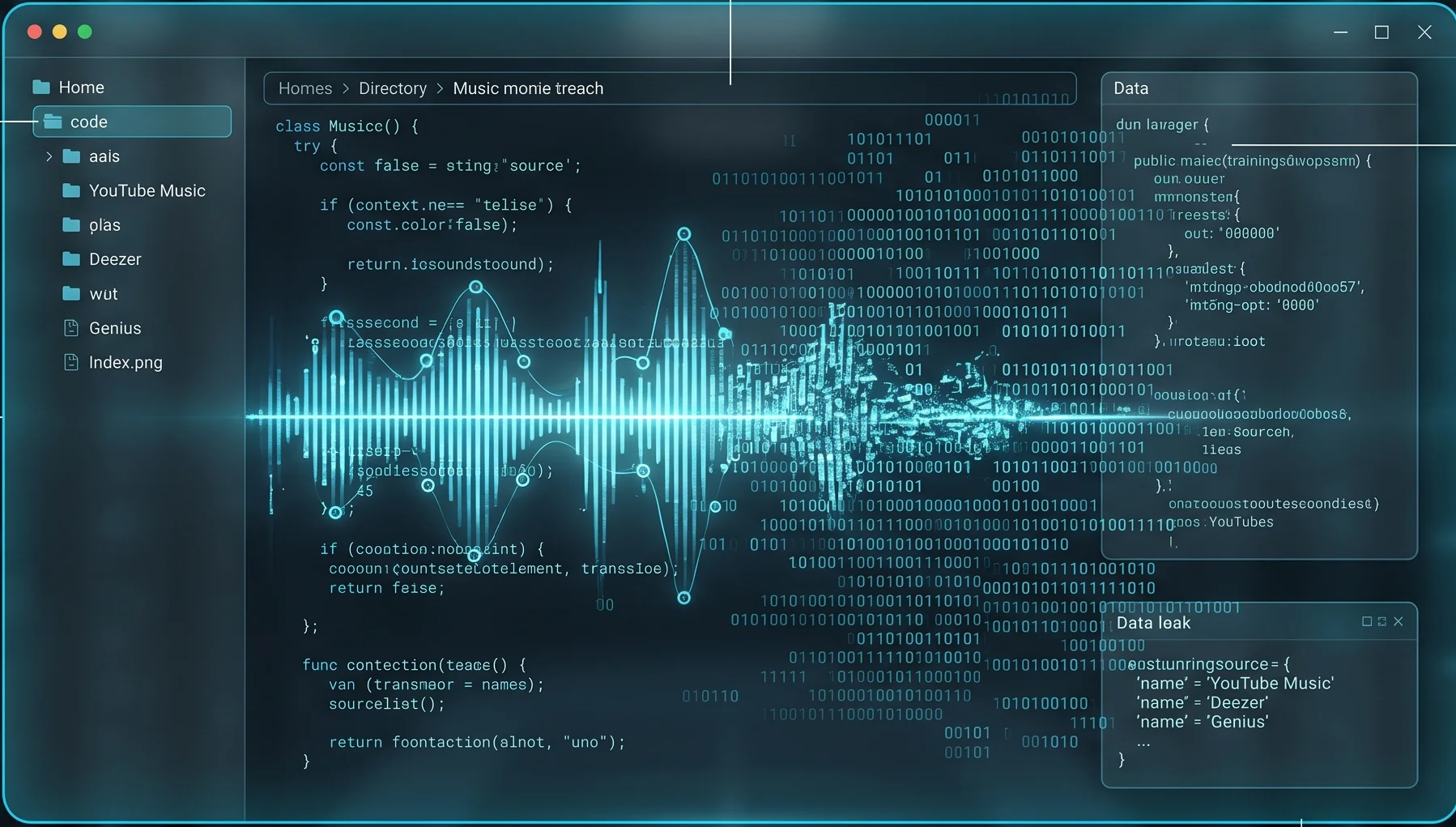
The generative artificial intelligence platform Suno has found itself at the center of a massive scandal. A hacker operating under the alias ellie.191 gained unauthorized access to the company’s internal code repository and published a detailed report on the service’s inner workings. This leak represents the first documented confirmation that the developers utilized copyrighted content without authorization. Until now, company representatives avoided direct questions about their databases, citing trade secrets and the fair use doctrine.
Analysis of the stolen scripts revealed explicit instructions for automated data harvesting systems. Instead of licensing content legally, the developers established a massive infrastructure to bypass the restrictions of popular platforms. Specialized tools scraped audio materials and accompanying lyrics to train the neural network to recognize song structures, vocals, and instrumental arrangements.
Data sources and the scale of content scraping
The leaked code contains direct pointers to target resources used for training data collection. The primary sources for training Suno’s algorithms were popular music streaming services and specialized databases. The developers configured their system to harvest materials from several key platforms.
- YouTube Music. The largest source of tracks, used to download millions of songs along with metadata. The scripts bypassed Google’s security measures to enable continuous automated audio downloads.
- Deezer. This platform was targeted to obtain high-quality audio recordings and detailed album structures across various artists.
- Genius. The extensive lyrics database served as the foundation for training Suno’s text generation engine, analyzing rhyme, verses, and choruses.
- Pond5. A popular stock library for sound effects and short audio clips, used to train the model in generating ambient noises, transitions, and specific instrumentals.
The scale of this scraping operation is staggering. According to analysts who reviewed the source code, the system processed tens of millions of files. The harvesting ran automatically via proxy networks, allowing the crawlers to avoid IP bans from target resources.
Lawsuits and legal implications for the company
This information leak occurred at the worst possible time for the startup. Major global music labels, including Sony Music Entertainment, Universal Music Group, and Warner Music Group, have already filed lawsuits against the creators of Suno. The plaintiffs accuse the startup of massive copyright infringement, seeking damages of up to 150000 USD per infringed work. The total financial exposure could be astronomical.
Prior to the source code leak, Suno’s defense rested on the argument that training AI models constitutes fair use rather than direct copyright infringement. They compared the process to a human listening to music to learn how to compose. Now, with concrete proof of targeted scraping of protected materials, their legal defense is severely undermined.
Technical details of bypassing security systems
The source code details the methods Suno engineers used to mask their scraping activities. While streaming giants invest heavily in anti-scraping measures, the AI developers found workarounds. They implemented dynamic User-Agent rotation and emulation of genuine user behavior.
To avoid download rate limits, the code distributed requests across thousands of rented proxy IP addresses. Additionally, the automated tools mimicked natural pauses between tracks so security systems at YouTube Music and Deezer would not flag the bot traffic. This approach enabled the undetected extraction of terabytes of audio data over long periods.
Industry reaction and the future of generative music
The music industry received the news of the breach as definitive proof of their suspicions. Trade groups claim that such training practices are simple piracy disguised as technological innovation. They demand transparent licensing frameworks where creators are compensated for their work in training sets.
Experts believe the Suno precedent could reshape the generative art landscape. If courts rule these scraping methods illegal, developers might be forced to delete current models and retrain them from scratch using public domain or properly licensed music. This could severely degrade output quality and delay generative technology development for years.



0 Comments