
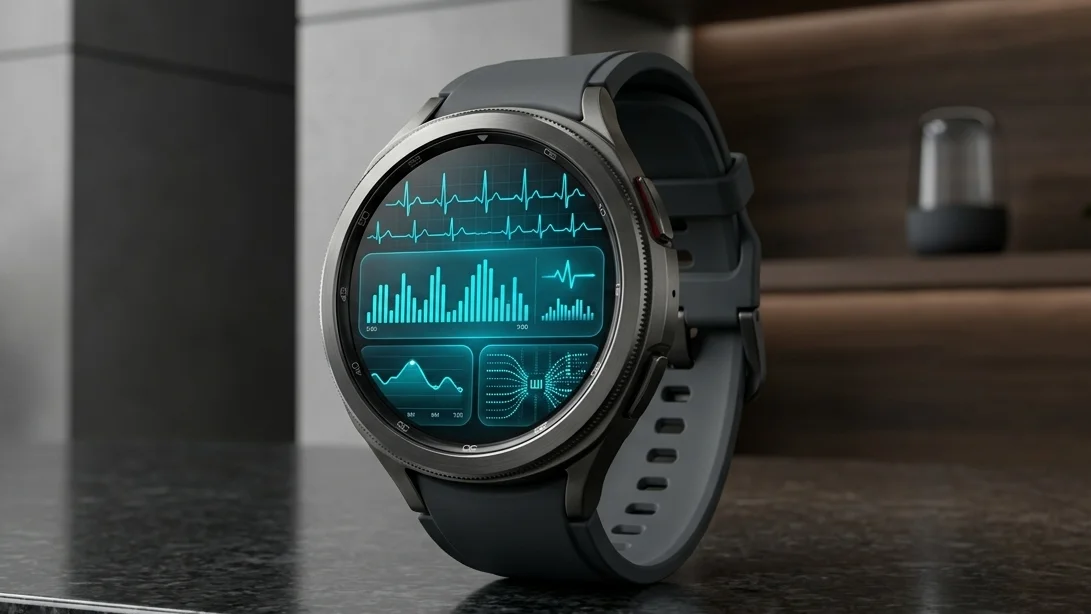
The New Frontier of Preventive Healthcare by Samsung
Samsung Electronics continues to redefine the wearable market by introducing a revolutionary update for the Galaxy Watch series. These smartwatches are now capable of not only tracking fitness but also warning users about a critical physical state – vasovagal syncope. This is made possible through advanced biosensors and AI algorithms that analyze the cardiovascular system in real-time.
Medical experts emphasize that sudden loss of consciousness often results in serious injuries due to falls. Receiving a warning 5 minutes before an episode gives the user enough time to find a safe place, sit down, or call for help. This innovation is rooted in years of clinical research and collaboration with top cardiology centers worldwide.
Scientific Basis and Algorithm Mechanics
At the heart of this new feature is a deep analysis of Heart Rate Variability (HRV). Vasovagal syncope occurs due to a sudden dysfunction of the autonomic nervous system, causing a sharp drop in blood pressure and heart rate. The BioActive sensor in Galaxy Watch6 and newer models utilizes photoplethysmography (PPG) technology to constantly monitor blood flow.
The AI algorithm identifies specific patterns in heart rate behavior that precede a faint. During trials, this prediction system achieved an accuracy rate of 84.6 percent. The system detects micro-changes that are not subjectively felt by the person but serve as clear indicators of an impending loss of consciousness.
Technical Implementation and Ecosystem Integration
To power the fainting prediction feature, Samsung uses a multi-modal approach. The watch aggregates data from three sources: the Optical Heart Rate Sensor, Electrical Heart Sensor, and Bioelectrical Impedance Analysis Sensor. This creates a comprehensive picture of the user’s hemodynamics. Data is processed directly on the device to ensure maximum privacy and speed.
It is crucial to ensure that the back of the watch remains in close contact with the wrist for the system to function correctly. The company recommends using official straps that provide a stable fit. The update is currently available via the Samsung Health Monitor app in selected regions. The price for flagship models like Galaxy Watch6 is approximately 299 USD, making preventive medicine accessible to a wider audience.
User Recommendations Upon Receiving an Alert
When the watch detects signs of an approaching faint, it triggers a strong vibration and a visual warning on the screen. Users are advised to take the following steps:
- Immediately stop any physical activity
- Find a place to sit or lie down on a flat surface
- Elevate legs above heart level to improve brain blood flow
- Drink a small amount of water if possible
- Contact emergency services or family via the SOS feature
Clinical Significance for Chronic Patients
For individuals suffering from Postural Orthostatic Tachycardia Syndrome (POTS) or other forms of autonomic dysfunction, this technology is a literal lifesaver. Traditional diagnostic methods, such as tilt-table tests, are only conducted in hospital settings. Now, patients have a 24/7 laboratory on their wrist. This allows doctors to gather objective data on patient health in real-life scenarios rather than just during brief clinical visits.
Samsung emphasizes that the feature is not a substitute for professional medical diagnosis but is a powerful tool for screening and early detection. Critical episode reports can be exported as PDFs and sent to physicians for further analysis. Future updates are expected to push the accuracy beyond 90 percent as the AI database continues to grow.
More technical details about the study can be found on the developer’s page at the link Official Samsung Source which provides the full clinical validation report.




4 Comments
interesting how will it distinguish a real threat from me just standing up quickly from the couch? my eyes often go dark in such moments. 84 percent is cool of course but won't it vibrate every half hour for no reason))
well finally some useful feature besides a pedometer! for people with low blood pressure it's a must-have. just wondering if it works with tattoos on the arm? because usually sensors on tattoos glitch hard
299 bucks for a medical gadget on the wrist is a fair price. but i wonder what's up with privacy? samsung says data is on-device but we all know how it goes... anyone tried the beta test yet?
just more marketing if you ask me. first they promise almost 90% accuracy but in reality the error will be huge just because the strap isn't tight enough. better go to a doctor than rely on a 300 dollar toy