
- A New Era of Performance for Mid-Range Smartphones
- The Evolution of Mobile Technologies and Company Strategy
- LPDDR5 RAM The New Standard for Speed
- Processor Architecture and Energy Efficiency
- Adreno Graphics Accelerator and Gaming Capabilities
- Smooth Motion UI Technology Interface Fluidity
- Wireless Communications Wi-Fi 7 and Bluetooth 6.0
- Artificial Intelligence and Image Processing
- Conclusions on the Platform’s Prospects
A New Era of Performance for Mid-Range Smartphones
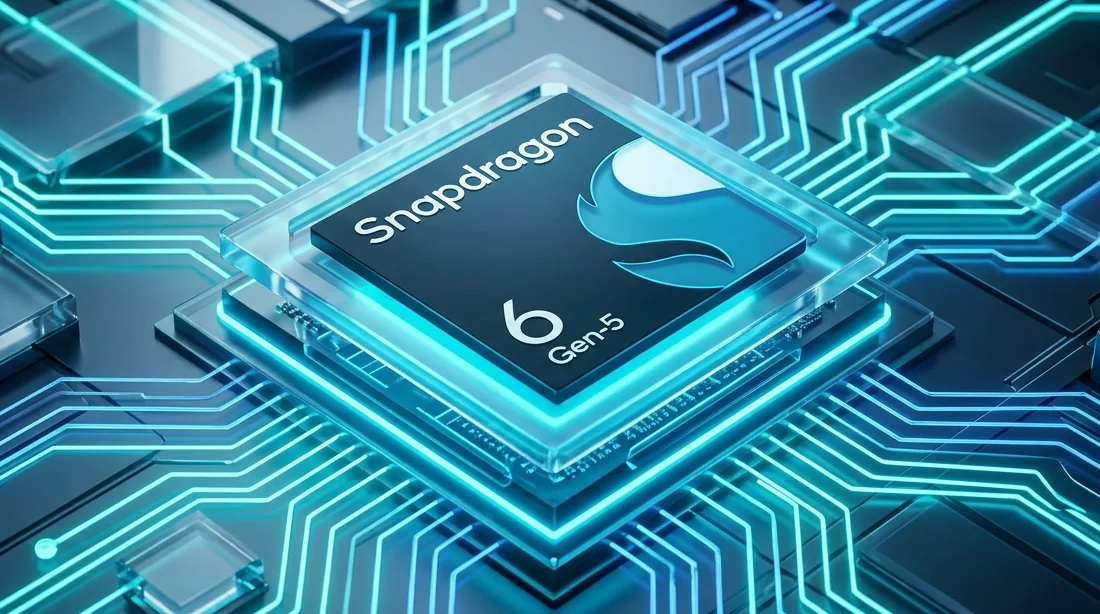
The mobile technology industry continues to evolve rapidly, and Qualcomm has once again reaffirmed its leadership in the semiconductor market. The official announcement of the Snapdragon 6 Gen 5 processor marks a significant milestone for the entire mid-range device segment. This chipset is designed to fundamentally change users’ expectations regarding the capabilities of affordable smartphones, bringing their user experience closer to flagship levels. The modern market demands not only basic functionality from gadgets but also high operational speed, the ability to handle resource-intensive applications, and long battery life. The new platform aims to solve these tasks by combining an advanced manufacturing process with a series of architectural innovations.
The Evolution of Mobile Technologies and Company Strategy
In recent years, the gap between flagships and mid-range smartphones has become increasingly noticeable due to limitations in memory speed and graphics performance of the latter. With the release of Snapdragon 6 Gen 5, developers have taken a decisive step towards the mass consumer. Thanks to the optimization of computing cores and the transition to more modern data transfer standards, the new chip provides an unprecedented level of system responsiveness. This means that typical usage scenarios – from web surfing to mobile gaming – will become much more comfortable for millions of users worldwide. The manufacturer’s strategy is to make premium technologies accessible in devices with an estimated cost ranging from 250 to 400 USD.
LPDDR5 RAM The New Standard for Speed
One of the most important upgrades in the new generation is full support for the LPDDR5 RAM standard. Previously, this technology was the exclusive prerogative of flagship 8-series platforms. The transition from the outdated LPDDR4X standard to LPDDR5 provides a colossal increase in bandwidth, which can now reach over 25 GB/s. For the end user, this translates into the following real-world benefits:
- Instant launch of heavy applications and large-scale mobile games.
- The ability to keep dozens of open programs in RAM without needing to restart them.
- A reduction in memory module power consumption by up to 20 percent, which positively impacts overall battery life.
- Faster processing of high-resolution photos and videos in the background.
Such a RAM upgrade effectively eliminates the main bottleneck of budget smartphones, allowing the processor to fetch the necessary data for computations much faster.
Processor Architecture and Energy Efficiency
The central processor is built on an advanced 4-nanometer technology process, ensuring a high density of transistors and minimal energy loss in the form of heat. The architecture includes a cluster of performance Cortex-A series cores responsible for complex tasks, alongside energy-efficient cores for background processes. Thanks to this load distribution, the smartphone can react instantly to user actions while remaining cool even during prolonged gaming sessions. The clock speed of the prime cores has been increased compared to the previous generation, ensuring confident device operation in multitasking mode without any hints of freezing.
Adreno Graphics Accelerator and Gaming Capabilities
The graphics subsystem of the chip received a significant update in the form of a new generation Adreno accelerator. According to official data, graphics rendering performance has increased by 21 percent. This opens new horizons for mobile gaming enthusiasts. Modern 3D games will now run at high graphics settings with unlocked frame rates up to 90 or even 120 Hz. Beyond raw power, the updated GPU supports optimized shading algorithms, reducing system load when rendering complex visual effects. An important advantage is the improved frame rate stability – even after an hour of active gaming, the processor minimizes FPS drops (thermal throttling), ensuring a comfortable gameplay experience.
Smooth Motion UI Technology Interface Fluidity
A particular point of pride for engineers is the integration of Smooth Motion UI technology. This is a comprehensive hardware and software solution designed to synchronize the display’s refresh rate with the operating system’s frame rendering process. Many mid-range smartphones often experience micro-stutters when scrolling through news feeds or rapidly switching between screens. Smooth Motion UI analyzes user actions at the display driver level and predicts upcoming movements, generating intermediate frames to ensure flawless smoothness. Combined with 120 Hz screens, this technology creates a visual effect of absolute responsiveness that was previously only available in premium devices costing over 800 USD.
Wireless Communications Wi-Fi 7 and Bluetooth 6.0
Equally impressive is the suite of wireless modules. Support for the latest Wi-Fi 7 standard provides stable network connectivity with minimal latency, which is especially critical for online and cloud gaming. The use of wide data channels allows downloading massive files in seconds. At the same time, the Bluetooth 6.0 module guarantees not only an extended range but also support for high-resolution audio (LE Audio) with reduced power consumption. Wireless headphones users will notice a significant improvement in sound quality and connection stability even in areas with high radio interference.
Artificial Intelligence and Image Processing
The integrated Neural Processing Unit (NPU) handles artificial intelligence tasks. From smart battery management to object recognition in the frame, machine learning algorithms work invisibly but extremely effectively. The updated Image Signal Processor (ISP) can work with camera sensors up to 200 MP, providing instant autofocus and excellent noise reduction in night shots. AI algorithms help adjust dynamic range and white balance in real-time, making mobile photography as simple and rewarding as possible.
Conclusions on the Platform’s Prospects
The arrival of Snapdragon 6 Gen 5 signifies the transition of mid-range smartphones to a new level of quality. The combination of fast LPDDR5 memory, powerful graphics, and Smooth Motion UI technology makes this chipset the perfect choice for those seeking maximum performance for a reasonable price. It is expected that in the coming months, the world’s leading brands will introduce a whole lineup of devices based on this platform, which will intensify market competition and bring even more benefits to end consumers.
The information is based on data from the official Qualcomm press release.




0 Comments