
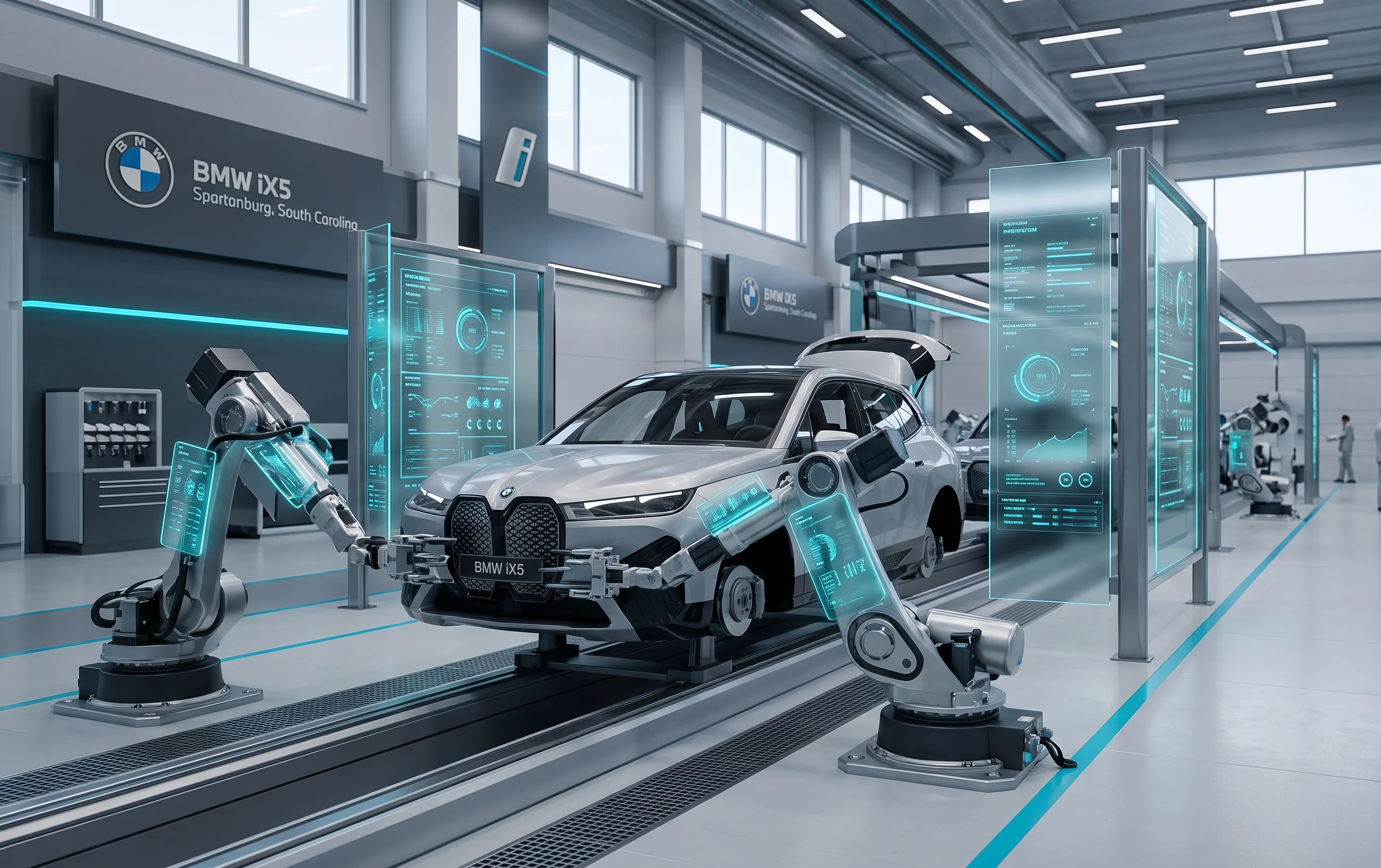
Industrial Transformation of BMW Production Base in South Carolina
German automotive manufacturer BMW Group has fully finalized a comprehensive modernization and technical re-equipment program at its core production sites in South Carolina. The total capital expenditure allocated for this project reached 1.7 billion USD. The primary goal of this investment initiative was to establish a flexible, high-tech manufacturing ecosystem capable of integrating battery electric vehicle (BEV) assembly directly into existing production lines alongside conventional internal combustion engine cars and plug-in hybrids.
The central hub of this industrial transition is the Spartanburg assembly plant, historically known as the largest BMW assembly facility worldwide. In addition, a substantial portion of the financial resources was directed toward constructing an entirely new supporting facility in Woodruff. This facility will serve as a specialized assembly center for sixth-generation lithium-ion battery packs, custom-engineered for the architecture of the upcoming iX electric vehicle lineup. The long-term strategic plan dictates that by 2030, the South Carolina cluster will mass-produce at least six fully electric BMW models.
Sixth-Generation Advanced Battery Systems
The core technological pillar of the updated platform is the transition to cylindrical battery cells, replacing the prismatic elements utilized in previous vehicle generations. This structural shift allowed engineers to fundamentally redesign battery integration within the vehicle floor. According to technical documentation from the BMW engineering division, the deployment of sixth-generation battery packs yields a 20 percent enhancement in volumetric energy density compared to older systems.
Beyond increasing pure energy capacity, the new architecture significantly lowers vehicle charging intervals. Charging velocity when utilizing high-power DC fast-charging infrastructure has expanded by 30 percent. Consequently, drivers will be capable of replenishing the battery within a standard timeframe of approximately 20 to 25 minutes. The Woodruff assembly plant will handle incoming raw cells from validated suppliers, execute advanced testing protocols, assemble cells into operational modules, and manage automated delivery directly to the main manufacturing lines in Spartanburg.
Integration into the BMW iFACTORY Strategy
The modernization process across the South Carolina plant network was completed in strict accordance with the underlying guidelines of the global BMW iFACTORY blueprint. This methodology operates on three fundamental principles, including process flexibility, ecological sustainability, and intense digitalization of all assembly phases. The manufacturing tracks in Spartanburg are now adapted to construct vehicles with entirely different drivetrain architectures on a single assembly line, granting the facility agility to respond instantly to volatile market conditions.
Automation metrics for internal logistics and welding procedures within the upgraded facility approach peak operational levels. Robotic complexes are outfitted with computer vision systems and artificial intelligence engines to analyze body panel alignment and structural weld integrity in real time. This minimizes error rates and accelerates the comprehensive assembly cycle of an individual car. Flexible overhead gantries and automated guided vehicles (AGVs) operate on a shared control grid, monitoring component distribution from warehouses straight to final quality evaluation sectors.
Economic Regional Impact and Supply Chain Evolution
Expanding manufacturing capabilities in Spartanburg and erecting the Woodruff battery plant delivers a substantial economic stimulus to the regional ecosystem. Aside from the baseline 1.7 billion dollar investment, the new operations generate over 300 highly specialized professional positions centered on automated battery module maintenance and robotic system programming.
The German automaker is concurrently engaging regional material and component suppliers. The strategic framework with battery cell manufacturers mandates utilizing 100 percent renewable electricity during cell fabrication, alongside integrating secondary raw materials, including recycled lithium, cobalt, and nickel. This strategy minimizes the aggregate carbon footprint tied to electric vehicle lifecycle metrics, beginning right at the raw material processing phase.
Future Aspects of US-Based Premium Automotive Exports
The BMW Spartanburg plant has consistently maintained its position as the leading US automotive exporter by financial valuation for several consecutive years. Adapting the facility to accommodate electric models like the updated BMW iX5 SUV allows the corporation to secure and fortify its international market stance. US-manufactured electric vehicles will supply North American domestic consumer markets and enter export routes leading toward the European Union, Asia, and other critical global territories undergoing structural demand increases for premium electric utility vehicles.


0 Comments