
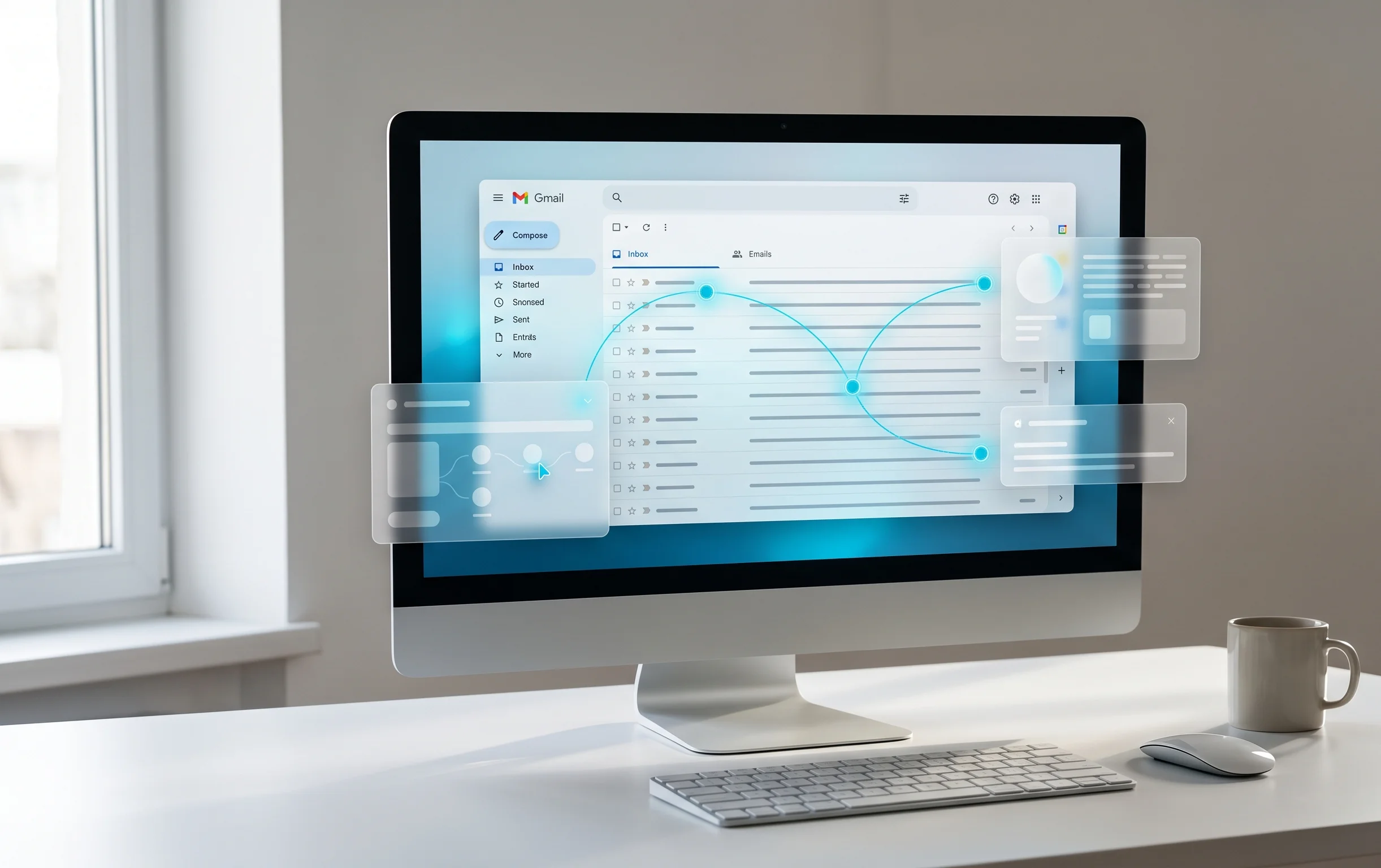
A new milestone in email automation by Google
Google has officially initiated the open beta testing phase for its new analytical tool, Live AI, within the Gmail email client. This feature integrates directly into the interface of both the web version and mobile applications for Google Workspace subscribers. The primary objective of this update is to streamline daily routine operations involving extensive volumes of corporate and personal correspondence through the utilization of next-generation language models. Users can now interact with their email archives via a real-time conversational format.
Unlike legacy automation utilities that could only offer brief response templates or correct typographical errors, this new framework operates across the entire context of an account. It is capable of examining email threads spanning multiple months, identifying correlations between distinct messages, and extracting pivotal points within seconds. This optimization significantly saves working hours and mitigates cognitive fatigue for professionals who manage hundreds of incoming emails on a daily basis.
Technical specifications and intelligent assistant architecture
The core of the Live AI functionality relies on tight integration with the Google Cloud infrastructure. The system does not merely scan the text of the currently opened email; instead, it constructs a dynamic context index tailored to each specific user account. Upon activating the assistant panel, the system automatically aggregates the history of interactions with the sender, recent file attachments, and associated records from Google Drive. This prevents the artificial intelligence from generating generic or irrelevant phrasing detached from the actual status of a project.
To guarantee rapid execution of user requests, engineers have optimized model operations to handle contextual queries on the fly. The system response latency ranges from a few milliseconds to a couple of seconds, depending on the complexity of the inquiry and the volume of processed data. Furthermore, all information processing occurs within a secure, isolated tenant environment, which is highly critical for corporate clients dealing with commercial trade secrets or sensitive user records.
Practical application scenarios in daily workflows
The new control panel allows users to complete elaborate analytical operations via basic text or voice inputs. Professionals can instruct the system to compile a brief summary of a week-long conversation with a specific contractor, highlight unfulfilled operational obligations, or pinpoint the final approved project budgets mentioned across dozens of messages. The system filters out spam, standard greetings, and signature blocks, delivering only the essential facts.
Another key feature is smart draft composition. Live AI can draft a comprehensive response based on a few brief notes provided by the user while strictly adhering to the corporate communication tone. The assistant automatically populates appropriate names, inserts links to documents discussed in previous threads, and suggests suitable meeting options by cross-referencing Google Calendar. The user only needs to review the generated text and click send.
Subscription pricing and regional deployment
During the beta testing phase, access to Live AI is granted to a limited group of Workspace administrators and users who applied via the developer console. Upon the conclusion of the test cycle, this feature will be integrated into premium subscription plans. For individual accounts, the advanced toolkit will be accessible under the Google One AI Premium tier, priced at 19.99 USD per month. This subscription package also unlocks identical functionalities across other workspace ecosystem applications, including Docs, Sheets, and Meet.
Regarding language accessibility, the initial beta deployment prioritizes English, though developers are actively expanding localization parameters. Google models already showcase an advanced level of contextual comprehension in various global languages, allowing for rapid scaling across European and Asian markets following the initial feedback collection from beta testers.



0 Comments