
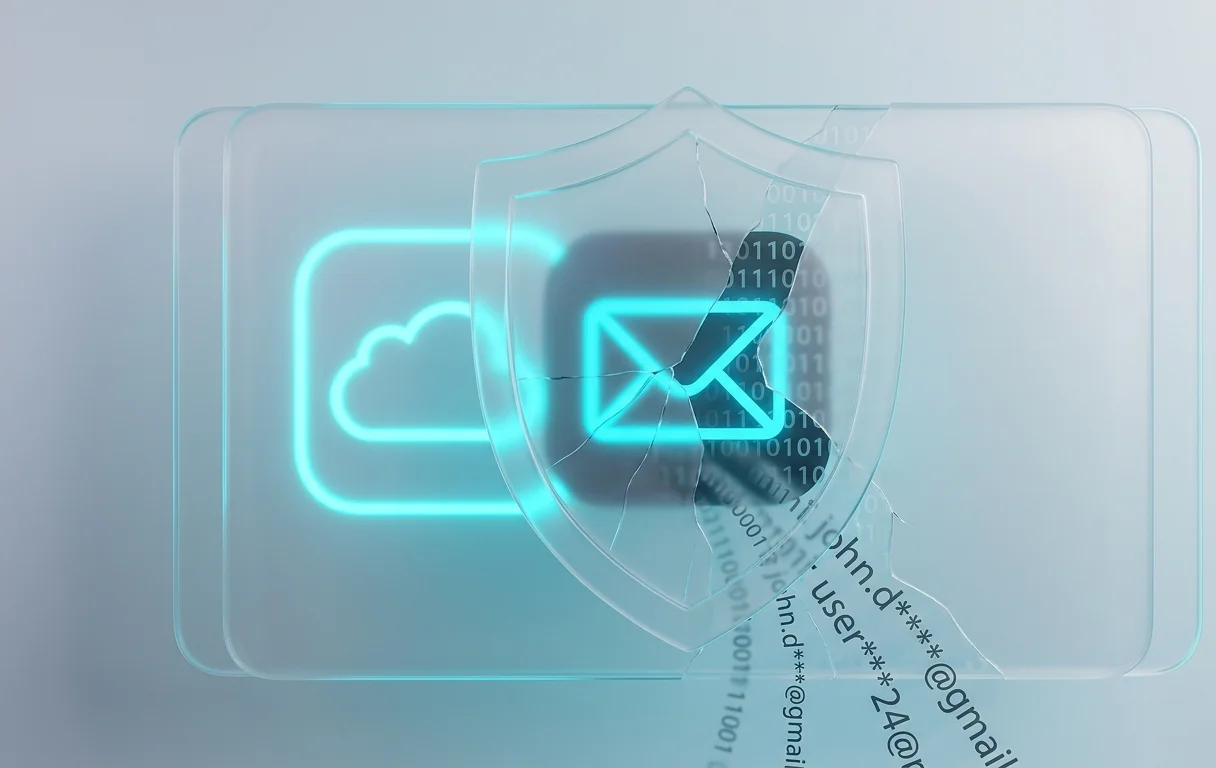
The core of the iCloud privacy routing issue
The privacy protection feature Hide My Email, which stands as a key advantage of Apple’s paid iCloud+ subscription, has become the center of attention for computer security experts. Independent researchers have discovered an architectural vulnerability in the message routing logic that, under certain conditions, allows third-party website administrators and malicious actors to uncover a user’s actual email address. This completely negates the stated masking functionality, as the real Apple ID identifier falls into the hands of third parties instead of a randomly generated alias.
The issue does not reside within the email clients on end-user devices like the iPhone or Mac, but directly within the architecture of the iCloud cloud servers responsible for automatic email forwarding. The service was designed to allow users to register on various websites without the risk of exposing their primary mailbox to spam and targeted phishing. However, the current implementation of the email header processing mechanism contains a flaw that allows this protective barrier to be bypassed without the user’s knowledge.
Technical mechanism of bypassing protective aliases
In standard operation, Hide My Email creates a unique email address with the icloud.com domain name, acting as an intermediary between the outside world and the user’s mailbox. The user sees emails sent by a website to this alias because Apple’s servers receive the message, replace the sender’s technical data, and forward it to the real address. For the originating website, the user’s real address is supposed to remain completely unknown under all circumstances.
A detailed analysis of the vulnerability shows that attackers have learned to manipulate specific service headers of emails, such as Reply-To, Return-Path, and Return-Receipt-To, as well as utilize complex nested MIME structures. If a sender formats a specific email packet, the iCloud architecture, during automatic processing and forwarding, appends information about the final destination into open service logs or returns a delivery report where the original recipient’s address appears. This allows the server owner to initiate a reverse request and record the user’s real e-mail in their databases.
Key technical risk factors
- Insufficient filtration and sanitization of message headers on Apple transit servers before they are forwarded to the recipient’s final mailbox.
- Automatic generation of delivery status notifications or error reports (DSN) sent back to the sender containing the original routing data.
- The vulnerability affects all platforms since processing occurs at the iCloud infrastructure level, regardless of the operating system version on the device.
The scale of the problem is significant due to the high popularity of the Apple ecosystem among individuals who consciously care about their privacy. Users who completely relied on the operating system’s automatic tools found themselves in a situation of false security. The exposure of a real email address creates the prerequisites for conducting targeted phishing attacks, as malicious actors now know the exact address tied to the user’s Apple ID account, simplifying unauthorized access attempts.
Analytical comparison of threat levels for users
To clearly assess the impact of the discovered vulnerability on overall user security, it is worth comparing different email usage scenarios and the consequences of a technical failure within Apple’s service.
The presented data clearly shows that during the exploitation of this vulnerability, the level of privacy protection drops to values observed with regular email usage without any masking tools. This renders the paid iCloud+ feature ineffective until a complete patch is deployed on the company’s server infrastructure side. Many users who pay a monthly subscription for extra security features are effectively left unprotected against targeted data collection.
Recommendations for data protection and mitigation
While Apple engineers work on correcting the routing algorithms on their mail servers, cybersecurity experts advise users to adhere to additional security measures. If you used Hide My Email to register on critical or financial platforms, it is worth temporarily changing those addresses to alternative options or utilizing trusted third-party email decentralization services.
It is also necessary to activate two-factor authentication for the Apple ID and closely monitor any requests for login confirmation or password changes, since knowing the real e-mail allows attackers to initiate password guessing or attempt to lock the account through access recovery tools. Complete isolation of user data must remain a priority, so manual email control methods should not be neglected. Additionally, it is recommended to refrain from clicking links in delivery reports that arrive at your primary mailboxes.
Impact on the reputation of the company’s security services
This incident deals a tangible blow to Apple’s reputation as a company that builds its marketing strategy around the idea of absolute user privacy and personal data protection. Marketing slogans stating that privacy is a fundamental human right clash with the harsh reality of cloud infrastructure vulnerabilities. Users are beginning to realize that even a closed ecosystem does not guarantee protection against data leaks if the server architecture contains technical oversights.
Competitors offering similar email masking tools based on open standards could leverage this situation to attract a new audience. Services like SimpleLogin or Proton Mail have long offered similar aliases, and their header processing architecture undergoes regular independent security audits. For Apple, this is a serious signal regarding the necessity of opening part of its services to third-party researchers to detect such architectural flaws before they become widely known and exploited by malicious actors in real-world campaigns.



0 Comments