
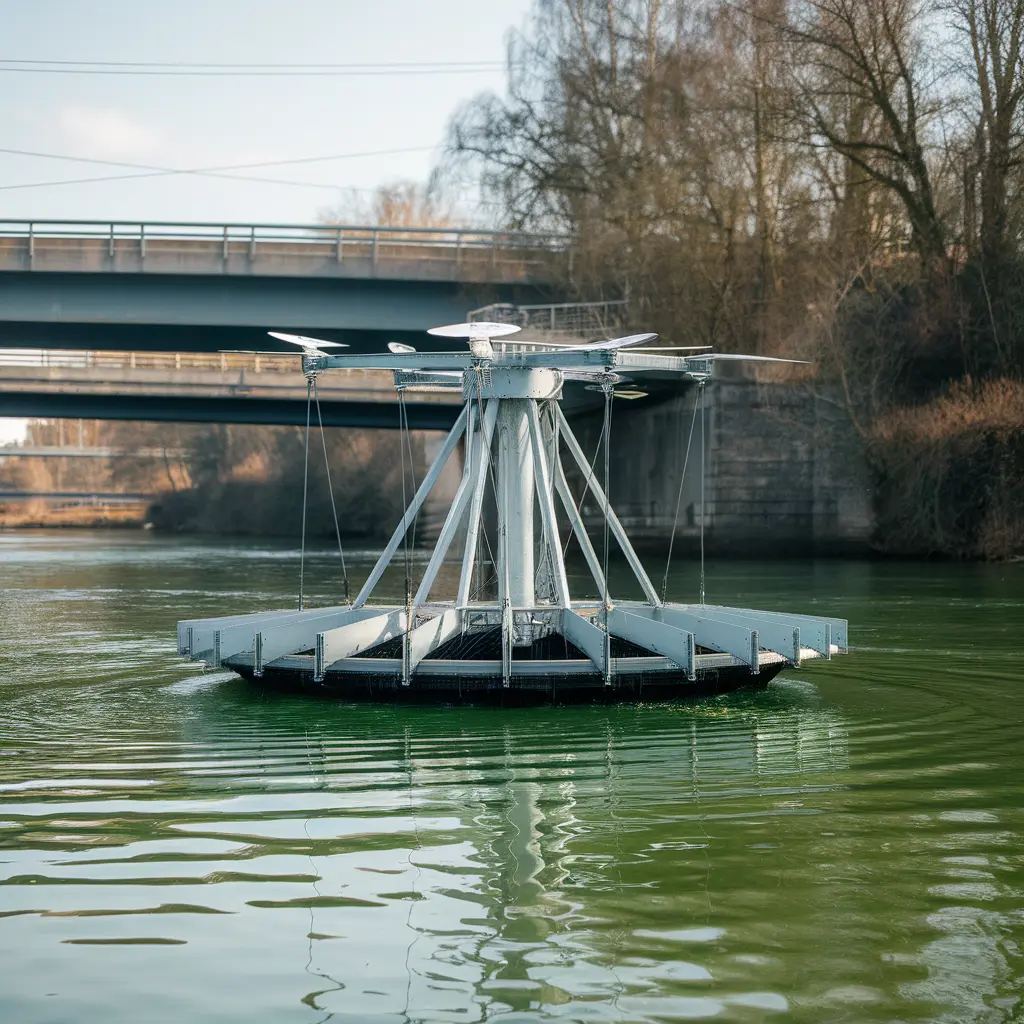
Discover how Austrian Power Giants’ energy buoys and designer towers are changing the way we approach AI generation and energy transmission.
Energy Buoys and Austrian Power Giants: How Austria is Rethinking Energy
For decades, traditional hydropower relied on massive concrete dams, forever altering the river landscape. Today, however, Austria is demonstrating an alternative. The use of innovative energy buoys and aesthetically pleasing infrastructure allows for clean energy production without disrupting natural ecosystems. This juxtaposition of small, decentralized solutions and large-scale grid projects is creating a new model for sustainable development.
Energy Buoys: Mini Power Plants on the Danube’s Surface
The basic idea behind energy buoys is their simplicity. They are floating turbines anchored to the riverbed and generate electricity solely from the force of the current. Unlike large hydroelectric power plants, they do not require damming the riverbed, which preserves fish migration routes and maintains natural water levels. The estimated cost of deploying such a network, calculated per capacity, is becoming increasingly competitive and is measured in millions of dollars, significantly cheaper than capital construction.
- Complete ecological preservation for river flora and fauna.
- Quick installation and scaling of the system.
- Stable generation 24/7 regardless of solar activity or wind.
- Using AI to monitor the efficiency of each turbine in real time.
Austrian Power Giants: Design at the Service of Infrastructure
While small buoys operate in the water, APG has proposed a radical upgrade to the land-based network. The Austrian Power Giants project transforms ordinary steel transmission towers into gigantic animal sculptures over 50 meters tall. In Lower Austria, you can find towers shaped like deer, and in Burgenland, storks. This solution not only improves the visual appeal of industrial sites but also helps communities more easily approve the construction of new power lines near populated areas.
Technologies and AI in Energy System Management
The modern Austrian grid actively integrates AI for load balancing. Since energy buoys and wind turbines on bridges generate energy decentrally, intelligent control systems distribute resources as efficiently as possible. This reduces energy losses during long-distance transportation and ensures grid stability even during peak loads.
Benefits of a decentralized approach
Instead of a single point of failure like a massive dam, a system of hundreds of energy buoys ensures greater infrastructure survivability. Even if just a few units fail, the overall grid continues to operate. Investment in such projects in Austria has already exceeded $150 million, demonstrating the government’s serious commitment to abandoning outdated energy production methods.
A future without energy giants
Austria’s experience shows that the future lies not in giant monoliths, but in flexible, intelligent, and aesthetically pleasing solutions. The combination of AI, macro-design, and microgeneration creates an environment where people receive the resources they need without displacing nature. This is a new standard for all of Europe, where technology becomes part of the landscape, not an enemy.



0 Comments