
- Transformation of the American Energy Balance
- Factors Driving Rapid Growth in Solar Generation
- Recovery of Hydropower Potential After Severe Drought
- Reduction of Coal Share and Environmental Consequences
- The Role of Energy Storage Systems in Grid Stabilization
- Prospects and Economic Drivers of the Ongoing Transition
Transformation of the American Energy Balance
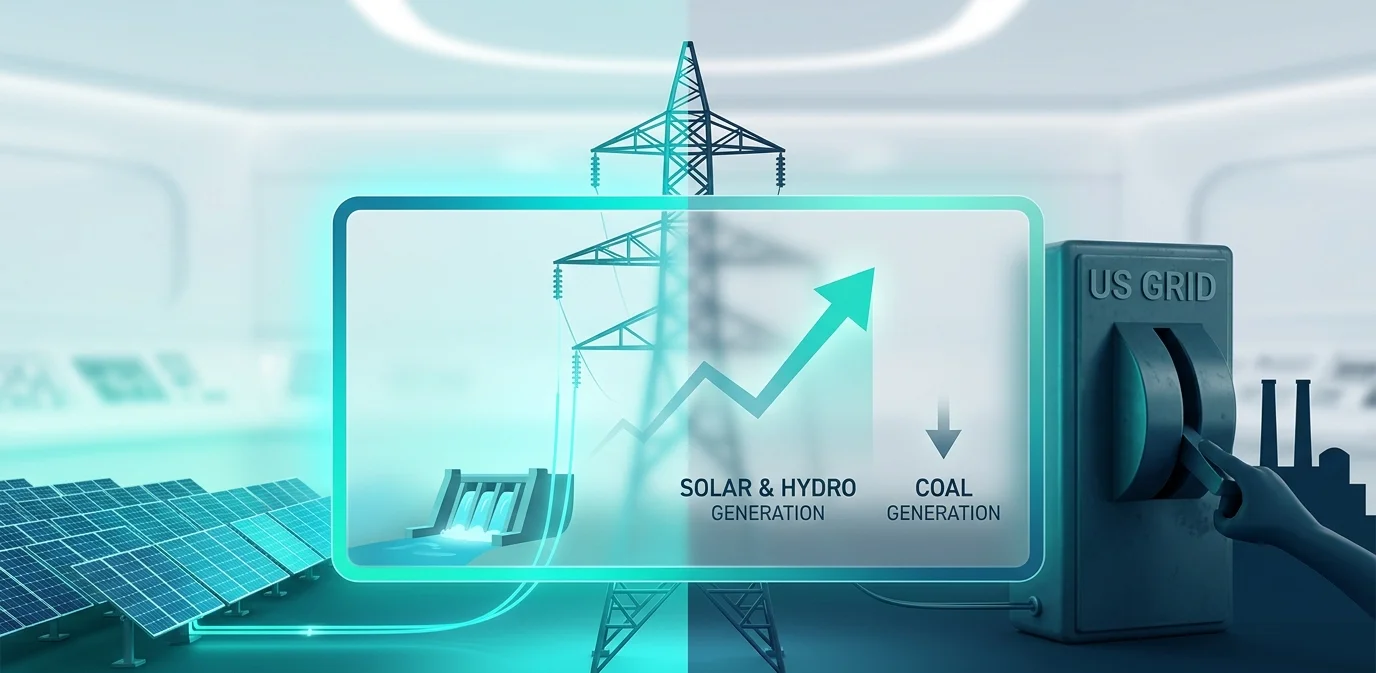
The contemporary energy system of the United States of America is undergoing a period of profound structural changes. According to the latest reports from the U.S. Energy Information Administration, there is a steady trend toward reducing the use of fossil fuels, particularly hard coal and lignite. The main drivers of this process have been the large-scale commissioning of new solar generation capacities and a substantial recovery in production volumes at hydroelectric power plants after a prolonged period of drought in the western regions of the country. This shift demonstrates a change in priorities in generation development and market adaptation to new economic realities.
An analysis of statistical data shows that the decline in the share of coal in the power grid is not a temporary fluctuation but reflects a long-term strategy of energy companies. Many operators of thermal power plants are making decisions to prematurely decommission old power units due to their low economic efficiency and high maintenance costs. At the same time, capital expenditures for the construction of utility-scale solar power plants continue to decline, making them more competitive even without taking subsidies into account. An additional impulse was the restoration of the hydrological balance, which allowed hydroelectric plants to operate at full capacity.
Factors Driving Rapid Growth in Solar Generation
Over the past few years, the growth rate of solar energy in the United States has exceeded most previous forecasts. The main regions that provided this breakthrough were the states of Texas, California, and a number of southwestern regions. Utility-scale solar farms are being integrated into the general grid at an accelerated pace due to the optimization of connection processes and the development of local infrastructure. An important role is also played by the private sector, which actively invests in rooftop solar installations for commercial and residential facilities, reducing the load on main networks during peak consumption hours.
The economic viability of solar generation is supported by the development of photovoltaic module manufacturing technologies. Increasing the efficiency of panels allows for more electricity to be generated from the same area, which reduces the cost of capital construction and land lease. As a result, the cost of one megawatt of solar energy in many states has become lower than the cost of generation at existing coal-fired power plants, where the fuel component and environmental fees create significant financial pressure on operators.
Recovery of Hydropower Potential After Severe Drought
Hydropower traditionally occupies an important place in providing baseline and load-following capacity in the US grid, especially in the Pacific Northwest region. However, previous years were characterized by severe droughts, which led to a critical drop in water levels in the reservoirs of large hydroelectric power plants. This forced operators to limit production and attract additional fossil fuel capacities to cover the deficit. The situation changed dramatically due to heavy precipitation and significant snow cover in the mountains, which ensured a stable flow of water during the spring and summer periods.
The increase in hydropower generation allowed for the displacement of significant volumes of coal generation, which was typically used to compensate for the shortage of renewable sources. Hydroelectric power plants have high flexibility, which allows them to quickly respond to changes in demand in the grid and balance fluctuations caused by changing weather conditions for solar and wind stations. The recovery of hydro potential has become an important stabilizing factor for the entire energy system of the continental United States.
Reduction of Coal Share and Environmental Consequences
The decline in coal utilization is one of the most prominent trends in American energy over recent decades. Coal-fired power plants are not only losing economic competition to cheap natural gas and renewable sources but are also facing strict environmental requirements. The implementation of new standards for carbon dioxide, nitrogen oxides, and sulfur emissions requires plant owners to make significant investments in modernizing treatment facilities. In many cases, such investments are deemed financially impractical, which accelerates plant closures.
The reduction of coal generation has a direct positive impact on the environmental situation. Reducing greenhouse gas emissions allows the US to move closer to meeting international climate commitments. In addition, the level of air pollution by particulate matter is reduced, which improves the quality of life for the population in regions formerly dominated by heavy industry. However, the process of closing coal mines and power plants creates socio-economic challenges for mono-towns, requiring the development of government programs for retraining workers and stimulating new types of economic activity.
The Role of Energy Storage Systems in Grid Stabilization
One of the main problems with integrating large solar capacities is its variability throughout the day. Maximum generation occurs during daytime hours, while the peak of electricity consumption by the population occurs in the evening. To resolve this contradiction, large-scale construction of industrial energy storage systems based on lithium-ion and other types of storage batteries has been deployed in the United States. These complexes allow for the accumulation of excess solar energy during the day and its release into the grid during the evening peak, replacing flexible gas and coal plants.
The development of energy storage systems has increased grid reliability and reduced the risks of emergency situations. The states of California and Texas are leaders in terms of installed battery capacities, which has already allowed them to successfully pass periods of extreme summer temperatures without consumer disconnections. Integrating storage systems directly into the construction projects of new solar farms is becoming a standard practice for investors, as it increases the market value of the electricity produced.
Prospects and Economic Drivers of the Ongoing Transition
The further development of the US energy sector will be determined by the balance of market forces and government regulatory policy. Federal tax incentives for clean energy projects provide long-term visibility for investors and stimulate capital attraction into technological innovations. At the same time, infrastructure constraints, such as insufficient capacity of interstate transmission lines and long timeframes for obtaining permits to connect new facilities to the grid, remain the main barriers to an even more rapid expansion of clean technologies.
Despite existing difficulties, the trend toward displacing coal is irreversible. Economic calculations show that even in the event of a change in political direction, market mechanisms will continue to support cheaper and more efficient renewable energy. Upgrading networks, implementing intelligent energy distribution management systems, and reducing the cost of storage technologies will allow the United States to create a more flexible, reliable, and clean energy system that meets modern challenges.




0 Comments