
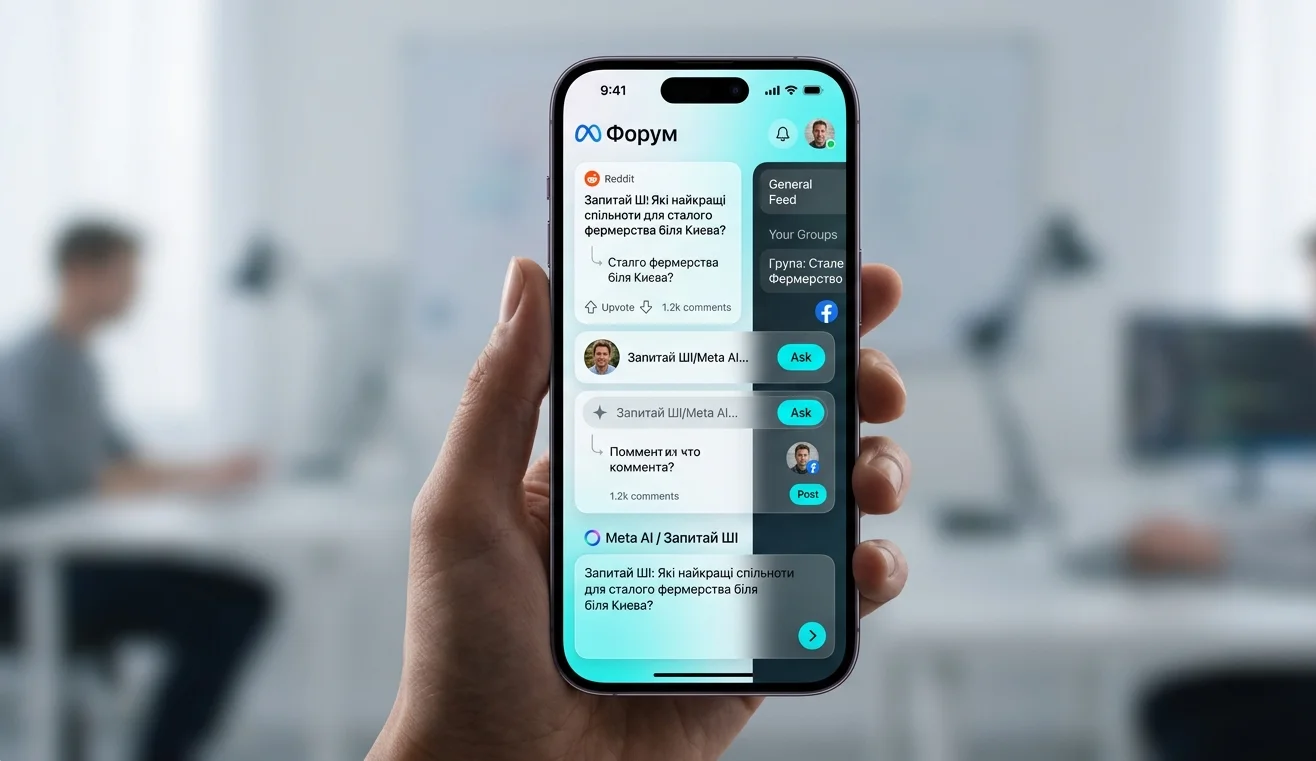
- Background and strategic goals of the new Meta project
- Interface structure and mechanics of user interaction
- Integration of artificial intelligence tools for finding answers
- Comparative analysis of text platform parameters
- Moderation privacy and profile management
- Impact on the ecosystem and long-term prospects
- Technical features of mobile client optimization and data synchronization
- Economic aspects and monetization potential of the discussion space
Background and strategic goals of the new Meta project
Social networks have been developing in the direction of visual content for a long time. Short videos, bright images, and quick reactions have pushed text-based discussions to the periphery of major platforms. However, the demand for deep thematic communication has not disappeared anywhere. Users looking for expert answers, detailed instructions, or simply wanting to discuss highly specialized topics have increasingly chosen third-party platforms. This is why Meta decided to return the focus to the text component by creating a separate application called Forum.
The main goal of this step is to isolate meaningful discussions from the general chaotic information noise. A typical news feed on social networks is oversaturated with algorithmic recommendations, advertisements, and entertainment content. In such conditions, conducting a structured dialogue becomes almost impossible. The new service offers a completely autonomous environment where the basis is not the user profile or their status, but a specific topic of discussion.
For Meta, this is also an attempt to retain the audience that has gradually migrated to other specialized resources. Using the already existing giant user base of groups, the company is trying to provide them with more convenient tools without forcing them to create new accounts from scratch. This is a pragmatic calculation for the reorganization of the digital space.
Interface structure and mechanics of user interaction
The architecture of the application differs significantly from the classic interface of social networks. Instead of the usual likes, a system of voting for comments and publications has been implemented here. Users can vote in favor of useful information or lower the rating of irrelevant messages. This approach allows to automatically filter out spam and bring the most valuable answers to the top positions.
Comment threads have a tree-like structure. This means that each answer forms a separate sub-discussion, which avoids confusion during large-scale discussions. In classic groups, long discussions quickly turn into a linear stream of text, where it is difficult to track who exactly is responding to whom. In the new format, this problem is completely solved due to the clear nesting of messages.
An important aspect is the visual design of the platform. The developers abandoned heavy design elements in favor of minimalism and text centering. The user sees only the essence of the discussion, the author avatar, and the publication rating. This allows to reduce the cognitive load and increase concentration on the content of the messages.
Integration of artificial intelligence tools for finding answers
The main technological feature of the platform is the deep integration of artificial intelligence algorithms. A special tool called Ask performs the function of an intelligent assistant and search hub. Instead of manually browsing dozens of communities in search of the necessary information, the user can formulate a direct question in the search bar.
Artificial intelligence analyzes the content of hundreds of open and closed thematic discussions, finds the most relevant answers from real experts, and generates a concise summary for the user. At the same time, the system strictly adds links to the original discussion threads so that the user can independently verify the accuracy of the data or join the discussion.
In addition to helping with search, artificial intelligence algorithms take over a significant part of the routine work of community moderation. They are able to analyze the context of messages, detect hidden aggression, mass spam, or attempts to artificially boost publication ratings. This greatly facilitates the work of live group administrators, who can now focus on community development rather than mechanical cleaning of comments.
Comparative analysis of text platform parameters
To understand the place of the new product in the market, it is worth comparing its key characteristics with the closest competitors and the base platform. This will allow assessing the potential of the project.
Moderation privacy and profile management
The issue of privacy is always critical for services of this type. The developers took this factor into account and offered a compromise solution between full anonymity and verification of individuals. Authorization in the application occurs through an existing profile in the social network, which minimizes the risk of creating thousands of spam bots. However, within a specific community, the user can create a separate text pseudonym.
This allows people to discuss complex, specific, or private topics without worrying that these publications will be seen by work colleagues or relatives in the general news feed. The created pseudonym is technically linked to the profile, but remains hidden from other discussion participants.
The moderation system works on a multi-level principle. The first level is automatic, where algorithms block explicit violations of the rules. The second level is community moderation through the mechanics of downvoting. The third level remains with the group administrators, who have the right to permanently block users or delete discussion threads.
Impact on the ecosystem and long-term prospects
Separating text discussions into a separate product indicates a change in the global content management strategy. Attempts to combine all possible types of interaction in one interface lead to user overload. Creating niche applications allows returning the audience that values its time and looks for specific practical information.
In the long term, the success of the platform will depend on user activity and the accuracy of search algorithms based on artificial intelligence. If the Ask tool can indeed stably find useful answers without involving advertising junk, the service has every chance of becoming a serious competitor to traditional text resources.
Currently, the product is under active testing, and access to it is provided gradually. This allows developers to collect feedback, adjust sorting algorithms, and improve the interface based on real user interaction experience.
Technical features of mobile client optimization and data synchronization
A separate application requires high speed of operation and minimal consumption of device resources. The company engineers implemented a new text data transfer protocol, which allows instantly updating discussion threads even with an unstable mobile connection. This is achieved through aggressive caching of text fragments on the client side and optimization of the data packet structure.
Synchronization between the base account and the Forum client occurs in the background. When a user changes privacy settings or adds a new pseudonym, these changes are applied instantly at the level of the platform server architecture. At the same time, great attention is paid to conserving the battery power of mobile devices, which is an important factor for active users.
Economic aspects and monetization potential of the discussion space
At the initial stage of testing, the platform is completely free of direct commercial advertising. This was done consciously to attract the highest quality and most demanding audience, which is tired of banners and sponsored posts. However, analysts are already considering potential monetization models that will not disrupt user comfort and the logic of text communication.
Among the possible options, the introduction of premium features for administrators of large communities is discussed, which will expand analytical tools and automate the management of large content streams from 5 USD per month. It is also possible to implement a system of voluntary donations or paid subscriptions to closed expert channels, where authors publish unique text materials, research, or highly valuable analytical reports.




0 Comments