
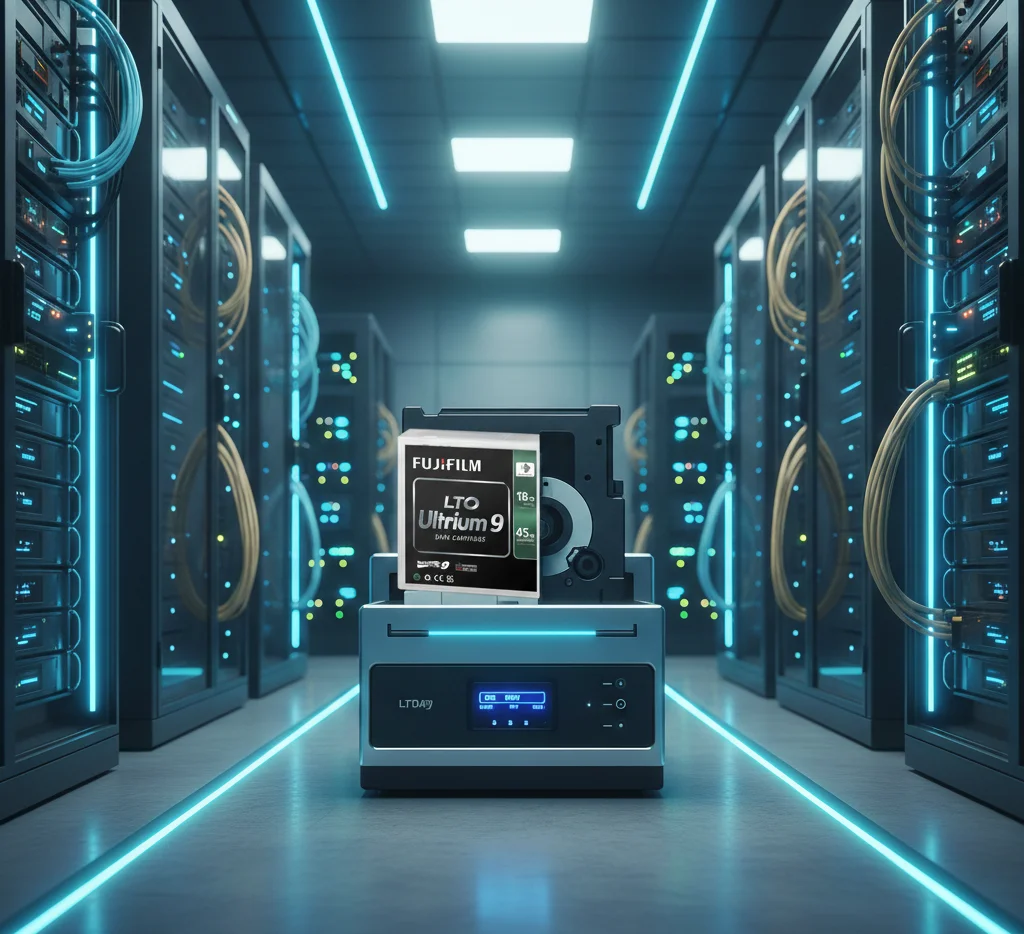
A complete guide to LTO technology: the evolution from LTO-1 to LTO-9, cost per GB, comparison to disk, and tape storage reliability.
LTO Data Storage: Why Magnetic Tape Still Beats Digital
In a world where data volumes are growing exponentially, the issue of reliable and affordable storage is becoming critical. While SSDs and HDDs compete for speed, LTO (Linear Tape-Open) technology remains a quiet giant in the enterprise sector. This open magnetic tape format, developed in the late 1990s by a consortium of technology leaders, now enables petabytes of data storage in the world’s largest clouds.
The Evolution of LTO: From Early Steps to Modern Giants
The standard’s history began in 2000 with the release of LTO-1. At the time, a tape held just 100 GB of data, and the transfer rate was a meager 15 MB/s. This was a breakthrough, offering an alternative to closed, proprietary systems. Since then, a new generation has been released every two to three years, doubling the capacity and improving recording methods.
- LTO-1 (2000): 100 GB capacity, speed up to 15 MB/s.
- LTO-5 (2010): 1.5 TB capacity, the introduction of the LTFS file system, which made it possible to view the tape as a regular flash drive.
- LTO-9 (real): 18 TB raw (up to 45 TB compressed), speed up to 400 MB/s.
Storage Economics: Cost per Gigabyte and Drives
LTO’s main advantage is its cost of ownership. In terms of media cost, an 18TB LTO-9 tape costs between $120 and $160 on average. This means the cost per GB is approximately $0.007–$0.009. By comparison, enterprise HDDs cost $0.02–$0.03 per GB, and SSDs over $0.08 per GB.
However, the entry barrier should be considered. A tape drive (streamer) is complex equipment. A new external LTO-9 drive can cost between $3,500 and $6,000. Therefore, tapes are only cost-effective for large data volumes (100 TB and above), where the savings on the media quickly offset the cost of the device.
Comparing LTO with HDD and SSD
The choice between tape and disk depends on the scenario. SSDs offer speed and instant access. HDDs offer a balance. LTO offers security and capacity. Below are the key differences to consider when building an IT infrastructure.
- Access speed: SSD provides microseconds, while LTO requires tens of seconds or even minutes to rewind the tape to the desired file.
- Power consumption: The tape consumes zero energy while it’s on the shelf. An HDD requires power to spin its platters even when idle.
- Reliability: LTO’s bit error rate (BER) is orders of magnitude lower than that of hard drives. Tape is much more resistant to data loss over time.
Durability and physical resistance
LTO tapes are designed for archival storage for over 30 years. The magnetic layer of modern cassettes uses barium ferrite or strontium ferrite particles, which do not corrode or degrade as quickly as previous generations of metal powders.
An important advantage is the air gap. A tape stored in a safe is physically inaccessible to hackers over the network. This provides the best protection against malicious programs that encrypt even cloud backups. If your tape data is not being accessed, it is completely safe.
The Future of Technology and AI
Modern LTO systems integrate with AI to monitor the condition of media. The software can provide early warning that a tape needs to be rewritten based on signs of degradation. Furthermore, developers are already working on LTO-14 generations, where the capacity of a single tape will exceed 500 TB, making the tape indispensable for training AI models.
Conclusions: Is LTO worth using today?
If your archive exceeds 100 TB and you want to be sure the data will be accessible after 20 years, LTO is the only option. It’s the most reliable cold storage method, saving money on electricity and providing protection from cyberthreats thanks to the physical isolation of the drive.



0 Comments