
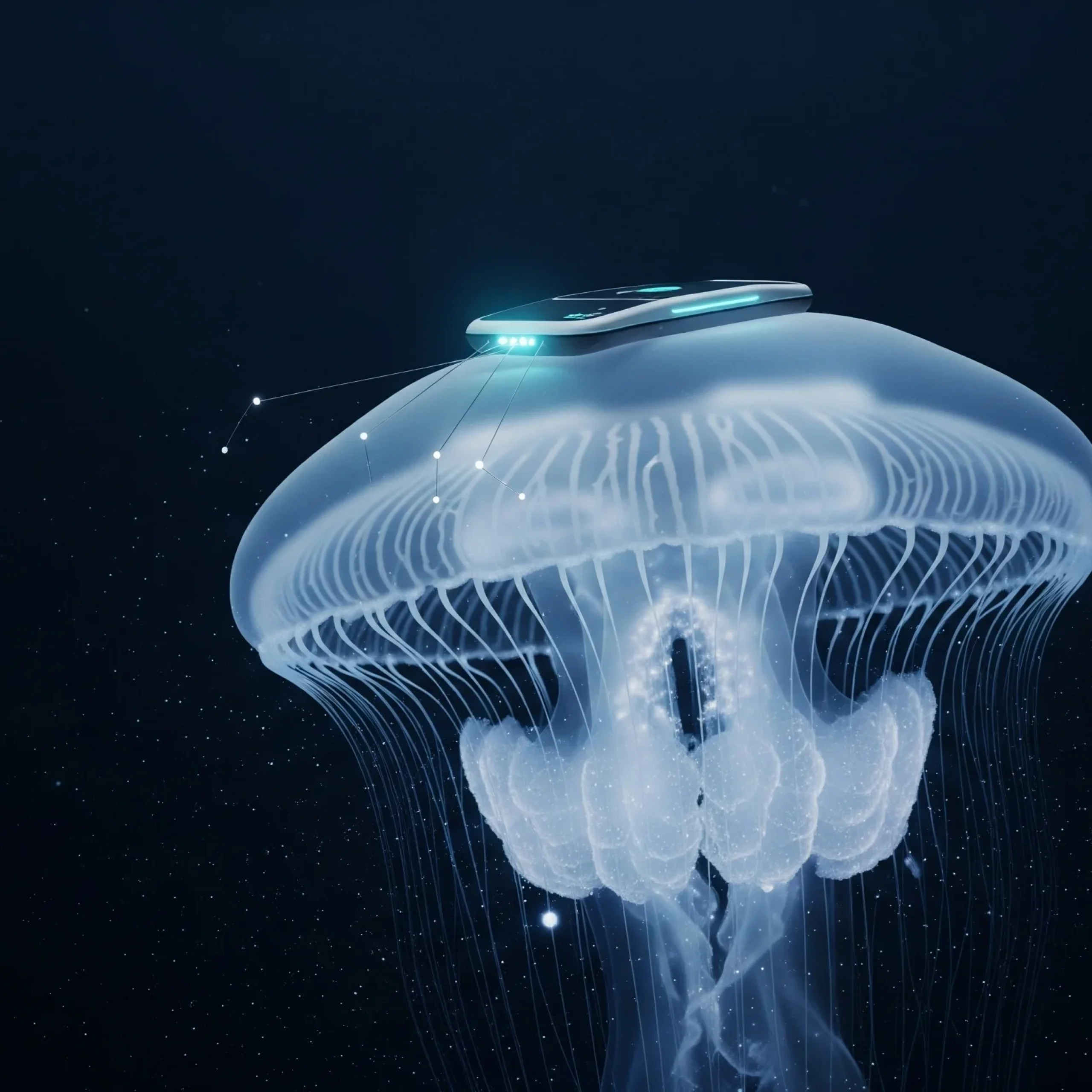
Global oceanography faces significant challenges. Exploring the ocean’s depths and monitoring its ecosystems requires significant resources, while traditional robotic vehicles are cumbersome and energy-intensive. In search of new solutions, scientists have turned to nature, creating a remarkable combination of biology and technology-cyborgs. These biohybrid projects aren’t the stuff of science fiction, but real tools designed to revolutionize ocean research, making it more efficient and significantly less expensive. They are a shining example of how scientific research can go beyond the conventional to address pressing global needs.
Why did jellyfish become biohybrid works?
At first glance, the choice of jellyfish may seem odd. However, it is precisely their unique biological characteristics that make them ideal candidates for this role.
- Impressive energy efficiency: Jellyfish are considered to be among the most efficient finners in the animal kingdom. Their bell-like movement requires minimal metabolic energy. This means these cyborg jellyfish can perform their tasks for extended periods without the need for constant recharging.
- Biological simplicity: Jellyfish have no brain, central nervous system, or pain receptors. This makes the process of installing electronic implants ethically acceptable, as it causes no harm or discomfort to the animal.
- These organisms are hardy and can survive in a wide range of temperatures and salinities. They are found in all the world’s oceans, making them suitable for ocean monitoring virtually everywhere.
How does development work?
The process of transforming a jellyfish into a cyborg is relatively simple. A tiny electronic device is attached to its bell, acting as a kind of “pacemaker.” This electronic implant generates weak electrical impulses that stimulate its muscles, causing them to contract more rapidly than they naturally would. This allows the jellyfish to control its speed, increasing it significantly. The device is small, waterproof, and powered by a miniature battery.
Main areas of use and prospects
The use of jellyfish-like objects opens up new, unprecedented possibilities for ocean exploration and environmental monitoring.
- Environmental monitoring: Biohybrid systems can carry sensors to collect data on temperature, salinity, pH, dissolved oxygen, and other important parameters. They can also track the spread of pollutants such as oil spills or microplastic deposits, which is crucial for ecosystem conservation.
- Underwater mapping: Using their motion, scientists can obtain precise data on ocean currents. This research can explore hard-to-reach underwater areas, such as deep-sea trenches or underwater caves, where traditional equipment is difficult to use.
- Biology Research: By observing how cyborg jellyfish respond to electrical stimulation and environmental conditions, scientists can better understand their physiology and behavior, which is important for biological science.
Cyborg jellyfish are a shining example of how engineers and biologists can work together to create innovative and sustainable solutions to complex problems. This technology has potential not only for scientific research but also for commercial applications, such as monitoring aquaculture or supporting maritime navigation. This solution is key to the future of oceanography and proves that nature can be our best partner in exploring the world.



0 Comments