
A New Era of Zero Emission Maritime Transport
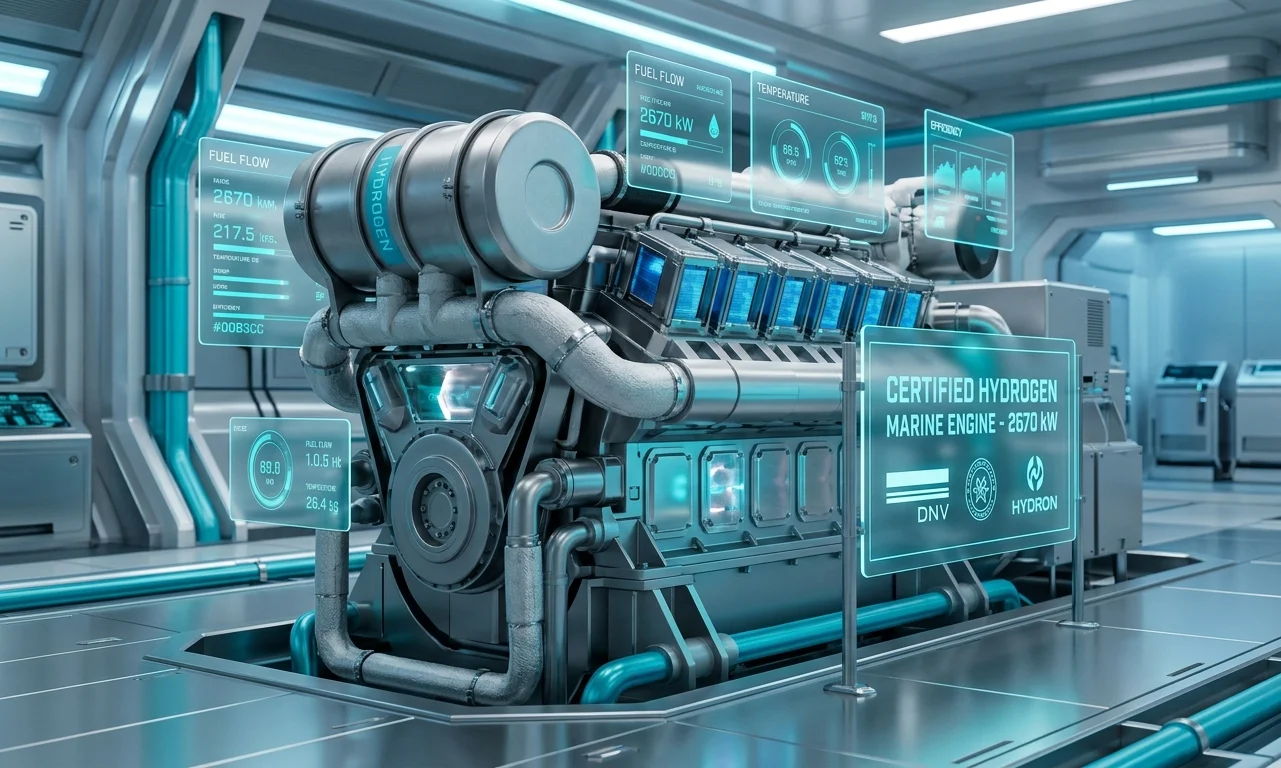
The international classification society DNV has officially issued a certificate of compliance for the world’s first large scale marine internal combustion engine operating exclusively on pure hydrogen. This milestone marks the beginning of practical decarbonization for the commercial fleet, which has traditionally been considered one of the largest sources of atmospheric greenhouse gas emissions. The newly developed propulsion system completely eliminates carbon dioxide emissions during operation, offering shipping companies a viable alternative to heavy fuel oil and diesel.
Creating a hydrogen power plant of this capacity required rethinking many traditional engineering methods. Hydrogen possesses a high burning velocity and a tendency to detonate, forcing engineers to design completely new fuel injection management and combustion chamber cooling systems. The successful completion of long term testing programs under independent supervision has proven that the new technology matches classical diesel units in reliability.
Technical Specifications and Propulsion Architecture
The new engine boasts a nominal output of 2670 kW, allowing its application as the primary propulsion system on medium tonnage vessels such as passenger and cargo ferries, river barges, and offshore wind farm support vessels. Furthermore, its modular architecture enables combining several units into a single power grid to satisfy the energy demands of large container ships or bulk carriers.
The main engineering advantage lies in the optimized high pressure direct fuel injection system. This achieves maximum thermal efficiency while minimizing the formation of nitrogen oxides, which are typically a byproduct of high temperature combustion in air. An integrated real time operating parameter monitoring system guarantees complete operational safety under open sea conditions.
Infrastructure Challenges and Commercial Outlook
Despite the successful certification, the mass adoption of hydrogen engines in the commercial fleet faces several economic and logistical barriers. The primary issue remains the availability of green hydrogen in seaports and its high cost relative to traditional fossil fuels. Storing hydrogen in a liquid or highly compressed state requires special cryogenic fuel tanks that occupy significant useful space onboard the vessel.
However, the tightening of international environmental standards, specifically the International Maritime Organization regulations targeting deep emission cuts by mid century, makes the transition to zero emission technologies inevitable. Experts predict that short sea shipping operators with regular access to refueling infrastructure at base ports will become the first commercial adopters. The gradual expansion of the global hydrogen production network will eventually allow scaling this technology to transoceanic shipping.
Environmental Impact on Global Oceans
Switching to hydrogen fundamentally alters the environmental footprint of maritime transport. Eliminating emissions of soot, sulfur compounds, and heavy metals will significantly improve air quality in coastal zones and major port cities. Since the sole byproduct of pure hydrogen combustion is ordinary water vapor, using such power plants eliminates any risk of water pollution from petroleum products in the event of engine room emergencies.



0 Comments