
- Engineering Masterpiece: The Technical Secrets of the AgiBot A2
- The Role of AI in Achieving Unprecedented Endurance
- Future of Commercialization: Where Will We See AgiBot A2?
- Logistics and compositions
- Production and inspection
- Search and rescue operations
- Competitor Comparison and Market Outlook
- Result: The Future, The Present
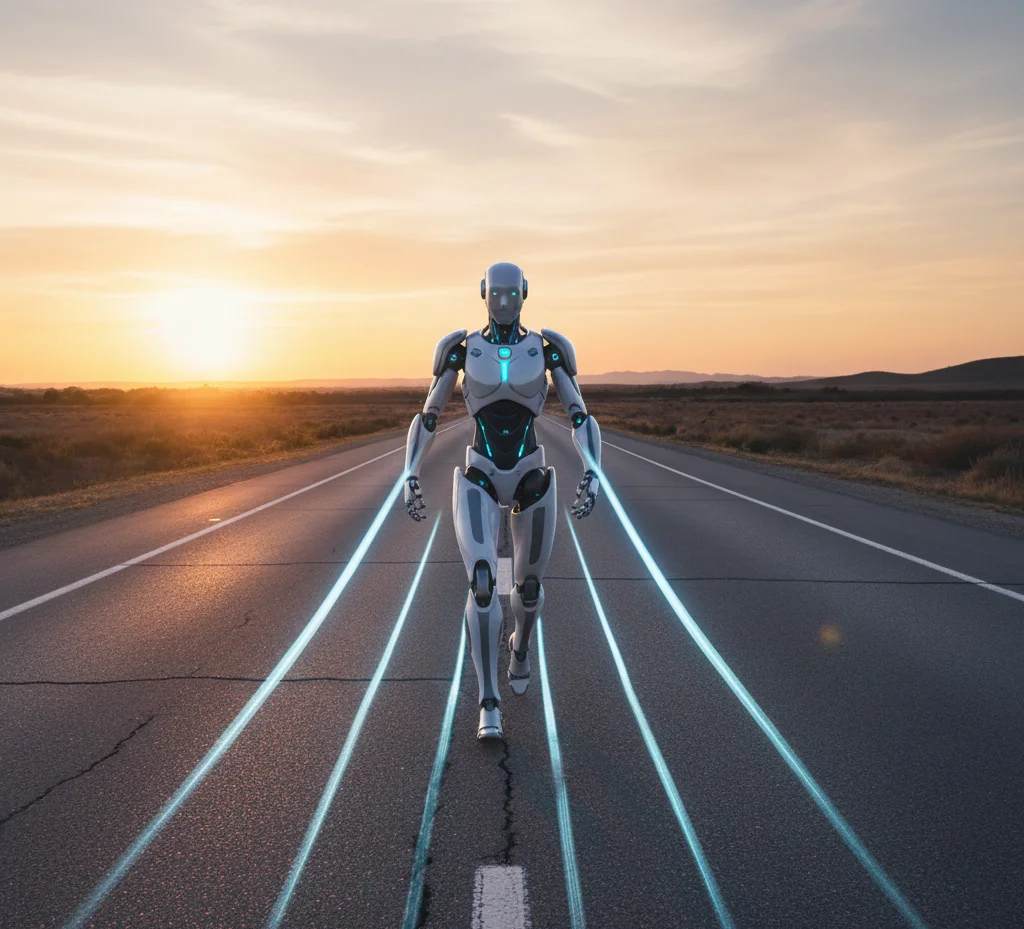
AgiBot announced a significant technological breakthrough: its advanced humanoid robot, AgiBot A2, successfully traveled a colossal distance of 106,286 kilometers. This is not just a demonstration of capabilities, but a key indicator of endurance and energy efficiency, ushering in a new era of industrial-scale humanoid robot use. AgiBot A2’s achievement confirms that humanoid robots are moving beyond laboratory prototypes to robust, autonomous machines ready for complex tasks.
Engineering Masterpiece: The Technical Secrets of the AgiBot A2
To achieve such an incredible autonomous range, AgiBot engineers integrated a number of innovative solutions. The AgiBot A2, which stands approximately 170 cm tall and weighs approximately 55 kg, is designed using lightweight composite materials. This significantly reduces the load on the drive mechanisms and optimizes energy consumption. A key feature is the advanced balancing system, which allows for efficient movement while minimizing energy loss due to posture correction.
- Drive system: High-precision and energy-efficient actuators in the joints ensure a smooth and stable gait.
- Sensors: A suite of sensors, including LiDAR, stereo cameras, and haptic sensors, provide accurate environmental perception and autonomous navigation.
- Batteries: Next-generation lithium-ion batteries are optimized for long battery life and fast charging cycles.
The Role of AI in Achieving Unprecedented Endurance
This actual mileage record was made possible by powerful AI (artificial intelligence) integration. The AgiBot A2’s AI system doesn’t just control movement; it continuously analyzes gait dynamics and surface terrain, adapting kinematics in real time. This allows for optimal energy efficiency throughout the entire journey.
- Gait optimization: AI learns to find the most energy-efficient movement patterns, which is critical for covering long distances.
- Autonomous Navigation: Intelligent algorithms create optimal routes, avoid obstacles, and quickly respond to changes in the environment without operator intervention.
- System monitoring: AI monitors the health of all components, predicting potential failures and adjusting the load to extend the equipment’s lifespan.
Future of Commercialization: Where Will We See AgiBot A2?
Reaching 106,286 km is a clear signal to the industry: robotics is ready for full-scale implementation. AgiBot’s primary focus is on sectors requiring high endurance and autonomy, making the AgiBot A2 ideal for complex, monotonous, or dangerous tasks.
Logistics and compositions
In logistics, the AgiBot A2 can perform long inspection routes, cargo handling, and order preparation. Its ability to operate autonomously over long distances significantly reduces operating costs, as human resources are expensive and limited in these processes.
Production and inspection
At industrial facilities, the robot can conduct regular equipment inspections, detect anomalies, and ensure safety. Its long-distance mobility ensures complete coverage of large factory areas.
Search and rescue operations
Its endurance and autonomous navigation capabilities make the AgiBot A2 invaluable in disaster zones. The robot can travel significant distances in unpredictable conditions, delivering aid or conducting reconnaissance in areas too risky for humans.
Competitor Comparison and Market Outlook
In the humanoid robot market, the AgiBot A2 stands out thanks to its focus on long-term battery life and endurance. While other companies, for example, focus on exceptional acrobatic capabilities or speed, AgiBot emphasizes reliability and practical value in industrial settings. The price of this humanoid robot at the commercialization stage is expected to range from $100,000 to $200,000, depending on the configuration. This price range makes it an affordable investment for large enterprises, especially considering the potential savings.
Result: The Future, The Present
The AgiBot A2 humanoid robot’s journey of over 106,286 km marks a turning point in robotics. This record demonstrates that, thanks to innovations in AI and battery technology, humanoid work is poised to become part of our everyday workflow. This achievement not only raises the bar for all manufacturers but also accelerates the widespread automation of global industry and logistics. The AgiBot A2 is more than a robot; it heralds a new era of autonomous systems.


0 Comments