
The Influx of Synthetic Content on Streaming Platforms
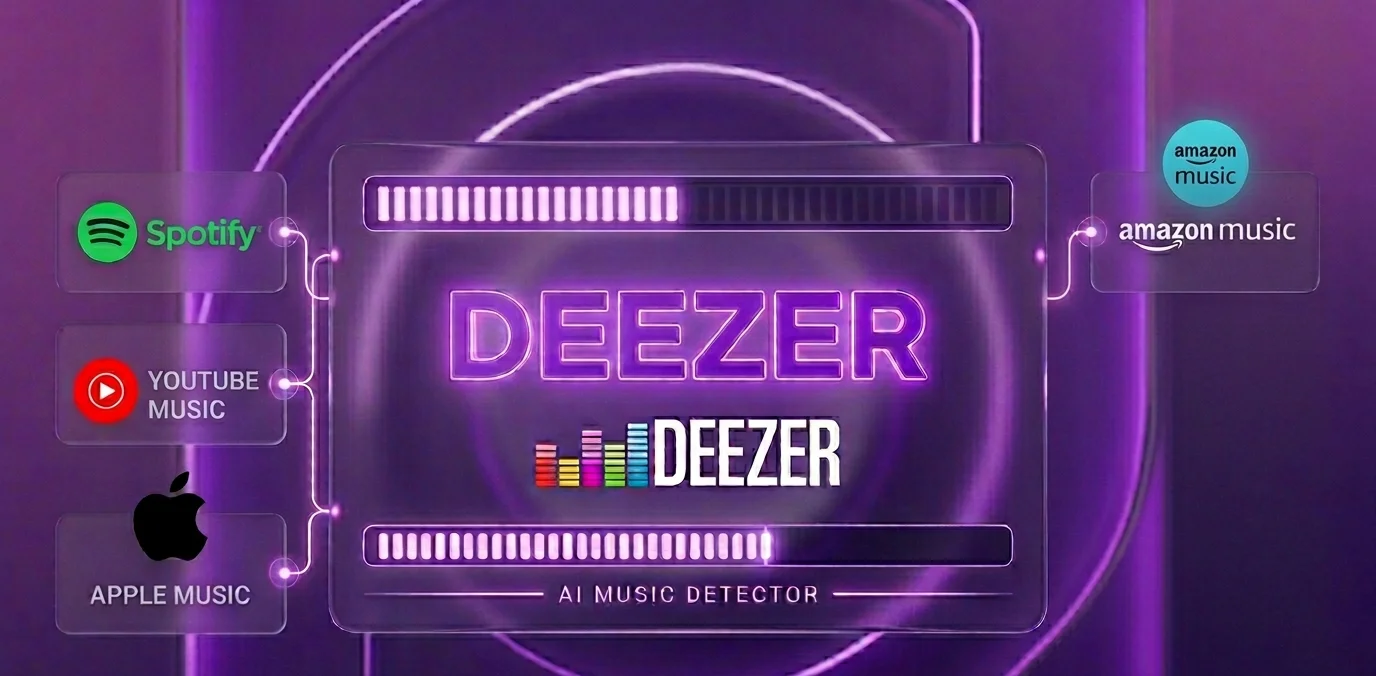
The rapid advancement of generative artificial intelligence has resulted in a significant volume of synthetic tracks entering music streaming services. Deezer has responded by introducing a free web-based tool called AI Music Detector. This utility allows users, creators, and copyright holders to scan public playlists across major platforms, including Spotify, Apple Music, YouTube Music, and Amazon Music, to identify tracks generated by AI algorithms.
The launch of this tool addresses growing concerns within the music industry regarding transparency and the fair distribution of royalties. Automated generative software can produce vast quantities of audio files daily, shifting streaming payouts away from human artists. By opening its proprietary identification tech to the public, Deezer aims to increase accountability across the digital music landscape.
Technical Framework and Identification Accuracy
The core of the service relies on Deezer’s proprietary machine learning architecture, developed internally over the past year. The algorithm processes audio signals to detect specific acoustic artifacts characteristic of generative models like Suno or Udio. It focuses on frequency distribution, structural patterns, and compositional regularities that AI systems frequently replicate or oversimplify.
According to the development team, the detection accuracy exceeds 95% for most widespread generative audio models. However, the system distinguishes between fully synthetic tracks and creative tools used by human musicians. The application of AI for audio mixing, mastering, or specific digital effect processing is not classified as AI-generated music by the detector.
Scanning Process and Platform Compatibility
To analyze a selection of tracks, a user needs to copy the link of a public playlist and paste it into the detector’s web interface. The system then evaluates the metadata and acoustic fingerprints of each composition. The analysis of a standard playlist containing 50-100 songs takes up to a few minutes, depending on current server demand.
Upon completing the evaluation, the platform generates a comprehensive report indicating the percentage of synthetic content found. The interface highlights specific compositions flagged by the algorithm, allowing curators to audit their lists effectively.
Economic Impact and the Streaming Royalty Challenge
The rise of generative audio has direct financial implications for the music economy. Most streaming services operate on a pro-rata model, distributing subscription pools based on total stream shares. Automated bot networks can run AI-generated tracks continuously, accumulating millions of plays and diluting the revenue available to human creators. Industry data suggests substantial sums are redirected annually through these methods.
Deezer initially attempted to license this detection technology to other major platforms as an internal moderation feature. Following a lack of adoption from competitors, the company chose to make the tool public. Providing a free utility is intended to build public and industry pressure toward establishing uniform standards for content labeling.
Current Limitations and Future Development
Despite high performance metrics, engineering teams acknowledge structural challenges. Generative audio models undergo frequent updates, reducing digital anomalies in the exported files. This evolution requires continuous data updates and model retraining to identify newer versions of synthesized tracks effectively.
Another analytical hurdle is hybrid music, where live vocals intersect with automated arrangements. Moving forward, Deezer plans to expand the service capabilities by allowing direct uploads of individual audio files, assisting distributors and labels in verifying material before it reaches commercial streaming platforms.




0 Comments