
Inside the Kinetic Cyber Range Why the FBI Built a Custom Digital Town
Modern threats to national security have long expanded beyond the traditional physical domain. Attacks on critical infrastructure objects can paralyze entire regions without a single shot being fired. Recognizing this reality, the US Federal Bureau of Investigation deployed a large-scale project known as the Kinetic Cyber Range. This specialized training facility is a detailed physical and digital replica of a typical American town. The main goal of creating this object is to provide agents and cybersecurity specialists with the opportunity to practice countering sophisticated hacking groups in real time.
The complex combines real industrial equipment with a powerful server environment, allowing for the simulation of digital intrusion consequences. Unlike conventional software simulators, the Kinetic Cyber Range demonstrates the so-called kinetic effect of cyberattacks. This means that a successful code compromise leads to physical outcomes: power outages, water pump shutdowns, or medical equipment failures. This approach helps analysts better understand the logic of threat actors and develop effective defense algorithms for Industrial Control Systems (ICS) and Supervisory Control and Data Acquisition (SCADA) networks.
Cyber Range Infrastructure Servers Networks and Life Support Systems
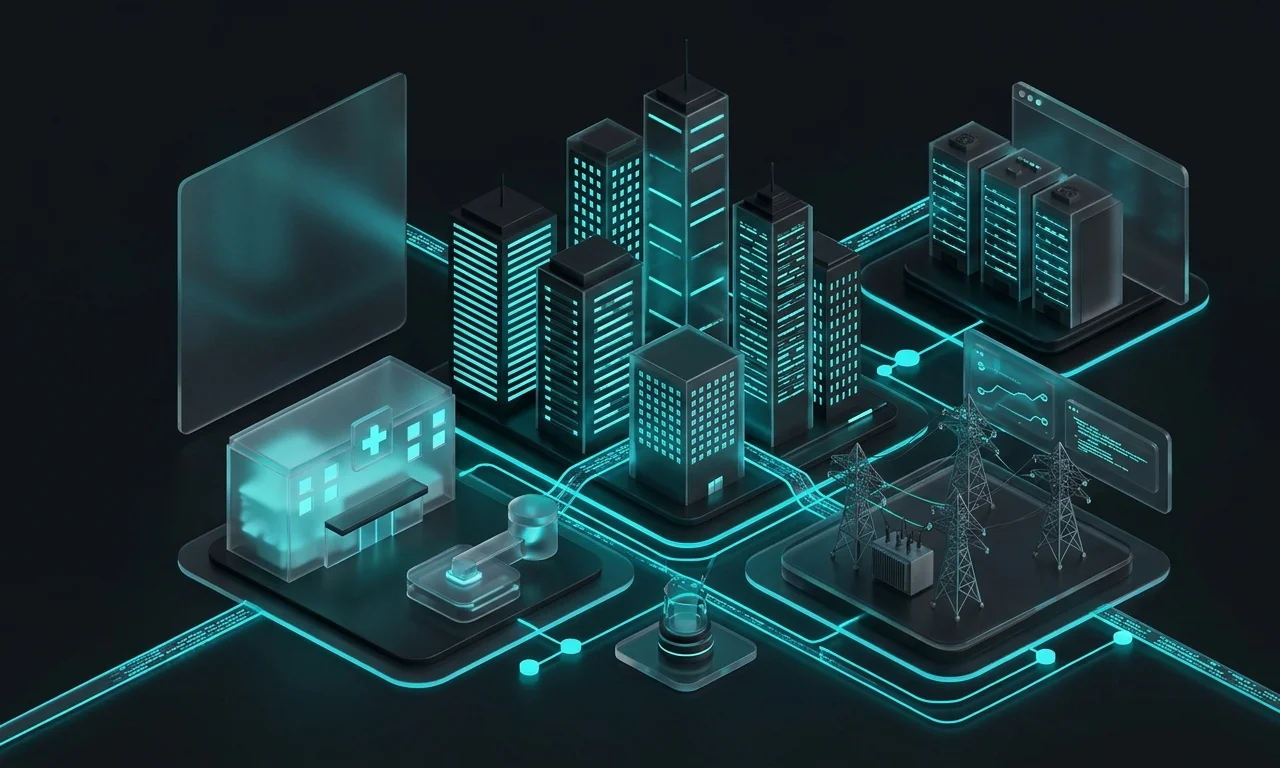
The FBI digital town features a complex architecture that completely mirrors the structure of a modern Smart City. At the core of the facility are more than 200 servers that support virtualized workstations, databases, and communication gateways. The network infrastructure is deployed using real data exchange protocols utilized in the energy and utility sectors. An important feature is the integration of numerous IoT (Internet of Things) devices, which frequently become entry points for cyberattacks due to poor code security.
Several key sectors operate within the range, each representing a separate critical system:
- Medical Sector. A full simulation of a modern hospital with networked pacemakers, patient monitoring systems, and medical record storage servers. Agents learn to protect healthcare facilities from ransomware attacks that block access to critical data.
- Energy Sector. A model of a power utility company including digital replicas of substations, transformers, and electricity distribution systems. Scenarios similar to real-world power grid attacks are investigated here, where hackers attempt to cause massive blackouts.
- Utility Sector. A water treatment and supply system. Specialists practice defending against unauthorized changes in water chemical composition or pumping station shutdowns, which could trigger a man-made disaster.
Training Scenarios From Ransomware to State-Sponsored Cyber Espionage
The educational process at the Kinetic Cyber Range is built on the principle of confrontation between two teams: the Red Team (attackers) and the Blue Team (defenders). The role of attackers is often played by FBI instructors who model the actions of known state-sponsored APT (Advanced Persistent Threat) groups. They utilize current zero-day vulnerabilities and sophisticated phishing campaigns to penetrate the defense perimeter of the virtual town. This allows the defense team to operate under conditions that are as close to reality as possible.
Special attention is paid to protecting against ransomware. In the real world, such attacks cause millions of USD in damages, paralyzing the operations of commercial and governmental structures. On the range, agents analyze malicious software behavior, study its propagation paths across the network, and practice methods to isolate infected segments without shutting down the entire enterprise. Training also includes securing digital evidence, which is necessary for the subsequent identification of hackers and bringing them to justice within the legal framework.
Project Significance for the Global Security Architecture
The creation of such a massive facility as the Kinetic Cyber Range highlights a paradigm shift in intelligence operations. Defending a modern nation is now impossible without deep technical expertise in information technology. The FBI uses this cyber range not only to train its own personnel but also to coordinate actions with other agencies, such as the Cybersecurity and Infrastructure Security Agency (CISA), and private companies that own the majority of US critical infrastructure. Joint training sessions allow for the development of unified resilience standards in the face of growing digital threats.


0 Comments