
A New Level of Security in Web Browsers
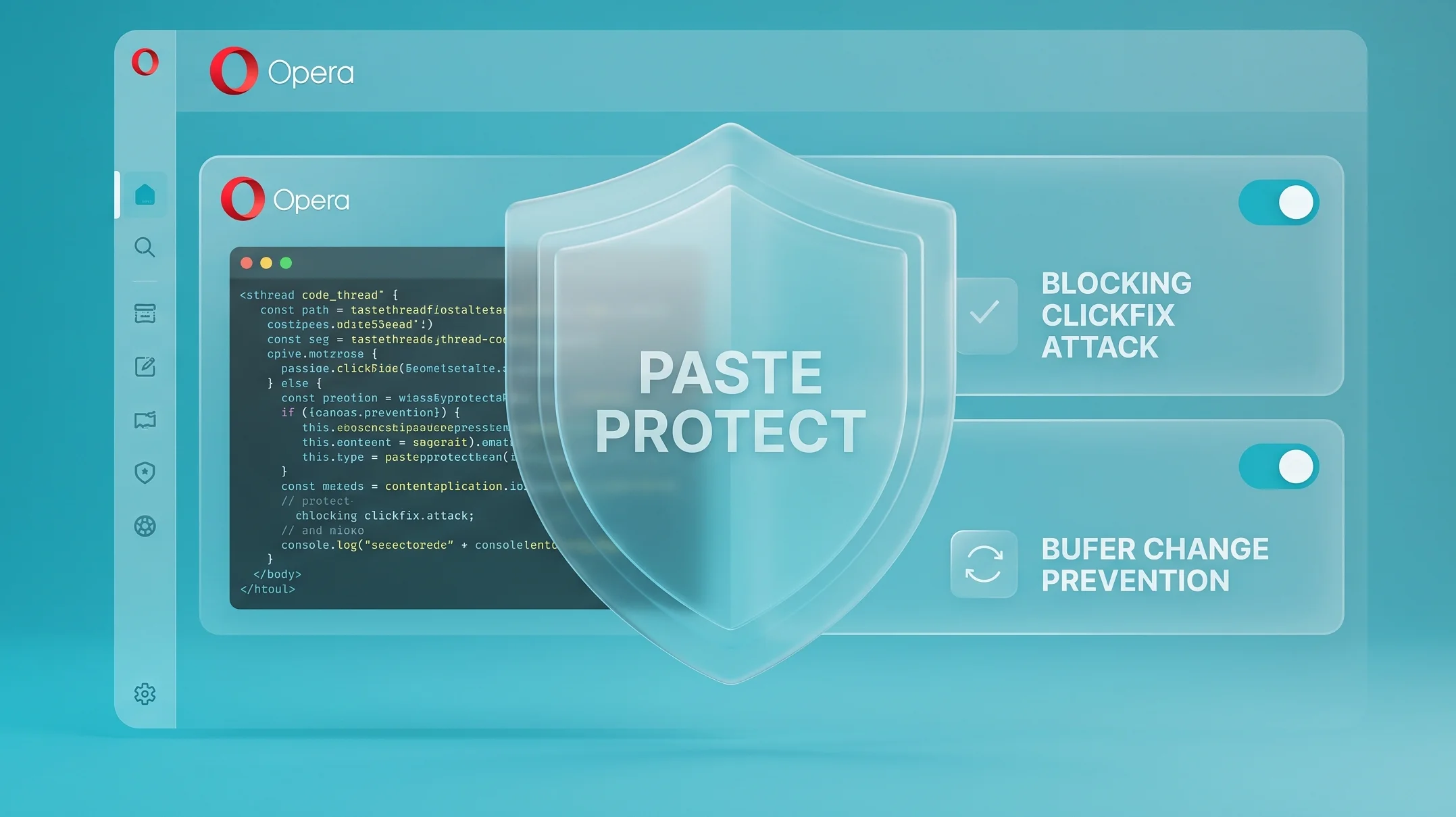
The problem of personal data security during internet browsing is becoming increasingly acute due to the emergence of complex social engineering methods and system compromises. Software developers are forced to look for proactive solutions that protect the user before a threat is activated on their device. Opera browser has officially introduced a built-in clipboard protection technology named Paste Protect. This tool is designed to counter specific types of cyberattacks known as ClickFix and pastejacking, which are actively used by attackers to tamper with confidential data and force the execution of malicious code across Windows, macOS, and Linux operating systems.
Integrating such a protective mechanism directly into the browser core is a first among major web browsers. Instead of relying on third-party extensions or antivirus software, which often flag an incident only after infection, the updated Opera analyzes interaction with the clipboard at the stage of copying information from web pages. This eliminates risks for financial transactions, especially in the cryptocurrency segment, where attackers massively use automatic replacement of digital wallet addresses during copying.
Mechanics of ClickFix and Pastejacking Cyberattacks
To understand the importance of the integrated Paste Protect tool, it is necessary to examine in detail the principles of operation of the threats it was created against. ClickFix attacks usually start on legitimate or compromised websites where a user, under the guise of a system error (such as a page update failure or a missing font), is prompted to perform a sequence of actions. Usually, this is a pop-up window instructing the person to press a key combination to open a command prompt or terminal, paste the copied text, and press Enter. This text is actually an encrypted malicious PowerShell or Bash script that downloads infostealers, ransomware, or trojans.
On the other hand, pastejacking works quietly but no less effectively. When a user selects and copies text on a website (for example, a Bitcoin wallet address or a bank account number), hidden JavaScript code on the page intercepts the copy event and replaces the clipboard content with the attacker’s credentials. Since users rarely check every character of a long cryptographic key when pasting, funds are sent to scammers’ accounts. Below is a comparison of data processing parameters by the new security system.
How the Paste Protect Tool Works
Paste Protect technology operates fully automatically and is integrated into Opera’s internal security engine. When a web page script attempts to make changes to the clipboard without an explicit and conscious click by the user on specific text, the browser flags this action as suspicious. If the copied text shows signs of system commands specific to PowerShell, CMD, or Terminal, the system immediately isolates this fragment and removes dangerous components, leaving only safe text or completely blocking the paste operation.
To ensure flexibility and prevent false positives in specific scenarios, developers provided a mechanism for manual protection bypass. If a user genuinely needs to copy complex system code from a trusted resource, they can temporarily disable the blocking. For this purpose, a mechanism of holding down the paste key for 5 seconds has been implemented. During this prolonged action, the browser displays an additional dialog box with a warning and a detailed preview of the first 120 characters of the code, allowing specialists to verify the safety of the operation before its execution.
Protection of Cryptocurrency Operations and Finances
Special attention in the update is paid to transaction protection. Cybersecurity statistics indicate that millions of dollars are lost every year due to the automatic replacement of wallet addresses by malicious software or scripts on phishing pages. Paste Protect monitors the structure of the copied data. If the system notices that the user copied one set of characters resembling a cryptographic key, and the web page attempts to write another string of a similar format to the clipboard, the operation is blocked, and the user receives a notification about the manipulation attempt.
This approach significantly reduces the load on end devices, as the threat is blocked at the browser level, preventing malicious code from gaining access to the operating system and its registry. This makes the use of web wallets and decentralized finance (DeFi) platforms significantly safer for average users who do not possess deep knowledge in the field of information security.
Industry Impact and Protection Integration
The introduction of Paste Protect puts Opera at the forefront of the fight against clipboard attacks. Most modern Chromium-based browsers limit themselves to standard clipboard permission policies (Clipboard API), which require user consent but do not analyze the actual content being written there. The new approach demonstrates that a browser can serve as a full-fledged first line of defense, filtering content on the fly.
Security experts note that the successful implementation of this feature in Opera could prompt other major browser developers to reconsider their approaches to clipboard security. As social engineering methods become increasingly sophisticated, automated protection of basic operating system functions during interaction with web content is becoming a mandatory standard for the software industry.




0 Comments