
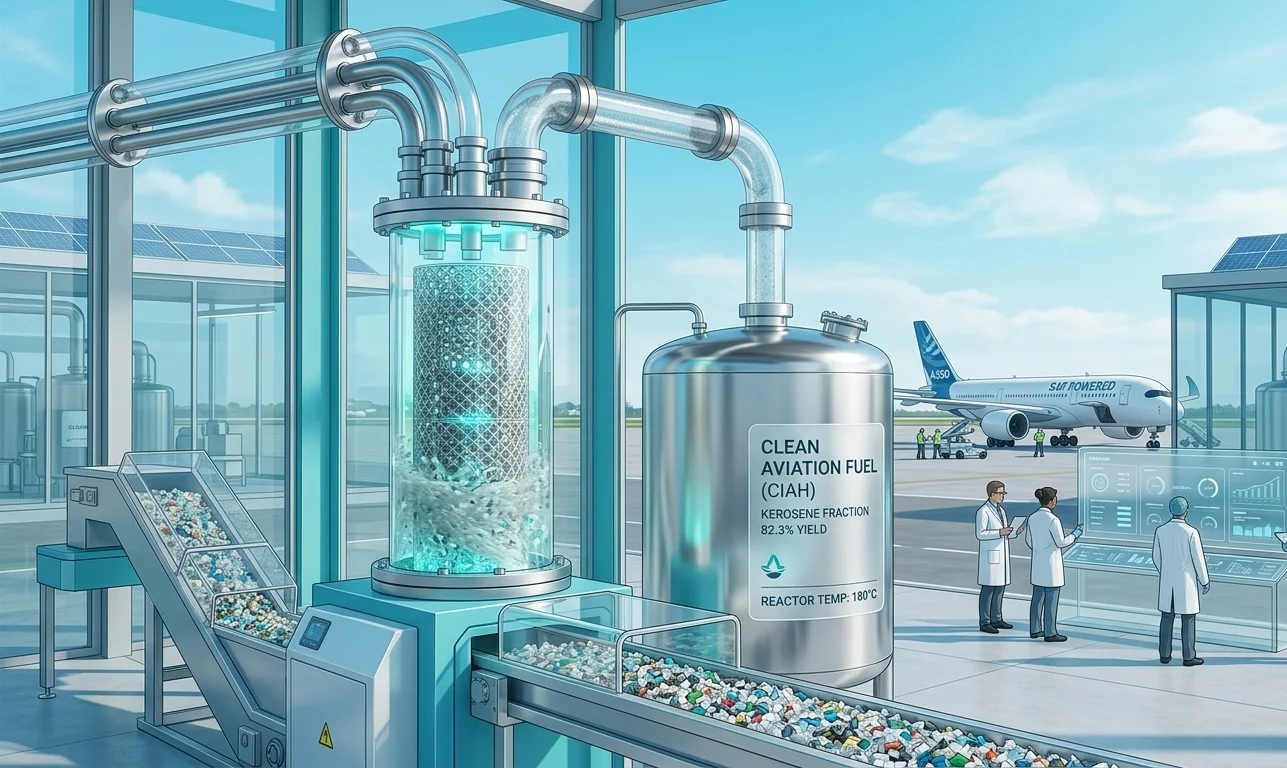
The Polymer Waste Challenge and New Analytical Approaches
Global accumulation of plastic waste forces researchers to seek recycling methods that go beyond classic mechanical recycling. Thermal cracking and pyrolysis traditionally require high temperatures, making the process energy-intensive and economically inefficient. A new research vector focuses on low-temperature catalytic degradation of high-molecular compounds. This approach allows the breaking of strong carbon-carbon bonds in polymers at significantly lower energy costs, converting waste into liquid hydrocarbons with high added value.
Main attention of scientists is drawn to low and high-density polyethylene, as well as polypropylene. These materials constitute the bulk of global plastic waste. Transforming them into fuel fractions, specifically into aviation kerosene components, opens the prospect of creating a closed-loop recycling system. Instead of long-term landfilling or incineration with toxic gas emissions, plastic becomes a valuable raw material for the transportation sector.
Technological Framework of Low Temperature Catalysis
Classic pyrolysis of plastics occurs at temperatures exceeding 400°C and often results in a wide range of products from light gases to heavy residues and coke. Modern low-temperature depolymerization technology employs specialized organometallic or zeolitic catalysts that lower the reaction temperature threshold to 140°C – 180°C. This allows precise control over the selectivity of polymer chain cleavage.
Mechanism of C-C Bond Cleavage
The process is based on tandem catalysis, where one component is responsible for the dehydrogenation of the polymer chain, and the other for its metathesis or cleavage. As a result, long hydrocarbon chains of polyethylene are sequentially shortened to lengths of C9 – C15, matching the aviation fuel fraction. This method minimizes the formation of undesirable methane and ethane, significantly increasing the yield of the target liquid product.
To compare the parameters of various polyethylene waste recycling methods, an analytical matrix was formed, demonstrating the physicochemical indicators of the processes.
Economic Viability and Comparison with Fossil Fuels
The cost of producing fuel from plastic waste using the new technology shows optimistic indicators due to a significant reduction in reactor heating expenses. Since the raw material has zero or even negative cost (considering environmental subsidies for waste disposal), the main cost items remain equipment depreciation and catalyst complex regeneration. According to preliminary calculations, the cost of obtaining one gallon of such fuel is lower than the market price of classic aviation kerosene derived from fossil petroleum.
However, there are technological limitations that must be addressed before scaling production to a commercial level. The primary challenge is the sensitivity of catalysts to impurities. Post-consumer plastic is typically contaminated with other types of polymers (such as polyvinyl chloride, which contains chlorine), food residue, dyes, and stabilizers. These components can poison the catalyst, reducing its activity after just a few utilization cycles. Therefore, thorough sorting and preliminary chemical purification of raw materials are mandatory steps in the production chain.
Environmental Balance and Carbon Footprint Reduction
The use of synthetic kerosene from waste helps lower greenhouse gas emissions in the aviation industry. Although burning fuel in aircraft engines releases carbon dioxide, the overall lifecycle of this product is more environmentally sustainable compared to its petroleum analogue. We avoid extracting new fossil resources and simultaneously prevent environmental damage from plastic accumulation in landfills.
Next Steps for Commercialization
To implement the technology industrially, researchers are working on improving catalyst stability against chlorine and sulfur compounds. Optimization continues toward creating continuous flow reactors capable of processing tons of raw materials per day without stopping for catalytic bed regeneration. It is expected that integrating such installations directly into waste processing facilities will create autonomous regional fuel supply hubs.




0 Comments