
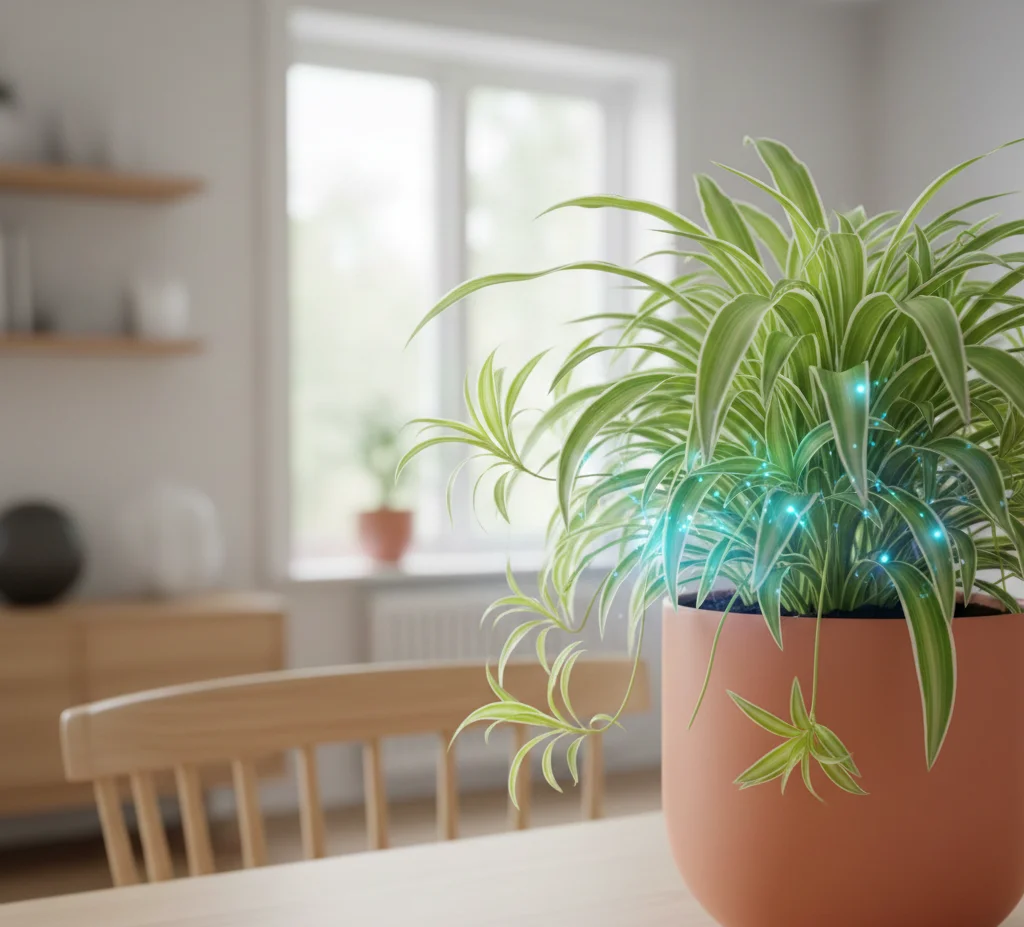
- Scientifically Proven: NASA’s Secrets to Chlorophytum’s Effectiveness
- Fighting Invisible Enemies: What Toxins Does Chlorophytum Comosum Neutralize?
- Formaldehyde is a ubiquitous pollutant.
- Xylene and Toluene are printing and ink toxins.
- Benzene is a component of fuel and plastics
- Carbon Monoxide and Mold Spores
- Chlorophytum: Four Reasons Why It’s the Perfect Plant for Every Home
- Practical Tips: How to Maximize the Cleansing Effects of Chlorophytum comosum
In today’s world, where indoor air is often polluted with volatile organic compounds (VOCs), finding effective and natural solutions for air purification is becoming critical. While high-tech air purifiers cost hundreds of dollars (over $200), there is a simple, affordable, and aesthetically pleasing way to improve air quality: the houseplant Chlorophytum comosum. Often overlooked due to its widespread use, this green “spider” is a true detoxifying champion, capable of eliminating up to 95% of harmful substances and mold spores in an area of up to 20 m² in just 24 hours.
Scientifically Proven: NASA’s Secrets to Chlorophytum’s Effectiveness
The ability of the Chlorophytum comosum to act as a biofilter was not just a hypothesis but also the subject of extensive scientific research. In the 1980s, NASA conducted the legendary NASA Clean Air Study to find plants that could purify the air on space stations from toxic gases emitted by synthetic materials. The results were astonishing: Chlorophytum comosum proved to be one of the most effective “natural devices.”
- Key finding: The study showed that spider plants actively absorb formaldehyde, one of the most common and dangerous VOCs indoors.
- The plant converts these toxic substances into components necessary for its nutrition, effectively rendering them harmless.
- Thanks to its powerful root system and high metabolic rate, chlorophytum is able to quickly remove pollutants, demonstrating impressive cleaning performance even in small spaces.
Fighting Invisible Enemies: What Toxins Does Chlorophytum Comosum Neutralize?
Modern homes, while comfortable, are often closed environments where VOC concentrations can be significantly higher than outdoors. Chlorophytum specializes in neutralizing the most common indoor pollutants.
Formaldehyde is a ubiquitous pollutant.
Formaldehyde is perhaps the greatest threat, as it is emitted by virtually all items made from treated wood (particleboard, plywood), new carpets, furniture upholstery, and many adhesives and paints. High concentrations of formaldehyde can irritate the eyes and throat, and are also carcinogenic. Chlorophytum is recognized as one of the best absorbers.
Xylene and Toluene are printing and ink toxins.
These compounds are often found in varnishes, paints, and solvents, and can be emitted by office equipment (printers, copiers). They can affect the nervous system. Unlike conventional filters, the spider plant effectively breaks down these substances.
Benzene is a component of fuel and plastics
Benzene is used in the production of plastics, resins, nylon fibers, as well as in tobacco smoke and some detergents. A NASA study confirmed that spiderwort also helps reduce levels of this hazardous compound.
Carbon Monoxide and Mold Spores
In addition to VOCs, spider plants also absorb and filter small amounts of carbon monoxide, making them ideal for kitchens. Also, as mentioned in the original post, they help control mold spores, improving overall air quality.
Chlorophytum: Four Reasons Why It’s the Perfect Plant for Every Home
Its popularity is explained not only by the air purification, but also by its exceptional ease of maintenance and safety.
- Extremely easy to care for (low requirements): This is one of the most low-maintenance houseplants. It tolerates both partial shade and bright, filtered light. It doesn’t require frequent watering, making it an ideal choice for beginners or frequent travelers.
- Absolutely non-toxic to animals: According to the ASPCA (American Society for the Prevention of Cruelty to Animals), spiderwort is safe for pets (cats and dogs), unlike many other popular houseplants. This is a critical aspect for pet owners.
- Active air humidification: In addition to filtering, it functions as a natural humidifier. The plant actively transpires water, which is especially beneficial during the heating season, when indoor air becomes dry.
- Quick and easy propagation: Chlorophytum propagates easily through shoots (called “pups”) that form on long stems. This allows you to quickly increase the number of air purifiers in different rooms without additional costs.
Practical Tips: How to Maximize the Cleansing Effects of Chlorophytum comosum
To get the most benefit from your plant, follow a few simple guidelines.
- Correct placement: It is best to place chlorophytum in rooms with the highest concentration of VOCs: new offices, kitchens (where there is carbon monoxide), bedrooms (to clean the air during sleep) and near new furniture.
- Moist Soil: Although the plant is hardy, optimal soil drainage occurs when the soil remains slightly moist. Regular but moderate watering is key.
- Wipe the leaves: Dust that settles on broad leaves reduces the plant’s ability to photosynthesize and absorb toxins. Wipe the leaves regularly with a damp cloth.
- Lighting: For best results and vibrant coloring of varieties (Vittatum or Bonnie), provide bright but diffused light. Chlorophytum will survive in the shade, but its water purification properties may be reduced.
Chlorophytum is more than just a decorative houseplant; it’s a living, highly productive, natural air purifier available to everyone. Its scientifically proven benefits, and its ease of care, make it an ideal choice for improving the health and comfort of your home.




0 Comments