
The Mystery of Strange Behavior: Why Birds Freeze in Insect Nests
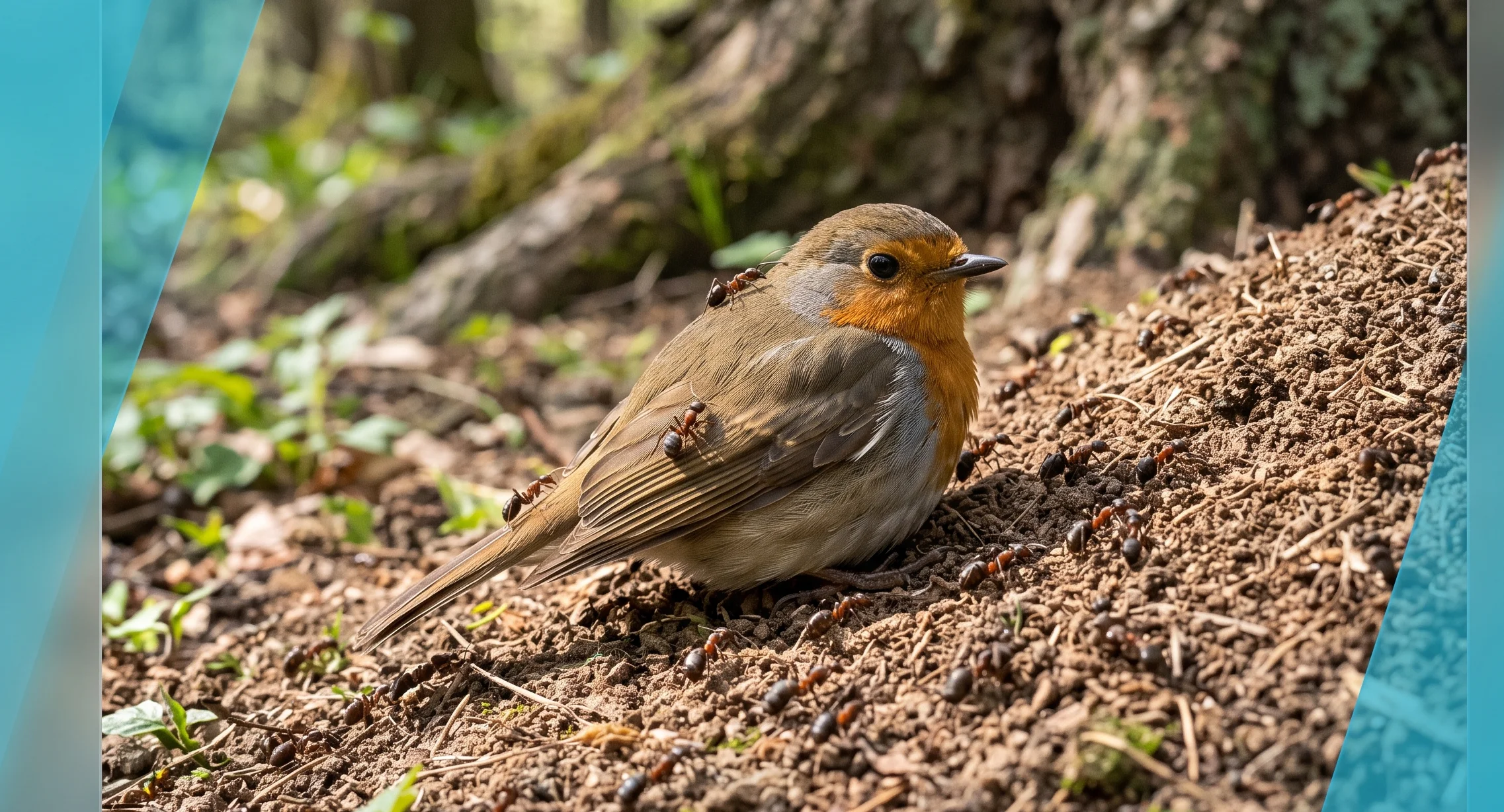
In the wild, one can often observe a scene that initially causes alarm for an unprepared observer. A small bird sits directly in the center of a large anthill, spreads its wings, ruffles its feathers, and freezes. From the outside, it looks as if the animal is trapped and doomed to die from the bites of thousands of insects. However, ornithologists reassure that this process is completely voluntary and vital for birds. In the scientific world, this phenomenon is called anting.
This phenomenon was first described in detail by the German researcher Erwin Stresemann in 1935. Since then, scientists have recorded this behavior in more than 200 species of songbirds, as well as representatives of other families. For many forest dwellers, regular visits to insects replace full-fledged hygienic procedures that cannot be performed using ordinary water or sand.
The Main Weapon Against Microscopic Enemies
The main reason that forces birds to seek contact with aggressive insects lies in protection against ectoparasites. Feather cover is an ideal environment for the reproduction of feather mites, ticks, fleas, and various fungi. These microorganisms destroy the feather structure, cause severe itching, and can carry dangerous infections. When a bird cannot reach pests with its beak in hard-to-reach places, it turns to natural chemistry for help.
Ants actively secrete a specific substance during the defense of their nest, the basis of which is formic acid. This compound is a strong natural antiseptic and insecticide. Getting on the bird’s body, the chemical substance instantly destroys most of the parasites hiding under a thick layer of down. For the bird itself, this process resembles a therapeutic or cosmetic peeling.
Two Styles of Biological Cleaning: Passive and Active
Researchers divide the behavior of birds during anting into two main categories, each of which has its own characteristics:
- Passive anting. The bird simply sits on an anthill, spreads its wings and tail as much as possible, pressing tightly against the substrate. Insects perceive it as a threat, crawl onto the body, and begin to massively spray the intruder with acid from their abdomens. The bird remains motionless and waits for the chemicals to do their job.
- Active anting. The bird independently collects insects with its beak, sometimes squeezing them slightly to provoke secretion, and purposefully rubs its flight and tail feathers with them. This method allows treating specific areas of the body that have suffered the most from pests.
Sometimes, instead of ants, birds use other insects that have corrosive protective secretions, such as certain beetles or millipedes. Some urban species, including sparrows and starlings, have adapted to bring cigarette butts to their nests. The nicotine remaining in the filters also acts as a powerful toxic agent against mites.
Impact on Physiology and Additional Theories
In addition to the direct destruction of parasites, formic acid performs several other important functions. It helps soften old feathers before the start of the molting season, which facilitates their shedding and stimulates the growth of new plumage. There are also hypotheses that birds receive a certain pleasure from this process, as the action of acid on the skin causes a light pleasant tingling, similar to a physiotherapeutic massage.
Some ornithologists put forward a theory that anting helps birds make insects edible. Before swallowing an ant, the bird forces it to completely release its supply of acid onto the feathers. After that, the insect becomes safe for the digestive system and turns into a nutritious easy prey without a bitter taste.




0 Comments