
Mechanisms of Spatial Expansion and Vegetative Dominance
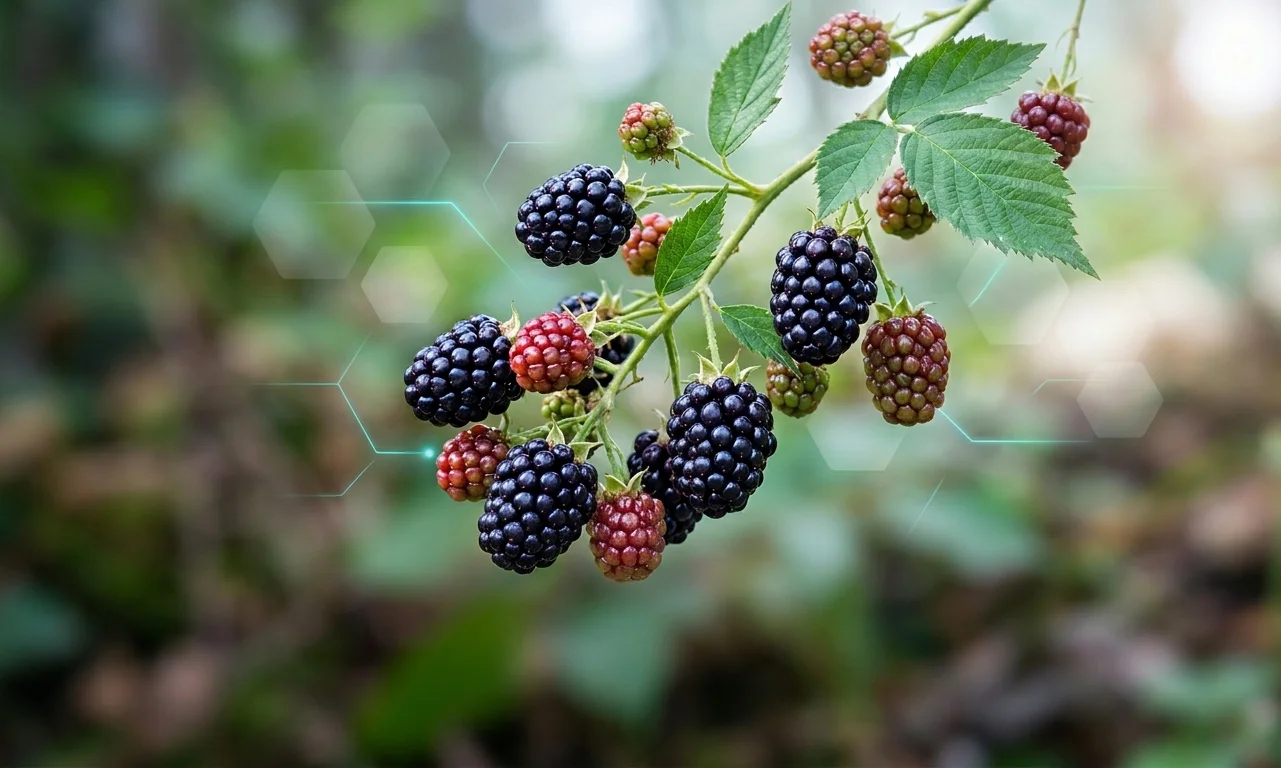
Wild blackberry belongs to the most aggressive shrub plants of the temperate zone due to its unique strategy of vegetative reproduction. Botanists describe its life cycle through the concept of walking growth. During a single growing season, individual shoots are able to reach a length of several meters. Instead of the vertical orientation characteristic of most berry shrubs, the arched stems of the blackberry bend towards the soil surface. As soon as the apical bud touches the ground, the plant activates a rapid rooting process, forming a new root system and an independent bush within a few days.
This mechanism allows the plant to continuously capture new territories, creating dense multi-tiered thickets. The main ecological consequence of such expansion is the complete blocking of sunlight for the lower layers of vegetation. Herbaceous plants and young tree seedlings under the blanket of blackberry leaves die from an insufficient amount of ultraviolet light and a deficit of moisture, which leads to the monopolization of plot resources by one species.
Prickles act as an important anatomical tool of expansion. From the point of view of plant morphology, these are emergences – outgrowths of the surface tissues of the stem, which are not modified shoots or leaves. They have a rigid structure and a backward-curved shape resembling a harpoon. In addition to the protective function against consumption by large mammals, emergences act as natural climbing equipment. Thanks to them, the shoots are fixed on the bark and branches of neighboring trees, raising the leaf apparatus of the blackberry closer to the sun and using other plants as a passive support.
Chemical Defense of Leaves and Trophic Tethers with the Microcosm
Young blackberry leaves, which have a complex three- or five-foliate structure with serrated edges, become the object of attack by phytophages in spring. However, the shrub does not remain defenseless. In response to mechanical damage to cell walls, the plant instantly activates a biochemical response, launching intensive synthesis of secondary metabolites. These include tannins (tanning substances) and phytoncides. Polyphenolic compounds significantly reduce the attractiveness of biomass for pests, as they give the leaves a pronounced bitter taste and block digestive enzymes in the gut of insects, slowing their growth.
The ecosystem of the blackberry bush attracts specific insects that have developed their own strategies of interaction with the plant. Among them, three types of adaptations are clearly distinguished
- Batesian mimicry – the longhorn beetle Clytus arietis imitates the coloring and jerky movement style of a wasp to feed safely on the plant under the protection of a visual danger code.
- Specialized feeding – the shield bug Acanthosoma haemorrhoidale pierces rigid membranes with a vascular proboscis, sucking juices without rough destruction of the leaf blade.
- Aggressive destruction – the larvae of the sawfly Arge cyanocrocea are able to massively consume leaf edges, damaging the photosynthetic apparatus if the level of protective tannins in the bush is insufficient.
Biochemical Contract During Flowering and Fruit Ripening
At the beginning of summer, the strategy of blackberry interaction with fauna changes from defensive to cooperative. Five-petaled flowers with a large number of stamens begin to secrete nectar, attracting insect pollinators. The plant concludes a pragmatic biochemical contract, providing high-energy sugars in exchange for the transportation of genetic material. Access to nectar is open to many species, including specialized parasitoids such as Gasteruption wasps and thick-headed flies Conops quadrifasciatus, which use long proboscises to pump carbohydrates from the depth of the inflorescence.
After successful pollination, a complex fruit is formed – an aggregate drupe consisting of many small drupelets with seeds. The ripening process is accompanied by a clear biochemical schedule
When the seeds are fully ready for dispersal, the plant reduces the concentration of acids and accumulates anthocyanins. These plant pigments not only protect the fruits from solar radiation but also make them visible to birds, which become the main agents of seed dissemination over long distances.
Pharmacological Potential and Medical Limitations
The medical use of blackberry has a long history, starting from the works of the ancient physician Dioscorides, who described the astringent and hemostatic properties of its juice in the treatise De Materia Medica. Modern clinical biochemistry confirms the presence of a high concentration of polyphenolic compounds in fruits, which significantly exceed similar indicators of raspberries. Anthocyanins and phenols provide protection for the vascular endothelium, reduce systemic inflammation, and neutralize free radicals in cells. Also, the fruits contain natural salicylates, causing a mild antipyretic effect.
However, high biological activity determines strict therapeutic limitations. The presence of a large amount of organic acids can cause irritation of the gastric mucosa in gastritis with high acidity. In addition, blackberry contains a significant amount of oxalates (salts of oxalic acid). This makes it a potentially dangerous product for patients with urolithiasis and impaired renal function. The physiologically justified daily intake for an adult is no more than 300 g.
Agrotechnical Requirements and Preservation of Bioactive Components
For successful cultivation of blackberry in a garden environment and obtaining berries with the maximum content of antioxidants, it is necessary to adhere to specific conditions. The plant demonstrates high plasticity and is able to survive in the shade, but under conditions of solar insolation deficit, biochemical processes slow down. Bushes grown in the shade have a low concentration of phenolic compounds and increased acidity of fruits. The maximum therapeutic potential is established only under conditions of full direct solar illumination on well-drained loams with high aeration of the root system.
To optimize the phytosanitary state without the use of synthetic pesticides, the method of companion planting is recommended. Planting next to bushes of lemon balm, basil, or dill allows bewildering insect pests due to the release of intensive essential oils. Clover as a green manure in the row spacing provides natural enrichment of the soil with nitrogen due to symbiosis with nodule bacteria.
Special attention should be paid to crop processing. Traditional thermal processing (cooking jams) at temperatures above 60 °C leads to the destruction of heat-sensitive ascorbic acid and the destruction of a significant part of polyphenols. The most effective method for long-term preservation of the chemical value of fruits is shock freezing. A rapid drop in temperature fixes the cellular structure and conserves the stability of anthocyanins without losing their antioxidant properties.



0 Comments