
The Future of Deep-Sea Energy Storage
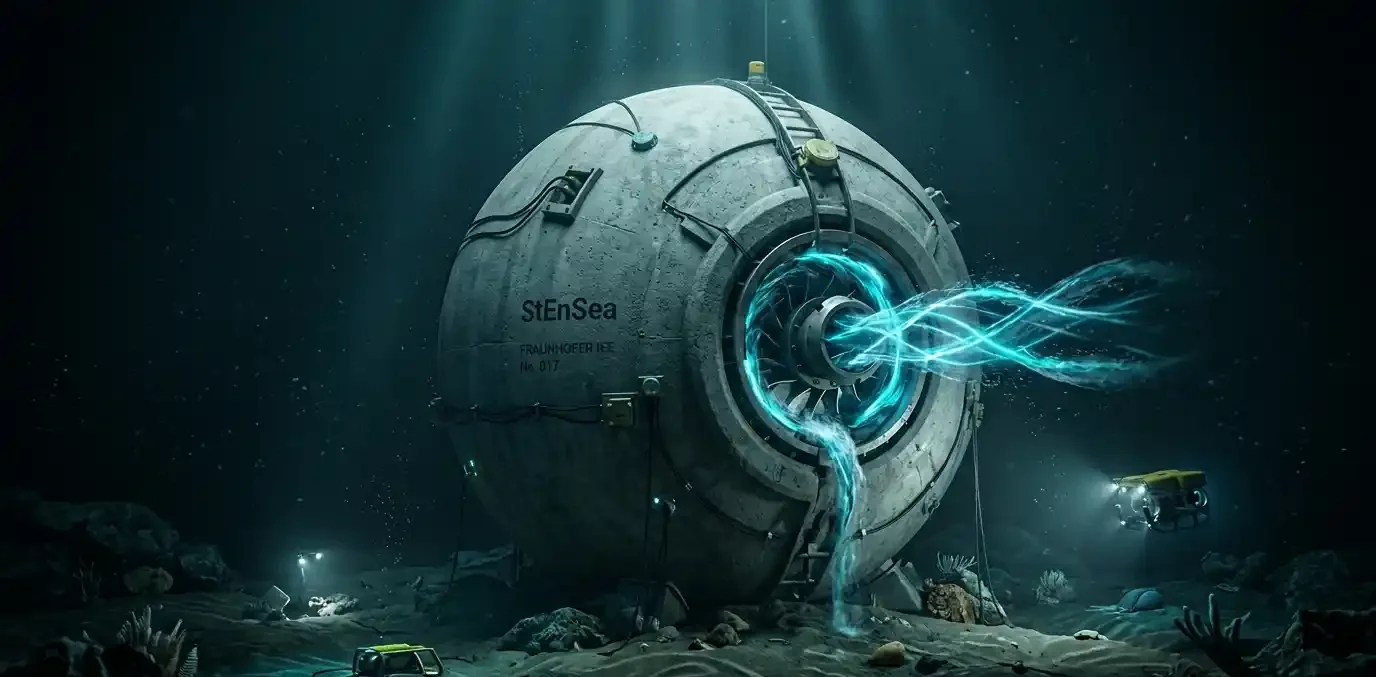
As the global energy transition accelerates, managing intermittent renewable energy has become a priority. The StEnSea (Stored Energy at Sea) project, led by the Fraunhofer Institute, offers a groundbreaking method of using deep-sea hydrostatic pressure as a grid-scale battery.
The Mechanics of Underwater Energy Storage
The system utilizes massive hollow concrete spheres anchored to the seafloor. During periods of excess renewable energy generation, electricity powers pumps to empty the spheres of water. The deep-sea pressure acts as the ‘potential energy’ storage medium.
Technical Specifications
The system is designed for durability and efficiency at scale:
When the grid requires power, valves are opened, allowing high-pressure seawater to drive internal turbines, which convert the potential energy back into electrical energy.
Sustainability and Scalability
Unlike chemical battery storage, StEnSea provides a solution that uses readily available materials. Its minimal environmental impact and significant storage potential make it a promising component for the future sustainable grid.



1 Comment
Interesting invention with these concrete balls