
A New Architecture of Safety from Industry Leaders
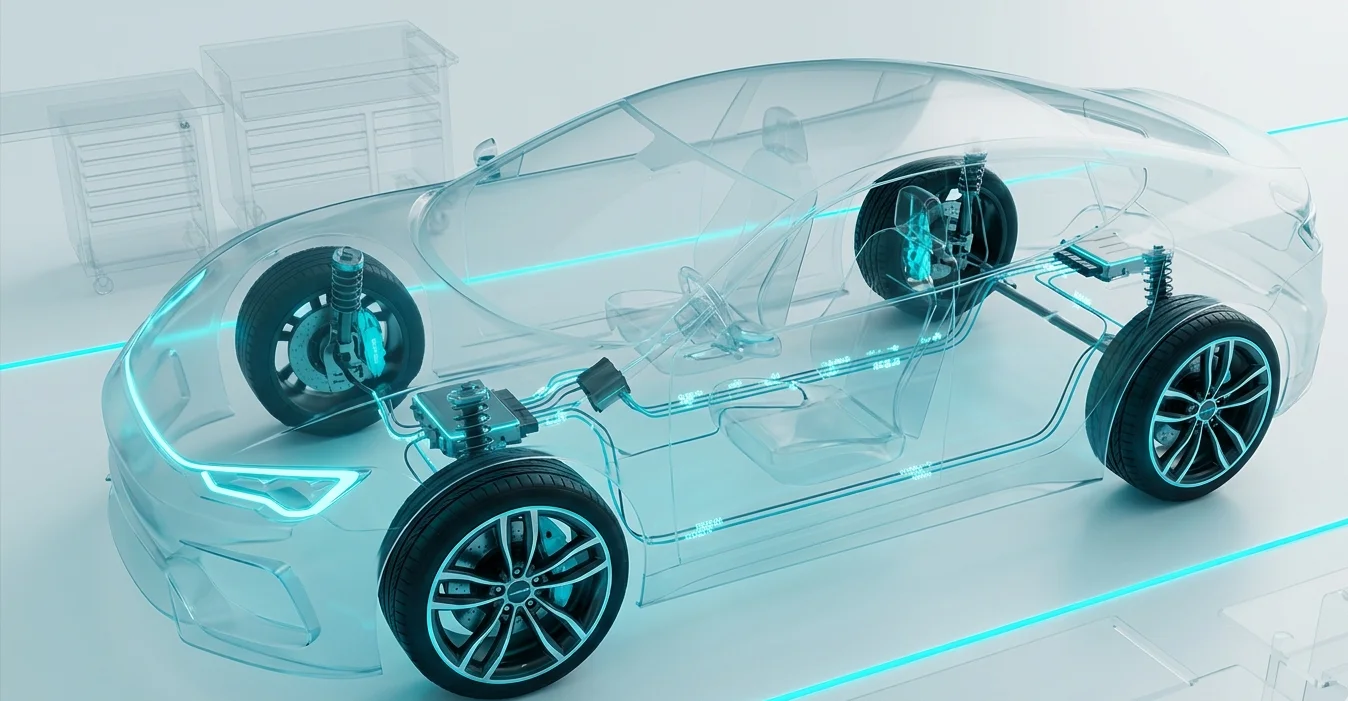
The automotive world is on the brink of a global paradigm shift in one of its most critical components-the braking system. Italian giant Brembo, whose calipers have been the benchmark for sports cars for decades, has introduced the Sensify system. This is not just a hardware update; it is a transition from mechanical interaction to intelligent digital control. The main feature is the abandonment of traditional hydraulics in favor of the Brake-by-Wire concept, where stopping commands are transmitted by electrical pulses.
Sensify combines hardware, software, and artificial intelligence. Instead of applying pressure to the pads uniformly through a common fluid line, the system processes data from sensors and makes decisions for each wheel individually. This allows the vehicle to remain as stable as possible even in the most challenging conditions, such as icy roads or sharp maneuvers at high speed.
How Sensify Works: Moving Away from Hydraulics
In a conventional car, the driver creates hydraulic fluid pressure by pressing the pedal. In the Sensify system, the pedal is an electronic simulator. A special control unit reads the force and speed of the press, analyzes road conditions, and transmits a signal to electromechanical actuators at each wheel. This eliminates the delay inherent in the movement of fluid through long tubes.
Thanks to the use of AI, the system learns continuously. It takes into account the distribution of the car’s weight in real-time, ambient temperature, and even the degree of pad wear. This provides a predictability of braking that is impossible to achieve with classical methods. The driver no longer feels the pedal pulsation during ABS operation, as the electronics independently modulate the effort at a frequency far exceeding the capabilities of hydraulic valves.
Benefits for Drivers and the Environment
One of the main advantages of Sensify is the reduction in braking distance. At a speed of 100 km/h, an 80-millisecond difference in reaction can result in an additional 4-5 meters of distance, which is often a critical safety factor. Besides speed, the system offers incredible flexibility in settings. Manufacturers will be able to programmatically change the braking character-from comfortable and soft in city mode to firm and aggressive on a race track.
- Increased Stability: Independent braking of each wheel allows for more effective combat against skidding.
- Eco-friendliness: The rejection of brake fluid makes the system safer for the environment, as fluid disposal is a complex and toxic procedure.
- EV Efficiency: Sensify syncs perfectly with energy recovery systems, allowing more energy to be returned to the battery during each stop.
Which Cars Will Get the Innovation in 2026
Brembo has already signed contracts with several major automakers. While the full list is kept secret, it is known that premium electric vehicles will be the first to receive the system. In 2026, Sensify is expected on top-tier models from Tesla. Other contenders include new generations of electric SUVs from BMW and Audi. The estimated cost of integrating such a system in a premium car ranges from 2500 USD to 4000 USD depending on the configuration.
The Future of Autonomous Driving
For autonomous cars, Sensify is a critical element. Traditional brakes are difficult to integrate with the digital brain of an autopilot due to mechanical inertia. Brembo’s digital system allows the AI to control the stopping process directly. This ensures a smoothness of motion that was previously only available to experienced drivers. In the future, we will see full integration of brakes with navigation systems, where the car will prepare for braking even before the driver sees an obstacle.

0 Comments