
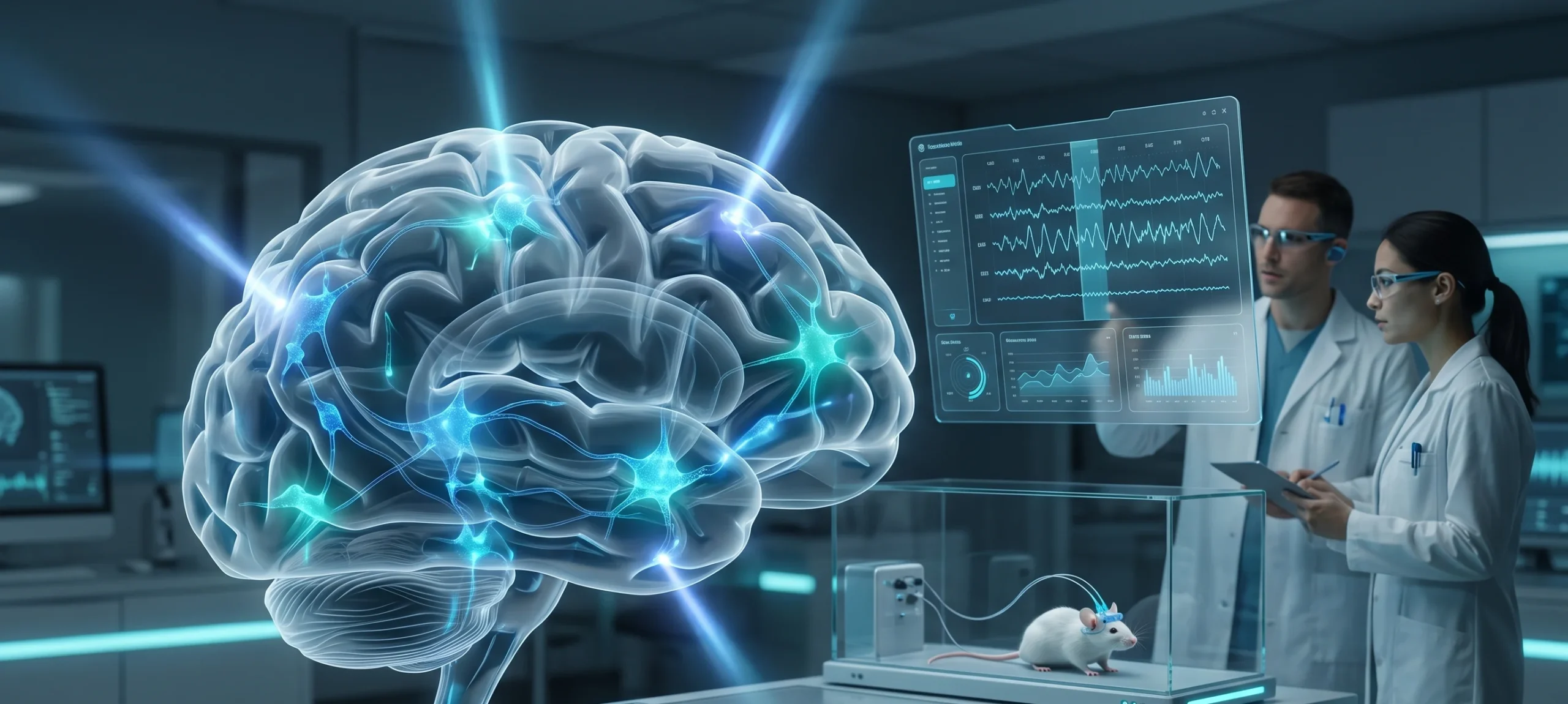
Neurobiological principles of slow-wave synchronization
Experiments on rodent models have demonstrated the possibility of artificially replicating specific neural activity patterns without placing the organism into a state of physiological sleep. Researchers focused on generating delta rhythms, which are traditionally recorded during deep sleep phases and are responsible for core restorative processes. The application of targeted light pulses stabilized the activity of cortical neurons, creating conditions for cellular recovery in real time.
A central focus of the study was examining how artificially induced oscillations affect the metabolism of the central nervous system. During natural deep sleep, the activation of slow waves promotes the clearance of cellular waste products and the optimization of synaptic connections. The new method confirmed that a similar clearance and stabilization effect can be triggered forcefully while the subject remains in an active, awake state.
Technical parameters of the system and experimental setup
Artificial stimulation relies on the deployment of invasive optical fibers and the expression of specific channelrhodopsins within targeted cell groups. Laser systems provide millisecond precision in light delivery, which is essential for establishing a stable wave amplitude. The table below details the recorded technical specifications used during laboratory testing sessions.
The modulation process demands a stable frequency, as any deviations from the specified delta-wave range result in desynchronization and the loss of therapeutic effects. The utilization of the blue light spectrum is dictated by the performance profiles of light-sensitive proteins, ensuring the fastest membrane response to external stimuli.
Impact on long-term memory and cognitive performance
One of the primary outcomes of the study involved evaluating behavioral responses and learning capacity following artificial neuromodulation sessions. Animals subjected to light stimulation during task execution demonstrated higher rates of information retention compared to the control group. This points to the activation of synaptic plasticity processes that typically occur exclusively during prolonged night rest.
During slow-wave activation, the transfer of information traces from short-term storage (the hippocampus) to the frontal cortex is recorded. Artificially launching this mechanism helps partially offset the effects of sleep deprivation, protecting the nervous system from overload and lowering cellular stress levels driven by extended wakefulness.
Advantages and limits of the current neuromodulation model
- Direct stimulation of specific regions without causing generalized nervous system inhibition.
- Acceleration of toxic protein compound clearance from the extracellular space.
- Preservation of basic motor functions during the implementation of the procedure.
- High equipment costs, with prototype development expenses regularly exceeding 100000 USD.
Scaling challenges and future clinical testing prospects
Translating this technology to human subjects presents serious technological and ethical hurdles. In its current form, optogenetics requires modifying the genetic material of cells to create light-sensitive channels. For safe human applications, scientists must develop non-invasive methodologies, such as transcranial magnetic or ultrasonic stimulation, capable of replicating similar delta rhythms from the surface of the skull.
The long-term consequences of artificially reducing natural sleep durations remain unexplored. Completely abandoning traditional rest cycles could lead to systemic disruption of hormonal balances and immune system operations, as sleep performs complex functions extending far beyond restoring the cognitive domain alone. Future research lines will target the interaction between artificial rhythms and the broader endocrine framework of the body.




0 Comments