
Scaling Biotech Methods for Vector Borne Disease Control
Verily Life Sciences, a subsidiary of the Alphabet holding company, has submitted an official application to the US Environmental Protection Agency (EPA) seeking approval for a new phase of its ecological insect control program known as Debug. The initiative involves the controlled release of 32 million male Aedes aegypti mosquitoes, which serve as the primary vectors for dangerous transmissible viral infections, including dengue, Zika, and chikungunya. The new testing phase is designed to cover several regions across California and Florida, where a steady increase in the population of these invasive pests has been documented.
The main distinguishing feature of the current campaign compared to previous field trials is the complete automation of insect sex separation processes using artificial intelligence and computer vision technologies. The project does not involve genetic modification of organisms but relies instead on utilizing natural biological population limitation mechanisms through infection with a specific strain of Wolbachia bacteria. This approach allows for a significant reduction in the target population density without deploying toxic chemical insecticides, to which mosquitoes are increasingly developing resistance.
Automated AI Sorting as the Basis of the Technological Process
For the successful implementation of the sterile insect technique (SIT), it is critically important to ensure that only male specimens are released. Male mosquitoes do not possess mouthparts capable of puncturing human skin; they feed exclusively on plant nectar and do not participate in hemophagy, meaning they do not consume blood and cannot transmit pathogens. On the contrary, the accidental release of even a small number of females within residential areas could lead to a localized spike in disease incidence and neutralize the positive impact of the ecological intervention.
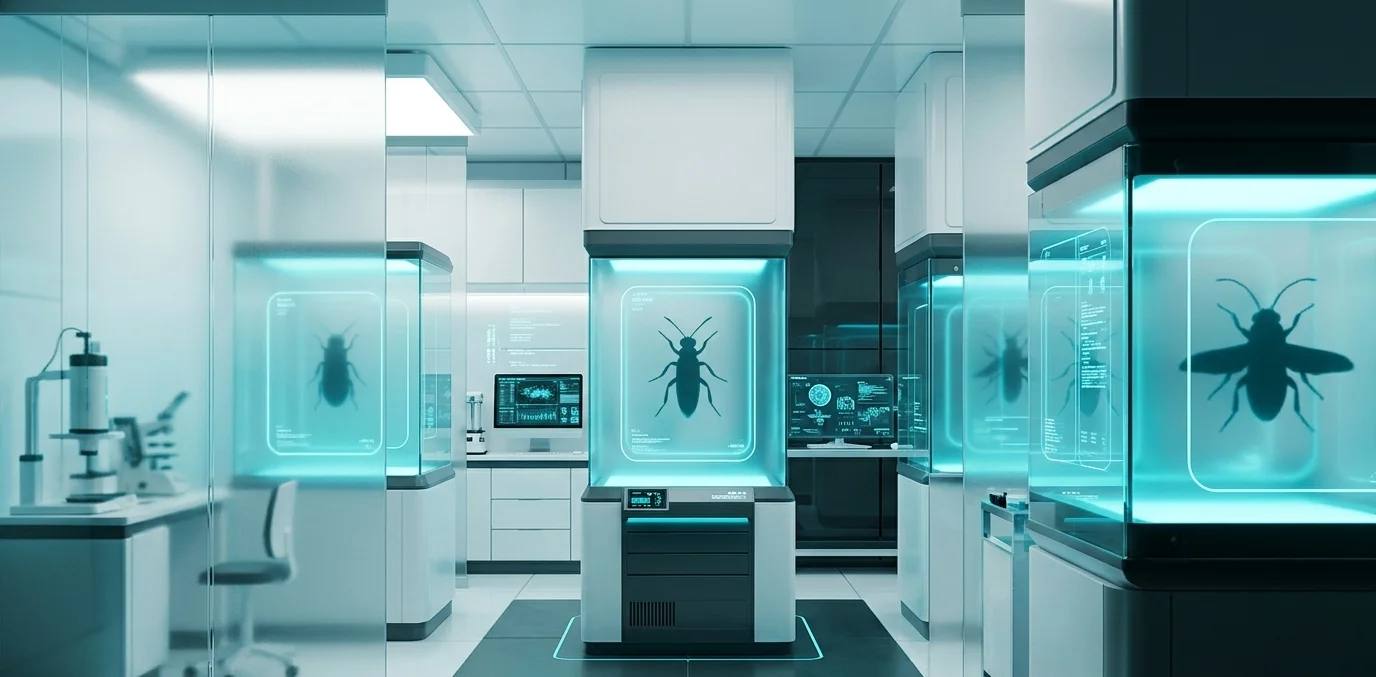
Previously, separating insects at early developmental stages was carried out mostly manually or through primitive mechanical sieves, since female pupae are on average slightly larger than male pupae. However, this approach carried a high error rate and did not allow for industrial production scales. Verily engineers integrated complex optical sensors and neural network algorithms into production lines to analyze geometric parameters, cocoon structure, and the developmental dynamics of each specimen in real time. The automated complex is capable of processing thousands of insects per minute, ensuring a sorting accuracy level exceeding 99.99 percent.
Biological Mechanisms of Cytoplasmic Incompatibility
At the core of the Debug project lies the phenomenon of cytoplasmic incompatibility caused by the endosymbiotic bacterium Wolbachia. This microorganism is extremely common in nature and is routinely present in the cells of nearly 60 percent of all insect species, but it is typically absent in wild Aedes aegypti mosquitoes. When male laboratory-reared mosquitoes from Verily, which carry Wolbachia, mate with wild females that do not possess the bacterium, the resulting zygote becomes non-viable due to disruptions in paternal DNA replication processes during the initial stages of cell division. As a result, the eggs laid by the female do not develop, and a new generation of pests simply fails to emerge.
Since the lifespan of an adult male in natural conditions ranges from a few days to two weeks, maintaining the population suppression effect requires a regular replenishment of the ecosystem with new batches of laboratory specimens. A gradual decrease in the number of reproducing mosquitoes leads to the natural decline of local disease transmission hubs. This method demonstrated high efficacy during previous limited trials in Singapore and select counties in California, where the presence density of vector mosquitoes dropped by more than 85 percent within a few months of systematic releases.
Logistics and Scaling of Production Infrastructure
To ensure an uninterrupted supply of biological material, Verily upgraded its laboratory complexes and specialized biofactories. Specifically, in May, a key production hub in Singapore was expanded, where new automated modules for larval rearing are being tested. The delivery of insects to the immediate release sites in the US is carried out in specialized containers with controlled temperature and humidity levels, which helps preserve high viability and activity of the males after transportation. The release of insects is coordinated using GPS trackers and specialized software that calculates optimal dispersion points based on building density analysis, climate metrics, and mapping of previous dengue case detections.



0 Comments