
- Development history and the concept of BYU Supermileage energy efficiency
- Design optimization and the use of composite materials
- Technical characteristics and powertrain parameters
- Driving strategy and cyclic burn and coast mode on the track
- Engineering challenges and technology implementation prospects
- Impact of student projects on the commercial automotive industry
Development history and the concept of BYU Supermileage energy efficiency
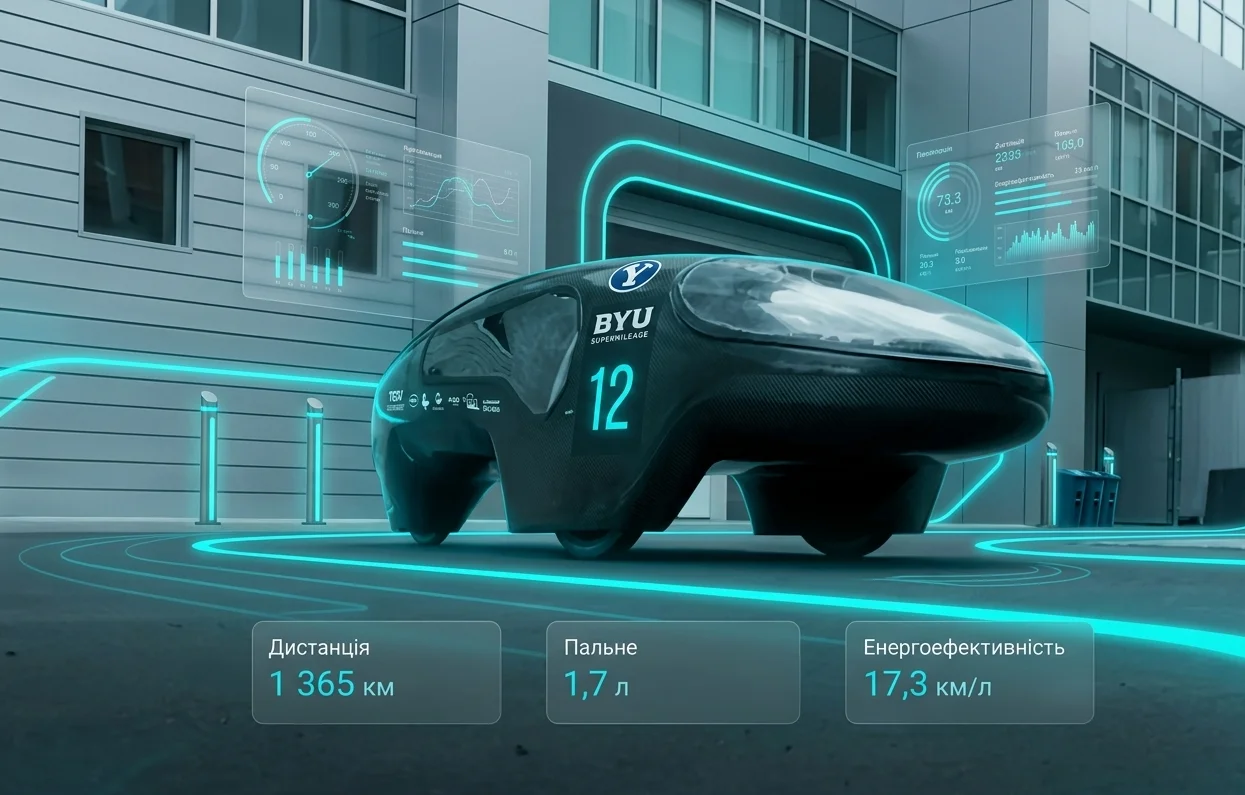
The energy crisis and the desire to minimize carbon emissions are forcing engineers to look for alternative approaches to vehicle design. While major automotive corporations are focused on the mass production of heavy electric vehicles, a team of students from Brigham Young University took a different path. They created an ultra-lightweight vehicle called BYU Supermileage, which demonstrates the ultimate capabilities of internal combustion engines. The main goal of this project is not to provide high speed or passenger comfort, but to achieve an absolute record of fuel efficiency within the annual Shell Eco-marathon engineering competition.
The concept of the vehicle is based on the total reduction of all types of resistance that usually occur during vehicle movement. This includes aerodynamic drag, tire rolling resistance, and internal energy losses in the powertrain. The students independently designed a monocoque body, where each structural element performs both a load-bearing and an aerodynamic function. This approach made it possible to abandon the traditional heavy frame, significantly reducing the total weight of the vehicle and ensuring smooth airflow around the structure.
Design optimization and the use of composite materials
To reduce the weight of the car, the developers used carbon fiber, which was manufactured using vacuum forming in an autoclave. This made it possible to achieve high body torsional stiffness with minimal wall thickness. The total weight of the vehicle, excluding the driver, is only a few dozen kilograms, which is a key factor in reducing energy consumption during acceleration. The shape of the body resembles a water drop, which has been recorded in aerodynamic studies as the most optimal geometric structure to minimize aerodynamic drag.
The vehicle wheels are equipped with special bearings with an ultra-low coefficient of friction, and the tires have high internal pressure to reduce the contact patch with the asphalt. This allows the car to continue coasting for a long time after the engine is turned off. In addition, the driver in such a vehicle is in a semi-reclined position, which made it possible to maximize the reduction of the vehicle profile height and decrease the frontal area projection.
Technical characteristics and powertrain parameters
The heart of the BYU Supermileage is a deeply modernized single-cylinder four-stroke internal combustion engine with a displacement of only 50 cubic centimeters. The factory base design of the engine was completely redesigned by students to increase thermal and mechanical efficiency. The traditional carburetor fuel delivery system was replaced with a precision electronic fuel injector developed in-house, which is controlled by a microprocessor engine management system.
The ignition system was optimized to work on lean fuel mixtures, where the air-to-gasoline ratio significantly exceeds standard stoichiometric values. This allows burning a minimal amount of fuel in each operating cycle of the engine. To reduce friction losses in the cylinder-piston group, special thin rings and synthetic lubricants with ultra-low viscosity were used, which retain their properties in a limited temperature range.
Driving strategy and cyclic burn and coast mode on the track
Impressive fuel efficiency figures are achieved not only due to technical equipment, but also due to a specific driving tactic known as the burn and coast mode. When moving on a test track, the internal combustion engine does not run continuously. The driver turns on the motor only for a short period of time to accelerate the light car to a certain maximum speed at the most optimal RPM, where the engine has maximum torque and efficiency.
After reaching the target speed, the engine is completely turned off, and the fuel supply stops. The vehicle continues to move solely due to the accumulated kinetic energy, rolling along the ideal surface of the track with minimal resistance. When the speed drops to a critical minimum, the driver starts the power unit again for a few seconds. Such a cyclic algorithm allows covering long distances with minimal use of fuel resources, which ensures the final result at the level of thousands of kilometers on a single tank.
Engineering challenges and technology implementation prospects
During the design of the BYU Supermileage, the team faced serious engineering challenges related to managing the thermal modes of the engine. Since the motor runs periodically and for short intervals, it does not have time to warm up to its operating temperature in the usual way. A cold start is usually accompanied by increased fuel consumption and unstable mixture combustion. To eliminate this effect, the students developed a thermal insulation system for the combustion chamber and cylinder block, which retains heat between engine activation cycles.
Another challenge was to ensure the stability of the lightweight body in crosswinds. Due to its teardrop shape and low weight, the car is highly sensitive to air flows from other vehicles or natural track conditions. The engineers had to change the position of the center of mass and optimize the contours of the bottom of the car to create a small downforce effect without increasing aerodynamic drag.
Impact of student projects on the commercial automotive industry
Technologies tested on such experimental prototypes are gradually finding their application in mass automotive production. Of course, consumers will not drive in a semi-reclined position in ultra-tight carbon capsules without safety systems and climate control. However, the principles of creating ultra-lightweight alloys, methods for optimizing the aerodynamic profile of the car bottom, and control algorithms for lean mixtures in injection systems are actively borrowed by major brands.
Modern hybrid powertrains in production cars partially copy the burn and coast principle, switching the load between the electric and gasoline engines to operate in areas of maximum efficiency. Thus, the work of student engineering teams acts as an accelerated testing ground for verifying the most radical ideas in the field of energy efficiency, which subsequently helps to make civilian transport more economical and environmentally friendly.




0 Comments