
The Impact of Geopolitical Instability on the European Automotive Market
The escalation of military conflict in the Middle East has triggered another wave of volatility in the global energy sector. Due to threats of oil supply disruptions, the price of Brent crude quickly crossed the 100 USD per barrel mark. This automatically led to a significant increase in gasoline and diesel prices at European filling stations, forcing consumers to look for alternative logistics solutions. The most notable consequence of this energy crisis has been a sharp acceleration in the adoption of battery electric vehicles (BEVs) across Europe.
Market analysts are recording a major shift in consumer priorities throughout the European Union. While previously the main drivers for purchasing an electric vehicle were environmental subsidies and eco-consciousness, in 2026 pragmatic calculation and the desire to ensure personal energy independence from fossil fuel fluctuations took center stage. New vehicle registration metrics demonstrate an anomalously high growth dynamic in the electric transport segment, significantly exceeding previous expert forecasts.
Statistical Market Indicators for Q1 2026
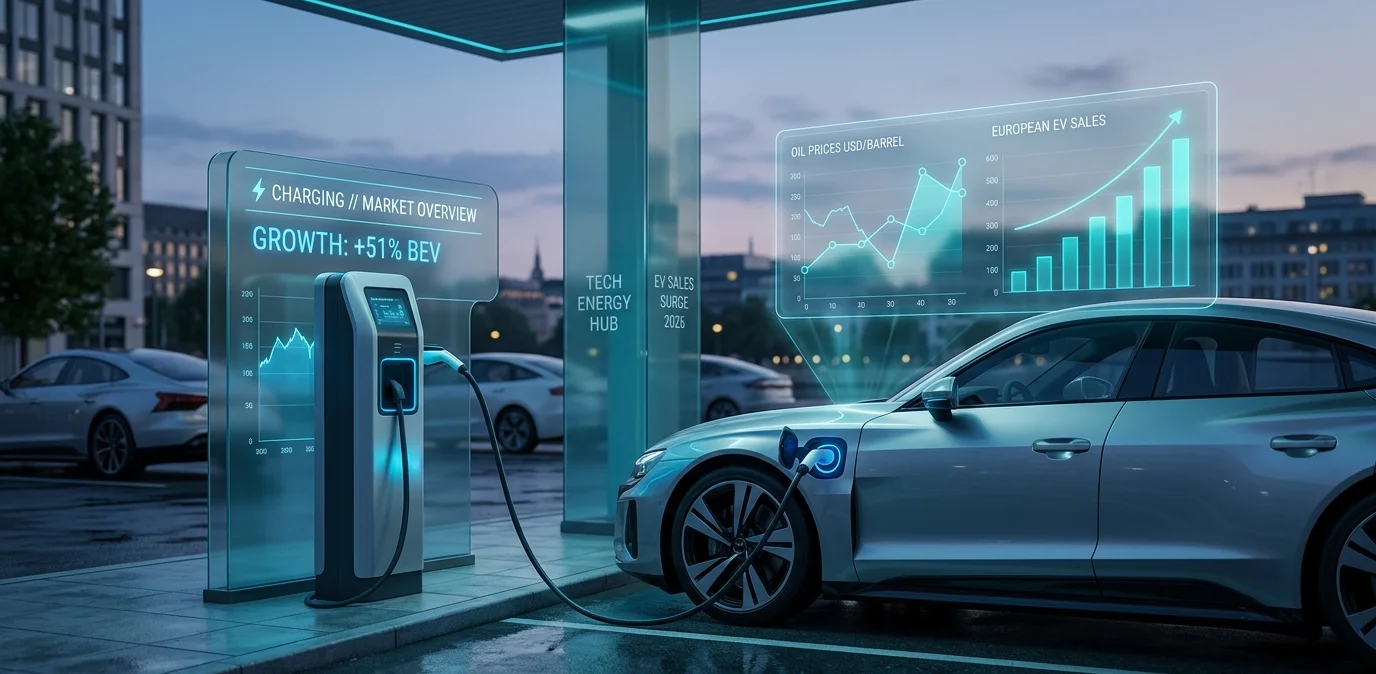
According to the latest reports from European automotive associations, registrations of new battery electric vehicles in key Western European regions jumped by 51% in the first month of the active phase of the fuel crisis alone. This quarterly acceleration represents the strongest market movement since the massive implementation of pandemic-era government financial incentives.
As the statistical data indicates, there is a direct correlation between rising energy prices and purchasing power in the automotive segment. Consumers are moving rapidly to mitigate the economic risks associated with owning vehicles powered by internal combustion engines.
Shifting Balance of Power and Expansion of Chinese Automakers
The current situation has created ideal conditions for Asian brands to strengthen their positions across the European continent. While European automotive groups are adjusting supply chains and attempting to contain production costs driven up by expensive energy, Chinese companies are offering ready-made, competitively priced solutions. Substantial inventory levels and relative independence from local industrial electricity price spikes allowed them to satisfy the sudden surge in demand.
Factors Accelerating Electric Vehicle Imports
- Competitive pricing strategies in the compact urban hatchback and crossover segments.
- Advanced manufacturing capabilities for lithium iron phosphate (LFP) batteries, which offer lower production costs.
- Rapid software adaptation tailored to the requirements of the European user base.
Several Chinese brands reported order increases for their electric models reaching hundreds of percent compared to the same period last year. This forces local regulatory bodies to balance protecting the domestic industrial base against the urgent need to rapidly expand the eco-friendly transport fleet to reduce total petroleum consumption in European nations.
Energy Security as a New Driver for the Automotive Industry
The current crisis clearly demonstrates that the transition to electric mobility is no longer just an environmental agenda. National and regional security considerations, alongside reducing dependence on energy imports from volatile world regions, have become key arguments for accelerating charging infrastructure deployment. Governments across Europe are already considering additional support packages for businesses investing in high-speed charging hubs and localized renewable energy generation systems.
Analysts project that even if the geopolitical situation stabilizes and oil prices drop, the market is unlikely to return to its previous state. Consumers who opted for electric transport during the crisis will appreciate the low operational costs and technological benefits of modern vehicles, reinforcing this shift as a long-term trend.




0 Comments