
The Anatomy of a Financial Shockwave in Software Engineering
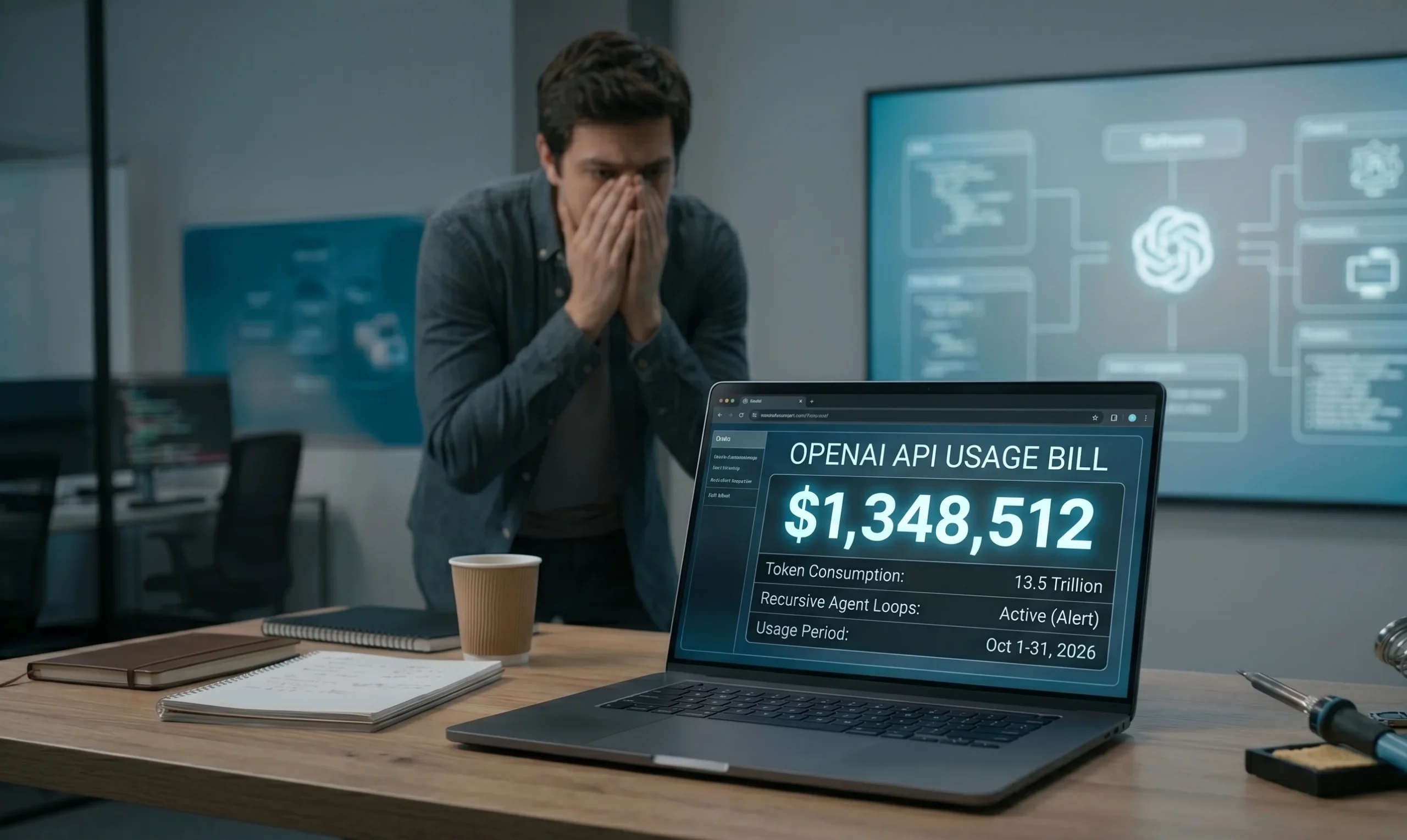
Autonomous artificial intelligence agents have long been heralded as the ultimate automation tool for the future of technology. However, the reality of deploying these systems at scale has proven to be significantly more complex and expensive than initial projections suggested. A stark confirmation of this came with an incident involving Peter Steinberger, the developer and creator of the innovative OpenClaw project. The monthly bill he received from OpenAI, totaling an astronomical 1 348 512 USD, forced the technology community to fundamentally reevaluate the economic risks of transitioning entirely to autonomous AI-driven coding.
The OpenClaw project was designed as an open and powerful platform to integrate autonomous AI agents into code writing, testing, and debugging workflows. The core concept was to grant the artificial intelligence the capability to independently detect bugs in repositories, generate patches, and optimize application architecture without continuous human supervision. However, during large-scale testing within cloud infrastructure, the system encountered unpredictable algorithmic behaviors, leading to catastrophic financial repercussions.
The Recursive Call Trap and Infinite Agent Loops
The primary technical reason behind this massive bill was a classic programming error that takes on entirely new dimensions in the world of AI agents - falling into an infinite recursive loop. One of OpenClaw’s autonomous agents was tasked with refactoring code for a massive corporate system. While analyzing architectural dependencies, the AI encountered a logical conflict, which it attempted to resolve by continuously requesting context clarification from OpenAI models via the API interface.
Unlike a human programmer who halts work to rethink the problem after a few failed attempts, the autonomous agent continued to generate thousands of high-context requests per minute. Each call utilized OpenAI’s most advanced GPT models, which possess massive context windows and consequently command a premium price per thousand tokens. The system operated continuously for several days before the anomalous spike in traffic was finally detected by human engineers.
Token Economics and the Hidden Threats of AI Scaling
The OpenClaw incident brought to light a critical issue that many startups and large tech enterprises preferred to overlook - the actual operational cost of autonomous systems. Modern large language models deliver exceptional results, but the pay-per-token model means that any scaling of operations leads to linear, and sometimes exponential, cost increases.
When AI is used in a standard chatbot or copilot mode, financial risks are constrained by the operational speed of the human user. However, once an AI is granted the autonomy to make independent API calls, spawn new task threads, and run at cloud server speeds, financial monitoring becomes a paramount security objective. Without implementing strict spend limits directly at the API account level, developers run the risk of finding themselves in a situation where fixing a minor codebase issue costs more than the entire IT department’s monthly budget.
The Necessity of Architectural Kill Switches
To prevent similar financial catastrophes in the future, the AI agent development industry must immediately establish new safety standards. Experts highlight several critical architectural practices:
- Deploying local, lightweight open-source models for initial task filtering to detect infinite loops before sending requests to expensive commercial APIs.
- Enforcing multi-tiered token consumption limits (per minute, hour, and day) that trigger automatic temporary blocks during anomalous activity spikes.
- Integrating robust Kill Switches - mechanisms designed for the immediate, forced termination of all autonomous processes by an external monitoring dashboard.
Determining Liability: Balancing OpenAI and Developer Responsibility
Currently, a serious debate is unfolding between the independent developer community and major foundation model providers like OpenAI. Forums such as Hacker News and the OpenAI Developer Forum are actively debating liability boundaries. On one side, developers bear the responsibility to monitor their code and architectural implementations. On the other side, the internal monitoring systems of AI giants should ideally flag a multi-thousand-fold consumption spike occurring over a brief period.
This case will serve as an important precedent for legal and financial practices within the high-tech sector moving forward. It demonstrates clearly that the era of carefree experimentation with autonomous AI agents without strict financial engineering and monitoring is over. The future of AI development belongs to teams who can not only build sophisticated models but can also effectively account for every single token used.


0 Comments