
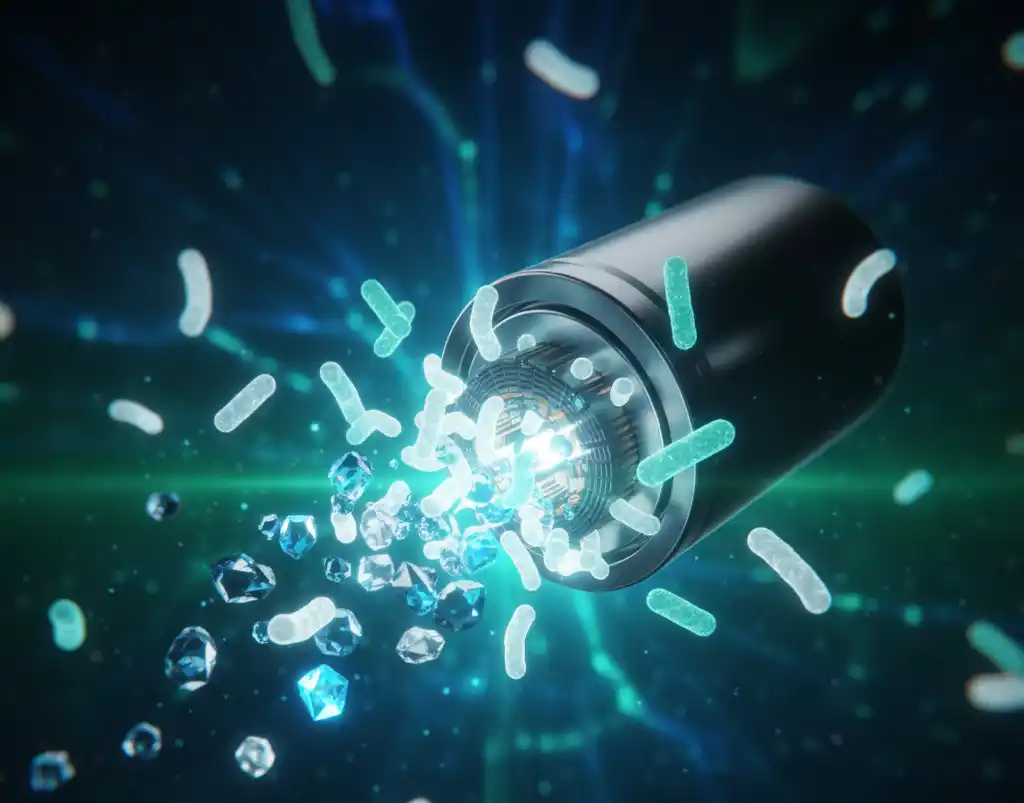
The rapid growth in demand for electric vehicles and portable electronics has led to a massive accumulation of lithium-ion batteries. These energy sources are a critical source of valuable and rare metals such as cobalt, nickel, and lithium. However, traditional methods of recycling them are energy-intensive, pollute the environment, and often economically unviable. Humanity faces a pressing challenge: how to safely return these resources to economic circulation? The answer may lie in the microcosm-specifically, in a new species of bacteria.
What is biorecycling and how does it work?
Scientists have discovered and are actively researching specialized bacterial strains capable of a process known as biorecovery or biorecycling. This innovative and environmentally friendly approach utilizes biological processes to extract metals from batteries. Unlike thermal or aggressive chemical processing, this method operates under mild conditions, significantly reducing the environmental footprint.
The specific mechanism of action of these microorganisms is striking in its effectiveness. The bacteria (often acidophilic strains) produce natural compounds-organic acids and other metabolites. These compounds react with the metal oxides contained in the cathode materials of lithium-ion batteries, dissolving them. Thus, valuable elements such as cobalt, nickel, and lithium are converted into a liquid solution, from which they can be easily isolated and purified for reuse.
Comparison with traditional disposal methods
Today, two main industrial approaches to battery recycling dominate: pyrometallurgy and hydrometallurgy. Both have significant drawbacks, making environmentally friendly battery recycling using bacteria particularly attractive.
Pyrometallurgy: Expensive and Dirty
- Pyrometallurgy (combustion at high temperatures, over 1400 degrees Celsius) requires enormous energy inputs, which leads to significant greenhouse gas emissions.
- High temperatures often result in the loss of lithium and some other light metals as they evaporate or settle in the slag, making the process inefficient.
Hydrometallurgy: aggressive chemistry
- Hydrometallurgy uses aggressive mineral acids such as sulfuric or hydrochloric acids, which creates significant amounts of hazardous and toxic waste that require complex and expensive neutralization.
- Although hydrometallurgy allows for the production of high-purity metals, it still requires large volumes of reagents and complex equipment.
Bioleaching: A Safe Alternative to Pyrometallurgy
Bioleaching is a genuine alternative to pyrometallurgy and hydrometallurgy. The process occurs at room temperature, significantly reducing energy consumption and, consequently, operating costs. Instead of expensive and hazardous chemicals, microbial metabolites are used, which are much safer for the environment.
Scientific studies show that, under laboratory conditions, bacteria can extract over 90% of cobalt and nickel from cathode materials. This makes the biological method not only environmentally friendly but also competitive in terms of efficiency in extracting metals from batteries.
Economics and scaling of biorecycling
One of the key aspects of implementing any new technology is its economic feasibility. Although pilot projects for battery biorecycling still require investment for optimization, long-term forecasts indicate its potential profitability. Reducing energy consumption and eliminating expensive acids significantly reduce the cost of the final product.
Significant efforts are currently focused on increasing the speed of the process. Bacterial leaching is inherently slower than chemical processing. Scientists are working on genetic modification or strain selection to increase metabolic rate and production of the necessary compounds. Success in this area will pave the way for industrial scale-up.
The Future: Safe Disposal of Electronic Waste
The technology behind this new lithium-ion battery recycling method has significant potential for applications beyond batteries. It could become the basis for the safe disposal of electronic waste (E-waste) in general. E-waste contains not only cobalt but also gold, silver, and rare earth elements, which can be removed using biotechnology.
The use of AI and advanced biotechnology enables the rapid identification and optimization of the most effective bacterial cultures for various waste types. This isn’t just recycling; it’s creating a true circular economy, where used resources become feedstock for new technologies. The successful implementation of cobalt-nickel bioleaching is a major step toward a cleaner, more resource-efficient future.
So, the discovery of a new species of bacteria is not just a scientific fact; it is a technological breakthrough that could solve one of the most pressing environmental problems of our time, making battery recycling safe, economical, and truly sustainable.

0 Comments