
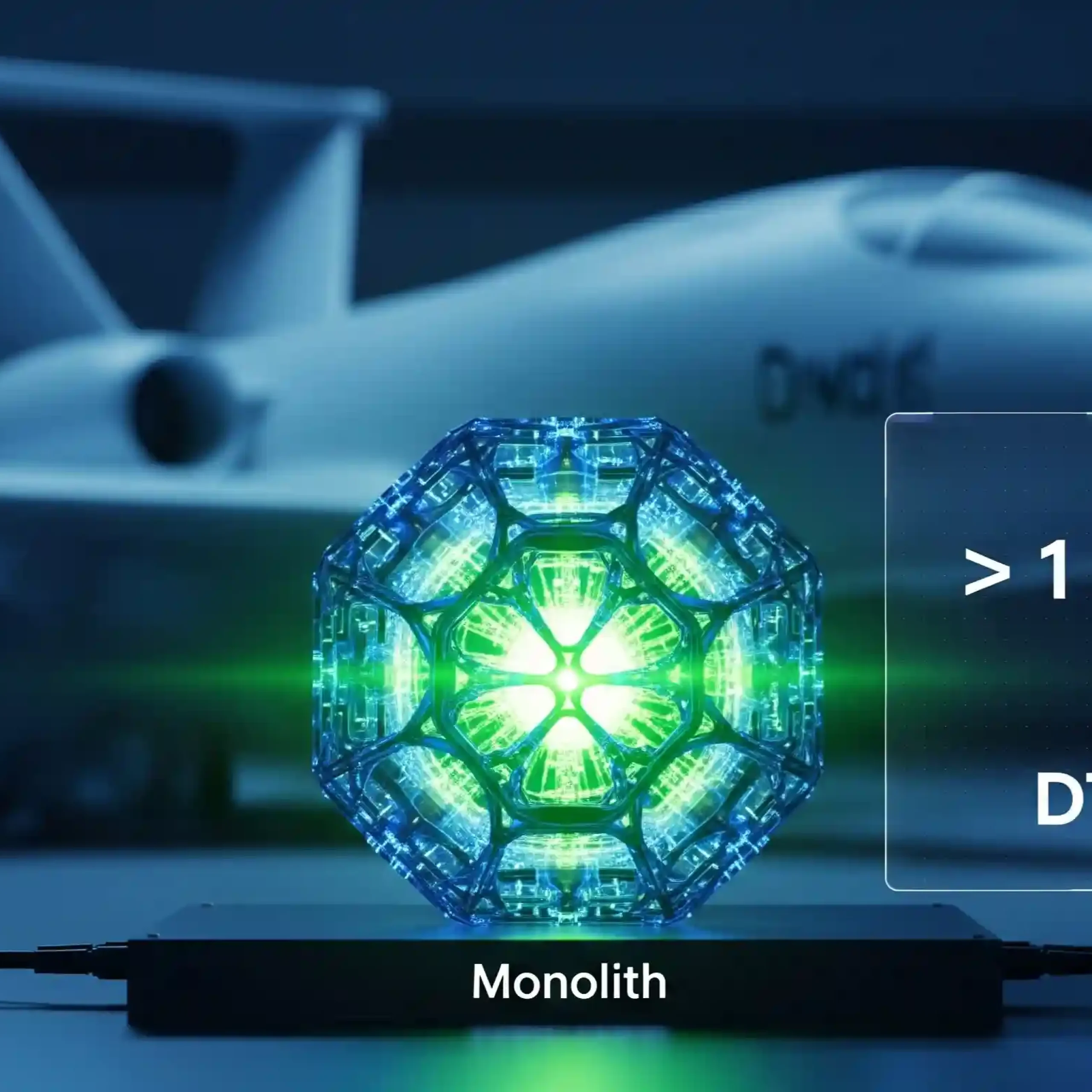
Scientists at the Technical University of Denmark (DTU) have made a breakthrough in clean energy engineering. They have developed a solid oxide fuel cell (SOC) called “The Monolith,” which boasts a record-breaking power-to-weight ratio, making this technology viable for the aerospace and mobility industries for the first time. This achievement, reported in the journal Nature Energy, marks a fundamental shift in the approach to creating energy devices.
Record performance: More than 1 watt per gram
The main problem with traditional fuel cells was their weight. Metal components used for connections and seals in conventional SOCs account for over 75% of the total device weight. This limited their use in mobile systems.
The Monolith completely eliminates this problem. Thanks to an innovative design and the use of ceramic 3D printing, Danish scientists have achieved a power density exceeding 1 watt per gram. This value is a critical threshold, opening the door to the use of fuel cells in aerospace technology, where every kilogram counts.
Design secret: Gyroid geometry and bioinspiration
The key to the Monolith’s success lies in its unique internal structure. The researchers were inspired by natural forms such as coral and butterfly wings, which feature gyroid geometry (Triply Periodic Minimal Surface, or TPMS).
- This mathematically optimized structure provides the maximum possible surface area for electrochemical reactions to occur within a given volume.
- It also promotes efficient distribution of gases and heat, significantly increasing the mechanical stability of the element.
- Using additive manufacturing (3D printing), DTU researchers have created a fully ceramic monolithic component, significantly simplifying the manufacturing process to five steps, as opposed to the dozens required for traditional SOC systems.
Potential Applications: From Jet Airplanes to Mars
The impact of the Monolith fuel cell on the future of transport is difficult to overestimate.
Aerospace industry
While replacing 70 tons of aviation fuel with lithium-ion batteries today would increase an aircraft’s weight to 3,500 tons (making takeoff impossible), Monolith technology makes electric and hydrogen-powered aircraft a reality. It could make jets up to 15% lighter, accelerating the transition to environmentally friendly hydrogen or “green fuel” in air transport.
Space Missions and Power-to-X
For space missions where the cost of launching 1 kg of payload into orbit is astronomical, the Monolith is a true lifesaver. For example, for Mars projects like NASA’s MOXIE (oxygen production from CO2), the new element could reduce the equipment’s weight from over 6 tons to 800 kg.
Furthermore, the Monolith is bidirectional. It can not only generate electricity but also function as an electrolyzer, producing hydrogen at a rate ten times higher than conventional systems. This makes it an ideal component for Power-to-X infrastructure (converting excess renewable energy into fuel).
Thus, the development of the DTU is more than just a record; it is a fundamental step towards the creation of lightweight, efficient, and environmentally friendly energy solutions, expanding the horizons of fuel cell use worldwide.




0 Comments