
Transitioning Geothermal Energy into Mass Market Production
Fervo Energy, a leading developer of enhanced geothermal systems (EGS), has officially initiated its initial public offering process. This strategic move aims to secure the capital required to expand its commercial footprint and demonstrate the viability of next-generation alternative energy on a global scale. Unlike traditional geothermal facilities that rely on specific tectonic locations with natural steam, the company’s approach allows for clean power generation almost anywhere by using horizontal drilling techniques.
Market analysts view this public debut as a critical indicator for the broader renewable energy sector. The influx of public capital is expected to help the firm drive down drilling costs, making geothermal power highly competitive with solar and wind while providing an uninterrupted baseload power supply regardless of weather patterns.
Technological Implementation of Horizontal Deep Drilling
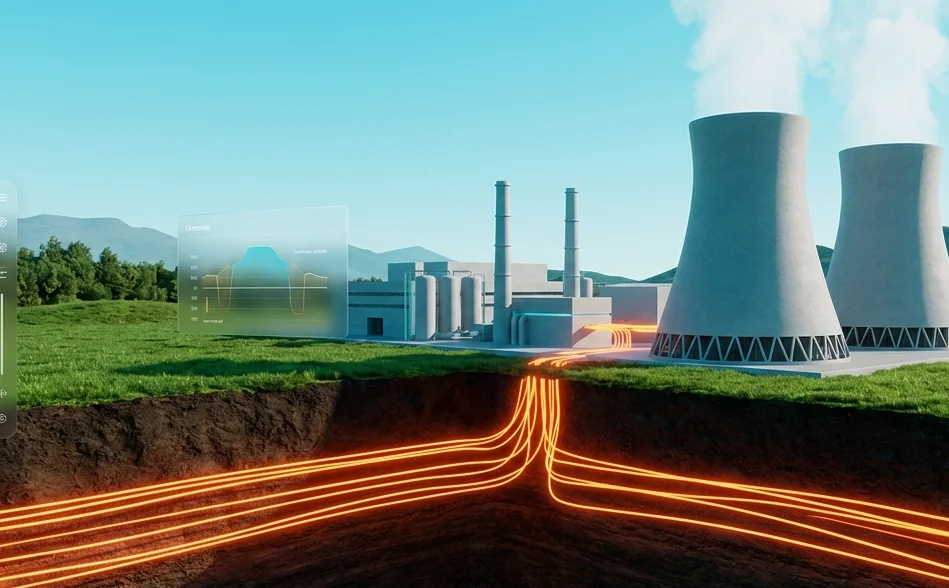
The historical bottleneck for geothermal adoption has been geographical availability. Fervo Energy bypassed this constraint by adapting proven horizontal drilling methodologies from the oil and gas industry to engineer artificial geothermal reservoirs. Engineers drill a pair of operational wells, connecting them via a network of horizontal fractures within deep, hot granite formations several kilometers beneath the surface.
Cold water is injected into the first well, circulates through the heated rock matrix to absorb thermal energy, and returns to the surface via the second production well as high-pressure steam or hot fluid. This steam drives a standard turbine assembly to generate electricity. The closed-loop design ensures minimal fluid loss and zero greenhouse gas emissions during operation.
Economic Performance and Comparative Efficiency Analysis
To understand the investment thesis behind this technology, it is useful to evaluate how advanced geothermal power stacks up against other mainstream zero-carbon energy sources, particularly regarding capacity factors.
This high capacity factor positions advanced geothermal energy as a premier candidate for powering massive industrial operations and continuous-uptime data centers that require clean, reliable, around-the-clock electricity.
Financial IPO Objectives and Sector Specific Risks
Despite technical milestones, the company remains exposed to steep upfront capital requirements for every new field development. Drilling down to depths exceeding three kilometers requires highly specialized equipment capable of enduring subterranean environments hotter than 200 degrees Celsius. Transitioning to a public structure unlocks access to institutional capital, which is essential for scaling from isolated commercial contracts to multi-facility energy parks.
However, the timeline for investment amortization presents a variable risk factor. While initial drilling optimizations in Nevada reduced costs by 40%, the overall asset-heavy nature of EGS projects demands significantly more initial funding compared to solar installations. Market observers will closely monitor the execution of the ongoing project in Utah, which serves as the primary test case for utility-scale commercial viability.
Grid Integration Prospects and Future Outlook
Widespread deployment of Fervo Energy’s technology could profoundly reshape grid architecture. Because these modern EGS plants can operate flexibly, they can adjust output rapidly to balance out intermittent drops from neighboring solar or wind installations. This capability mitigates the reliance on expensive lithium-ion battery storage arrays or fossil-fueled peaker plants.
Over the long term, scaling advanced geothermal solutions offers nations an avenue to curb energy import reliance while accelerating industrial decarbonization initiatives ahead of mid-century net-zero milestones.



0 Comments