
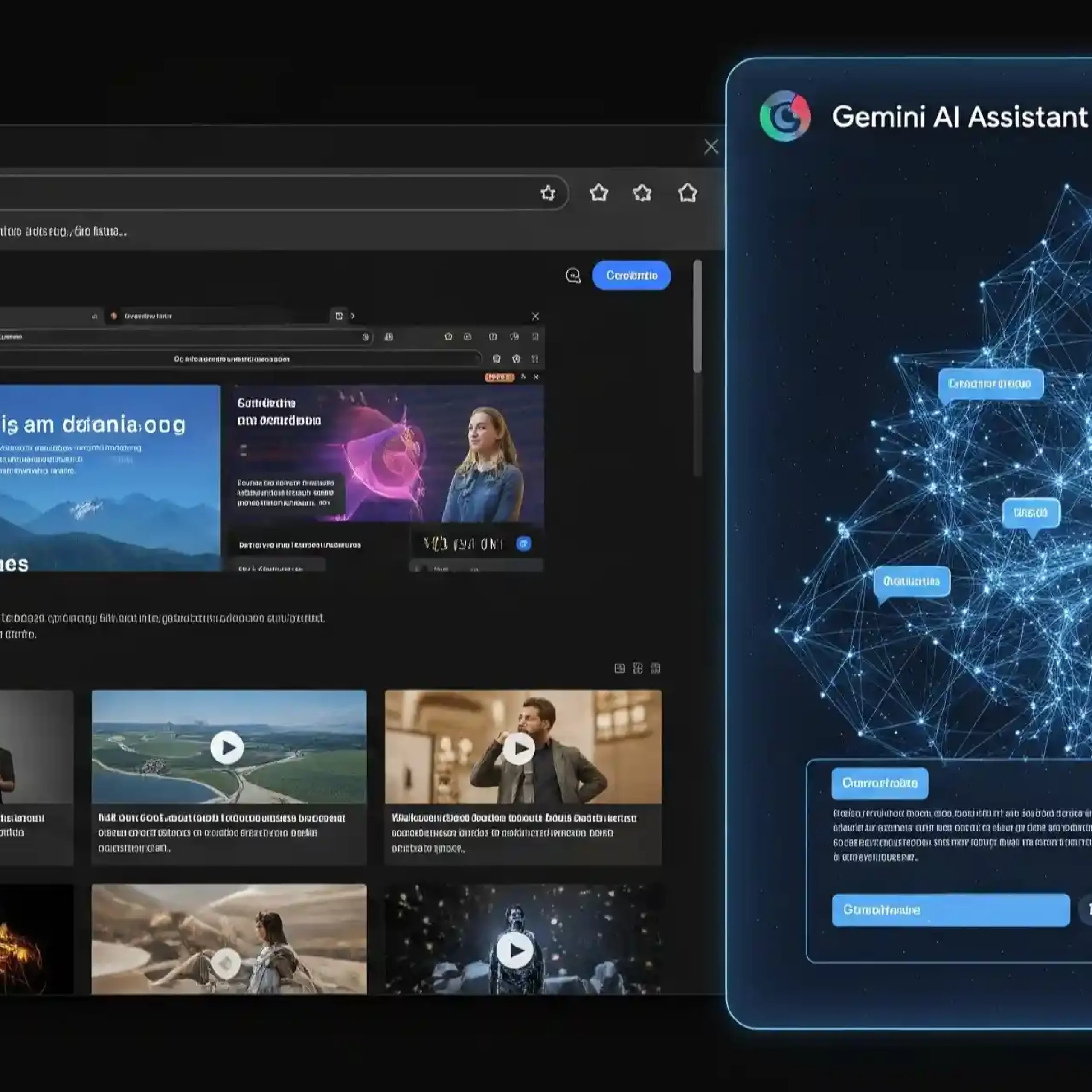
The era of Google’s two separate operating systems for mobile devices and laptops appears to be coming to an end. Google has officially announced its ambitious plan: to merge Android and ChromeOS into a single converged platform that will become the primary operating system for laptops and PCs. This decision, long rumored, marks a strategic shift designed to strengthen Google’s position in the PC market, challenging the dominance of Windows and macOS.
Evolution, Not Destruction: What’s Next for ChromeOS?
The title “Goodbye, ChromeOS?” is dramatic, but the point isn’t immediate disappearance, but rather a fundamental evolution. Google doesn’t plan to simply throw away the legacy of ChromeOS. Instead, the company will build on its successes, particularly its lightweight design, speed, and web app support, integrating them into the more powerful and flexible Android architecture.
This strategic move is the culmination of Google’s years-long effort to unify its ecosystems, formerly known as the Andromeda project. Now that Android has become a mature, universal system, its core becomes the ideal foundation for creating a platform that will work seamlessly on both touchscreen tablets and laptops with a keyboard and mouse.
Why Now: Qualcomm Partnership and the ARM Revolution
Synergy with ARM
The merger decision is directly related to the growing popularity of ARM processors in the PC market. Joint development with Qualcomm, aimed at optimizing Android for Snapdragon chipsets (such as the Snapdragon X Elite/Plus), is critical. The new converged OS maximizes ARM’s energy efficiency, delivering long battery life and the always-on connectivity that Apple Silicon has set as the new standard.
Benefits for developers
A single converged platform significantly simplifies the development process. Instead of optimizing their products for two different systems (ChromeOS and Android), developers will be able to create a single app that will run seamlessly across billions of Google mobile and desktop devices. This will significantly increase the number of high-quality Android apps on PCs.
SHI-centricity: Local Gemini and the Future of Interaction
A key element of the new operating system will be the deep integration of Gemini’s AI models. The new system will be designed to efficiently run on-device AI. This will allow Gemini to perform complex tasks-from document summarization to code or image generation-without latency or sending sensitive data to the cloud.
SI features will be built into the system’s core, improving search, file organization, and adapting the interface to user scenarios. This puts Google’s latest OS in direct competition with Windows 11 and its SI integration.
Forecasts and challenges on the path to unification
Challenges
While the prospects for a unified OS are exciting, Google faces a number of challenges:
- Interface Optimization: Create a truly intuitive desktop interface for Android that is easy to use with a mouse and keyboard.
- Performance: Delivering high performance for resource-intensive programs traditionally run on the x86 architecture.
- Transition Period: A smooth transition for Chromebook users.
Prospects
If Google and Qualcomm can solve these problems, the new converged system could truly revolutionize the laptop market. This combination promises not just a new operating system, but a holistic, AI-centric digital experience where your smartphone and laptop work seamlessly together. This makes Android not just a mobile OS, but a universal technology core.



0 Comments