
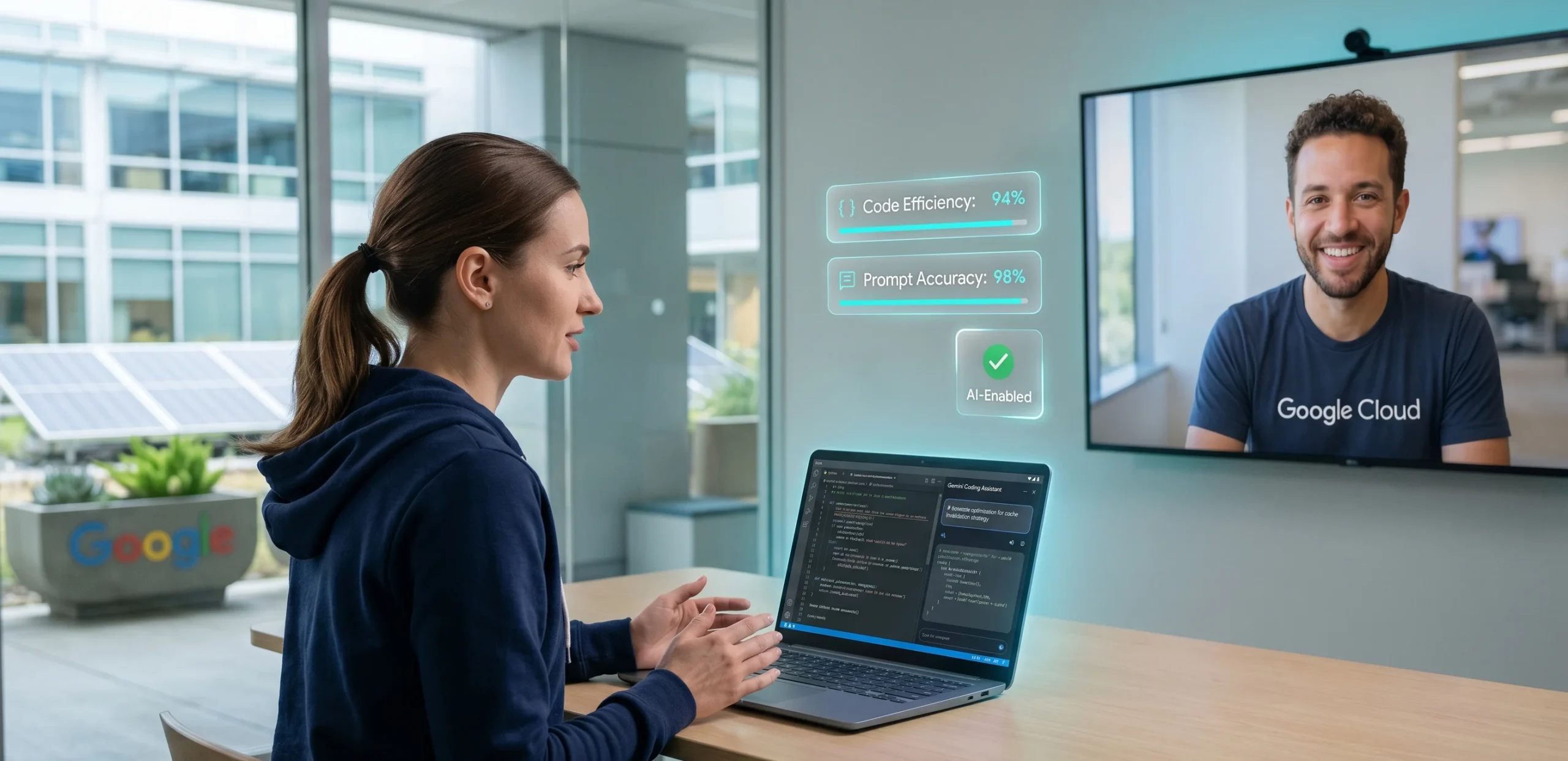
A Shift in Google Technical Interview Policy
Google has officially updated its internal guidelines for technical interviews, allowing candidates to utilize artificial intelligence tools during coding assessments. This move marks a significant departure from traditional methods that prohibited any external assistance. The decision recognizes that AI-driven development is becoming a standard practice in the software industry. By permitting these tools, Google aims to evaluate how engineers leverage modern technology to solve complex problems efficiently, rather than testing their ability to memorize syntax under pressure.
The Rationale Behind the Policy Change
The tech industry is evolving rapidly, and the tools used by developers are changing along with it. Internal data suggests that engineers who use AI assistants like Gemini can complete tasks significantly faster without compromising quality. By allowing AI in interviews, Google mirrors the actual working environment. This approach reduces the artificial difficulty of the interview and provides a clearer picture of a candidate’s problem-solving workflow. It focuses on the developer’s ability to direct the AI and critically analyze its output.
Guidelines for AI Usage in Interviews
While AI is now allowed, Google has established strict parameters to ensure a fair and rigorous assessment. Candidates must remain transparent about the tools they are using and must be able to explain every line of code generated. The interviewers will focus more on why a specific approach was chosen rather than how the code was typed. Furthermore, candidates may be asked to modify the code manually to demonstrate their foundational understanding. This ensures that the candidate is the master of the tool, not just a passive user copying results.
Impact on Candidate Preparation
Prospective Google employees must now adapt their preparation strategies. While understanding data structures and algorithms remains vital, mastering prompt engineering is becoming equally important. Candidates need to demonstrate that they can provide clear, concise instructions to an AI to reach an optimal solution. The ability to spot hallucinations or inefficient patterns in AI-generated code is now a key metric for seniority. Practice sessions should now include working with AI to see how it handles edge cases and large-scale architectural requirements.
Changing the Evaluation Metric
Google’s recruiters highlight that this change allows for a deeper dive into system design and soft skills. Since basic coding tasks are streamlined, there is more time to discuss security, performance optimization, and long-term maintainability. The interviewer can observe the candidate’s thought process in real-time, focusing on how they structure requirements and handle ambiguity. This shift makes the interview a collaborative problem-solving session rather than a high-stakes memory test, which often leads to better hiring outcomes.
Future Industry Trends
As a trendsetter in the tech world, Google’s policy is expected to influence hiring practices across the globe. Many startups and established tech firms are likely to follow suit, integrating AI into their screening processes. This transition signals a broader movement toward valuing higher-level engineering skills over basic implementation. While entry-level roles may face higher competition due to AI automation, the demand for engineers who can manage complex AI-human workflows will continue to grow, potentially increasing salaries for top-tier talent.
Final Thoughts for Applicants
The legalization of AI in interviews is not a shortcut; it is a higher standard of accountability. Candidates should focus on the ‘Big Picture’ of software engineering. Use AI to handle the boilerplate, but be ready to defend the architectural decisions and handle the edge cases that the model might miss. Success in the new era of Google interviews depends on the synergy between fundamental computer science knowledge and the expert application of generative AI technologies.




0 Comments