
The unusual discovery in the Caribbean and first technical evaluations
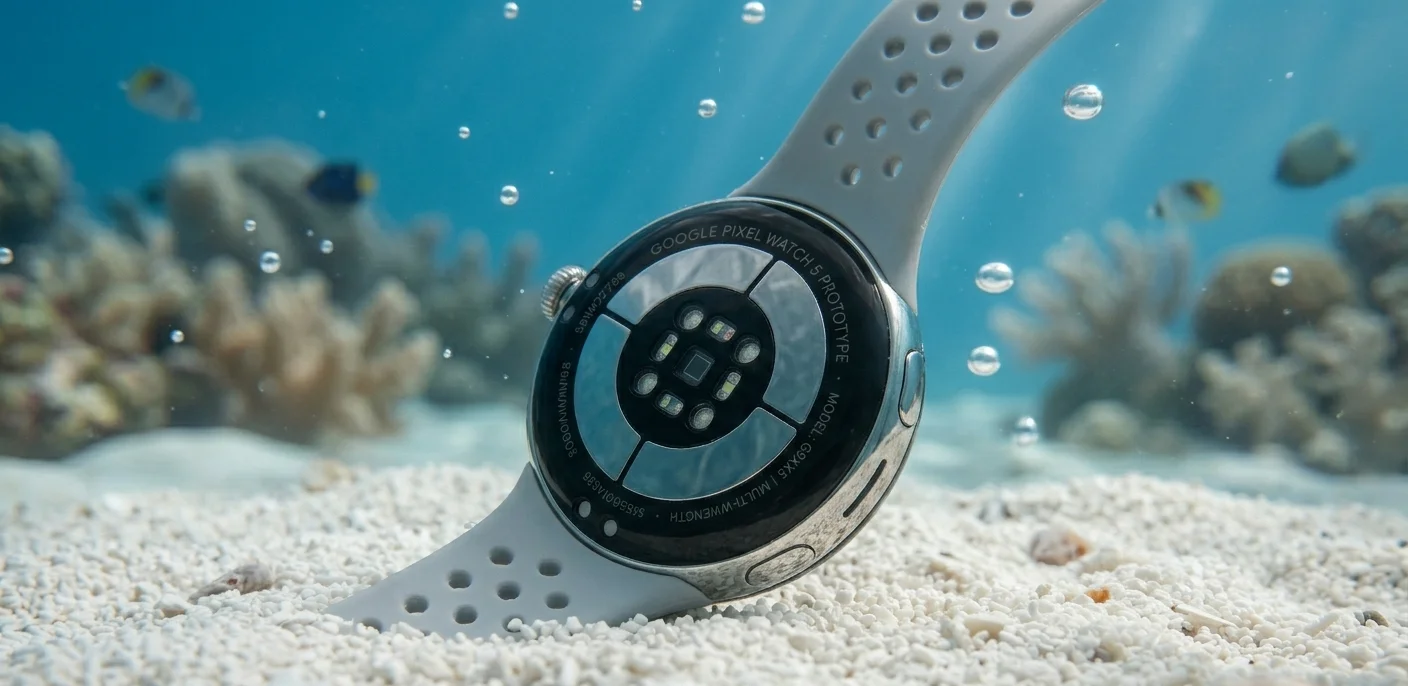
Engineering samples of mobile devices often fall into the hands of journalists or tech enthusiasts under quite mundane circumstances. However, the leak that occurred at the end of May 2026 near the island of Saint Martin claims the title of one of the most unconventional in industry history. A diver during a routine descent discovered a functioning smartwatch resting on the sandy bottom. A detailed inspection of the case markings and internal engineering menus revealed that this is the unannounced fifth generation of Google’s wearable line.
The device maintained complete water resistance despite being submerged in salt water. Thanks to high component density and a new type of internal element isolation, no moisture penetrated the chassis. The battery’s backup power allowed the watch to remain in a semi-functional state, displaying the basic bootloader interface. This event immediately triggered a wave of discussions regarding the origin of the gadget – ranging from simple carelessness by a member of the testing team to a planned guerrilla marketing campaign.
Analysis of design features and body materials from the leaked photos
The first detailed images of the back of the device allow us to evaluate significant changes in design compared to the current fourth generation. Google decided to abandon the highly convex dome-shaped glass in favor of a more practical flat shape. The case features pronounced metallic edges with a matte brushed finish, pointing to the likely use of titanium alloy or reinforced stainless steel to increase resistance to mechanical damage and corrosion.
The change in the shape of the back panel directly affects the ergonomics of the wearable. The flat surface provides a better fit against the wrist, which is critical for the correct operation of optical sensors. The images clearly show laser engraving with the model identifier and a mark indicating it belongs to a test series. Engineers have also modified the strap attachment mechanism, making it compatible with heavier sports accessories.
New biometric sensor matrix and integrated technologies
The main technical innovation visible on the prototype is a completely redesigned sensor array on the bottom cover. Instead of the linear or circular LED layout of previous versions, a complex matrix structure consisting of several elements of different spectrums is used here. The marking indicates the integration of a sensor with support for multi-wavelength signal analysis.
This architecture allows for a significant expansion of the list of metrics recorded in real time. The updated hardware base is expected to provide measurements of pulse wave velocity, more accurate blood oxygen saturation analysis during movement, and improved electrocardiogram recording. A special coating on the optical window minimizes distortion from sweat or water residue during intense workouts.
Appearance scenarios and market perspectives
The appearance of a working engineering sample in the public domain months before the official announcement always poses additional risks for the manufacturer. There are two main explanations for how the gadget ended up at the bottom of the sea. The first scenario involves field testing of the water sports tracking system. Company employees often conduct tests in real conditions, and during one of the dives, the strap attachment might have failed under load.
The second scenario is a controlled information leak to assess the tech community’s reaction to the design change. Similar methods are used by major technology corporations to fuel interest in a product line without significant direct advertising expenses. In any case, the find confirmed the readiness of the hardware platform and Google’s intention to shift the positioning of its watch toward more professional solutions for sports and health monitoring.
Impact of the update on the Wear OS ecosystem
The new sensors will require substantial changes at the operating system level. Along with this device, an updated version of Wear OS is expected to debut, with a strong focus on data processing algorithms powered by local artificial intelligence models. This will enable personalized recommendations directly on the device, reducing latency and increasing user privacy. The official presentation of the final commercial version of the watch is scheduled for the company’s autumn hardware event.



0 Comments