
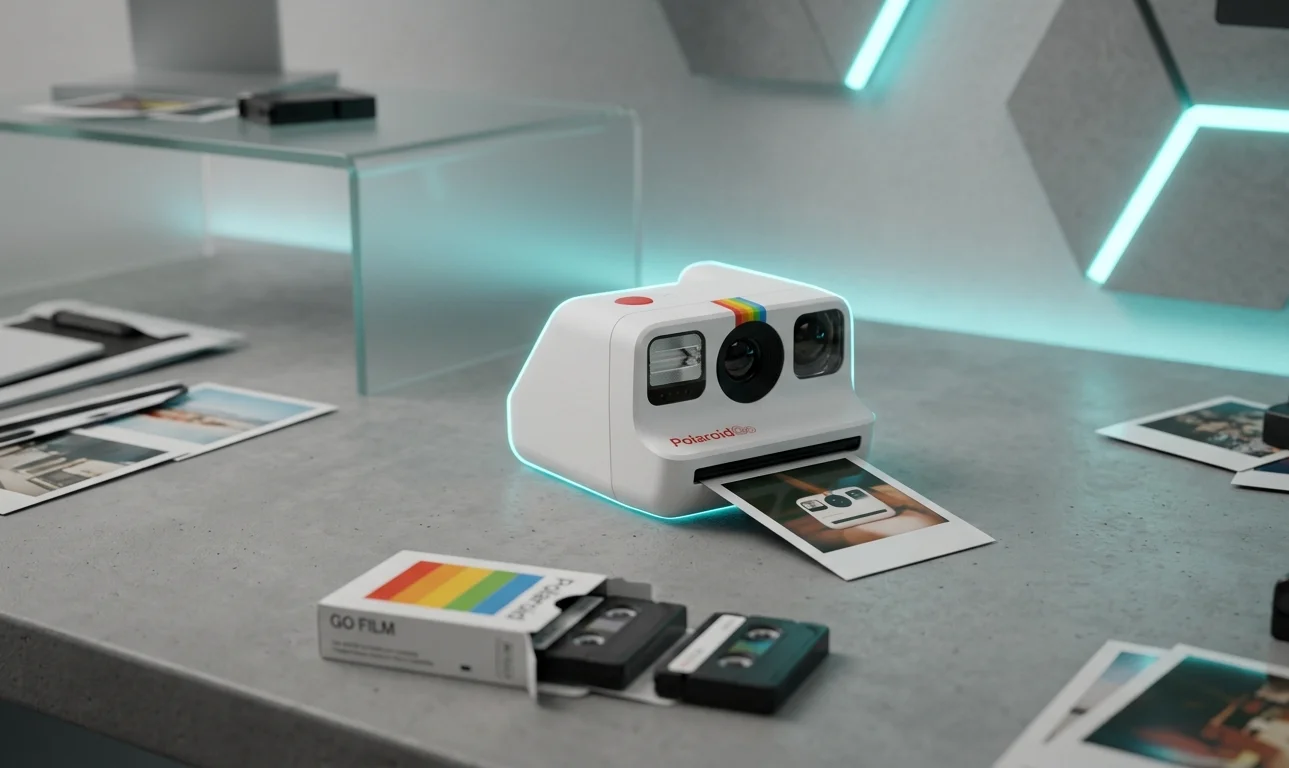
The Evolution of the Worlds Smallest Instant Camera
The rise of high-resolution smartphone cameras has not diminished the appeal of tangible, physical photographs. Polaroid continues to develop its ultra-compact hardware segment by introducing its third-generation micro camera. The Polaroid Go Generation 3 maintains the iconic design language of the brand while delivering upgraded internal mechanics aimed at improving image rendering in challenging lighting scenarios.
The primary engineering achievement of this model is the optimization of its optical system and the integration of a more accurate ambient light sensor. Designed for photography enthusiasts who prioritize portability, this pocket-sized instant camera fits easily into a small bag or jacket pocket. However, reducing the physical footprint of the chassis and the film format has not led to a proportional decrease in operating expenses.
Technical Specifications and Hardware Upgrades
With the third generation, the developers kept the exact physical dimensions of the previous iterations, focusing instead on internal component optimization. The device features a polycarbonate lens with a fixed 63.75 mm focal length. An updated automatic shutter and aperture management system reduces overexposure issues that were common in earlier Go editions. The flash system has also been recalibrated to prevent washed-out faces during close-up portrait photography.
The integrated battery provides enough power to shoot approximately 15 film packs on a single charge, making it reliable for travel. A full recharge cycle takes about 60 minutes via a standard USB Type-C port, allowing users to power the camera using the same cables as their other modern mobile devices.
The Economics of Instant Prints and Film Pricing
The main factor limiting the mass adoption of this miniature system is the ongoing cost of proprietary consumables. The specialized film packs utilize traditional chemical processes scaled down for a smaller surface area. The total dimensions of a finished photo print are 66.6 mm by 53.9 mm, while the actual square image area measures 47 mm by 46 mm. Image development takes between 10 and 15 minutes, during which the print must be shielded from direct sunlight.
A standard double pack of film containing a total of 16 exposures retails on the global market for around 20 USD. This positions the cost per individual shutter press at approximately 1.25 USD. Compared to alternative options in the instant format market, such as the Fujifilm Instax Mini lineup, the American brands chemistry remains more expensive per print. This price barrier encourages users to be more intentional with composition and scene selection rather than taking casual snapshots.
Ergonomics and Creative Shooting Modes
The exterior housing is constructed from matte ABS plastic and is available in multiple color schemes. Tactile controls are intentionally kept minimal. The top plate features a prominent red shutter button, a flash control button, and a small digital counter indicating the number of remaining unexposed frames in the camera. The front of the camera features a reflective coating next to the lens, serving as a framing mirror for self-portraits.
The camera features two creative shooting modes to expand photographic possibilities. The first is double exposure mode. When enabled, the device records two separate exposures onto a single sheet of film, allowing photographers to layer silhouettes and create artistic compositions. The second option is an integrated self-timer with a 9-second delay, offering ample time for the photographer to join group photos.
Comparing Miniature Analog and Digital Print Formats
When selecting a portable instant printing solution, consumers often choose between authentic analog chemistry and pocket-sized digital printers. The analog method employed by the Polaroid Go series relies on real chemical pods built into each card frame, producing one-of-a-kind prints with signature soft color gradations and rich contrast. Inkless digital printing options like ZINK offer lower per-print costs but lack the organic depth and character of a true light-reactive chemical development process.
Ultimately, the compact design of the Polaroid Go Generation 3 makes it a compelling tool for capturing everyday moments. It is best suited for individuals who accept higher long-term film costs in exchange for authentic analog results in a pocketable form factor.



0 Comments