
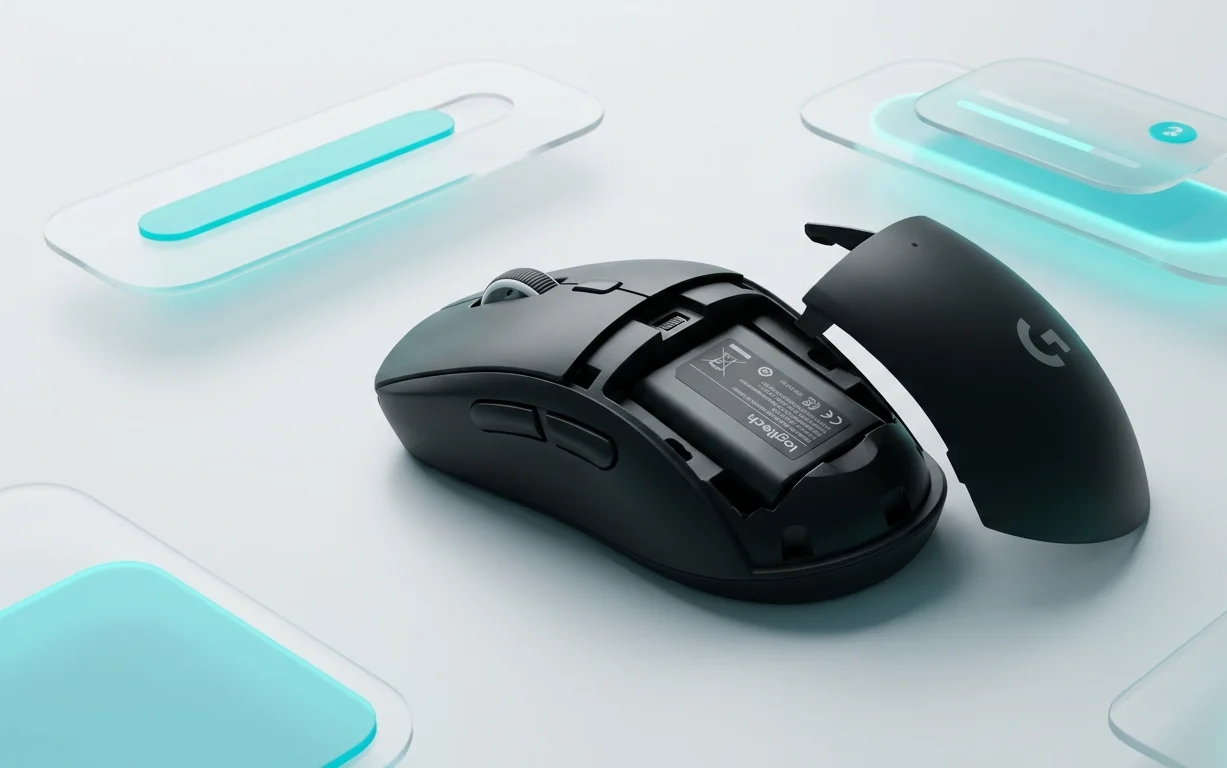
Why Logitech Is Changing Mouse Designs for Europe
Logitech, one of the world’s leading manufacturers of computer peripherals, has announced its intention to release special versions of its wireless mice for the European Union market. The key feature of these models will be the presence of a user-replaceable lithium-ion battery. This decision is not a voluntary initiative by the company, but a direct consequence of the entry into force of a new EU regulation aimed at improving the repairability of gadgets and reducing electronic waste.
Previously, most premium Logitech wireless mice, such as the MX Master series or G Pro gaming models, were equipped with hermetically sealed batteries. Replacing such a power element by the user was extremely difficult, and sometimes impossible without damaging the device’s casing. Now, the manufacturer is forced to rethink the architecture of its products to provide easy access to the battery using standard tools.
The Company’s Position: Risks of DIY Repair
Despite complying with legal requirements, Logitech maintains a critical stance on the concept of mass battery replacement by end-users. Company representatives have repeatedly expressed concerns that attempts at self-disassembly and replacement of lithium-ion elements could pose a safety risk.
Potential Threats to Users and Devices
- Battery Damage Risk: Compact batteries in mice often have a soft shell (soft-pack). Accidental puncturing of such a shell with a metal tool or excessive bending during removal can lead to a short circuit, overheating, and even fire.
- Design Complexity: To make a battery replaceable, engineers must add special connectors, holders, and removable panels. This increases the device’s complexity, its weight (although slightly, by a few grams), and can negatively impact reliability and water resistance.
- Loss of Water Resistance: Models with built-in batteries are easier to make hermetic. The presence of a removable cover complicates ensuring protection against liquid ingress.
- Increased Cost: Developing a new design and adding components for quick battery replacement could lead to an increase in the product’s final price.
Logitech emphasizes that their built-in batteries undergo strict quality control and are designed for a long service life, which often exceeds the moral obsolescence of the mouse itself. The company recommends that users contact certified service centers for any manipulations with electronics.
The EU Regulation: Ecology vs. Ergonomics
The new EU rules regarding batteries and accumulators are part of a broader “right to repair” strategy. They require that by 2027, all portable devices sold within the EU have a design that allows users to easily remove and replace batteries themselves. This applies not only to mice but also to smartphones, tablets, headphones, and so on.
The main goal of the regulation is to extend the service life of gadgets. If a battery loses capacity, the user can simply buy a new power element rather than discarding the entire device. This should significantly reduce the volume of electronic waste, which is difficult to recycle.
Regional Product Differentiation by Logitech
Interestingly, Logitech does not plan to implement a replaceable battery as a global standard for all its products. Models with easy battery replacement capability will be available exclusively in EU countries. For the rest of the world, including the US and Asian markets, the company will continue to sell classic versions with built-in power elements.
This approach creates a precedent for regional differentiation of technical characteristics. European consumers will get more repairable devices, but potentially slightly more expensive or with a less monolithic body. Users in other regions will have the familiar design but will face difficulties if the battery needs replacing.
Possible design changes and technical specifications of the new mice for the EU are listed in the table:
Conclusion and Outlook
Logitech’s decision to release mice with replaceable batteries for the EU is a clear example of how government regulation influences technological product development. Despite internal convictions and safety concerns, the company is forced to adapt to new environmental standards. This could be an impetus for other peripheral manufacturers to reconsider their repairability policies.
For consumers, this means more control over the lifespan of their gadgets but also requires greater responsibility and caution when performing DIY repairs. Future will show whether this approach becomes a global trend or remains a local feature of the European market. In any case, the electronics industry is moving towards greater sustainability, and a replaceable battery is just one step along this path.




0 Comments