
Science

KAIST replaces filters with water nanodroplets
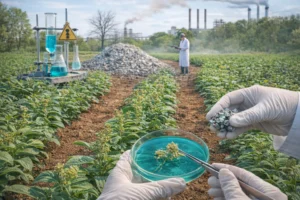
Phytomining: A Revolution in Metal Mining
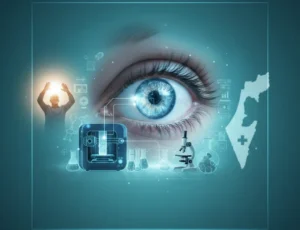
An artificial cornea restored vision after ten years of blindness.
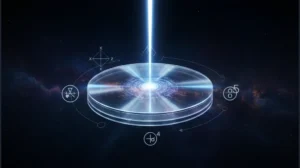
5D Memory: A Revolution in Data Storage for Tens of Billions of Years

DNA Revolution: Why Can 60,000 TB of Data Now Fit in 1 Liter?
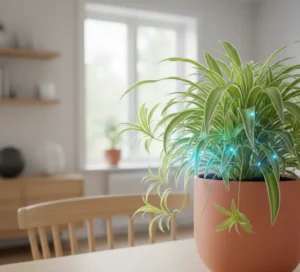
Chlorophytum: Why This Humble Plant Is the Most Powerful Natural Air Filter in Your Home

A bird that has conquered time: the scientific explanation for the revival of an extinct species on the islands

NotebookLM: A New Era of Deep Learning, Powered by Google AI

The world’s first microwave microchip has been created: a revolution in speed and energy efficiency.
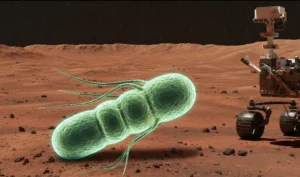
Global science is sounding the alarm: could NASA have accidentally introduced Earth bacteria to Mars?
New Atlas of Brain Development: Key Processes Continue into Adulthood
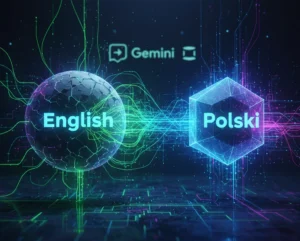
The LLM Paradox: Why ChatGPT and Gemini AI Failed at English, but Polish Was an Unexpected Triumph
Scientific Research
Science as the Foundation of Human Progress
The scientific method of understanding the world is the most effective tool humanity has ever created. It allows us to unravel the mysteries of nature, peer into the depths of space, and understand microscopic processes within cells. Modern science constantly expands the horizons of possibilities, turning yesterday's science fiction into today's reality. Studying the fundamental laws of the universe enables us to predict the future and adapt to global changes.
It is important to understand that scientific research is not limited to laboratories. It is a living process of constant search for truth that requires critical thinking and readiness to revise outdated dogmas. Every new discovery becomes a stepping stone to the next intellectual breakthrough, stimulating the development of related fields in technology and medicine. The dissemination of scientific knowledge helps form an educated society capable of rational decisions.
Key Areas of Scientific Research
Today, scientists pay special attention to the following fields:
- Astrophysics and the study of distant galaxies
- Quantum physics and the microworld of particles
- Genetics and molecular biology for longevity
- Ecology and methods for preserving biodiversity
Space and Universe Exploration
Exploring outer space has always been a symbol of human curiosity and the desire for the unknown. Modern telescopes and interplanetary stations provide us with data that fundamentally changes our understanding of the Solar System's origin. The search for exoplanets and signs of life beyond Earth remains one of the most exciting tasks of our time. Studying black holes and dark matter helps physicists test the boldest theories about the structure of space and time.
Every rocket launch or image received from orbit is the result of the work of thousands of people. The development of private cosmonautics makes access to orbit easier, clearing the way for the future colonization of other worlds. Space science unites nations around common goals, demonstrating the greatness of human intelligence in the face of the infinite vacuum.
Biotechnology and the Future of Humanity
Life science is experiencing a true renaissance thanks to the development of genome editing methods and synthetic biology. This opens the way to treating hereditary diseases and creating new types of fuels or materials. Understanding the mechanisms of aging and tissue regeneration can significantly extend the duration of active human life. However, such opportunities require the scientific community to strictly adhere to ethical standards and responsibility for experimental results.
Integrating biological systems with electronic components creates new types of interfaces that help people with disabilities return to full lives. Science is becoming increasingly interdisciplinary, uniting the efforts of chemists, physicists, and biologists. Only a comprehensive approach allows for solving global challenges such as pandemics or food shortages. Explore the world of science with us to understand the complex processes that govern our lives and be confident in a tomorrow built on knowledge.