
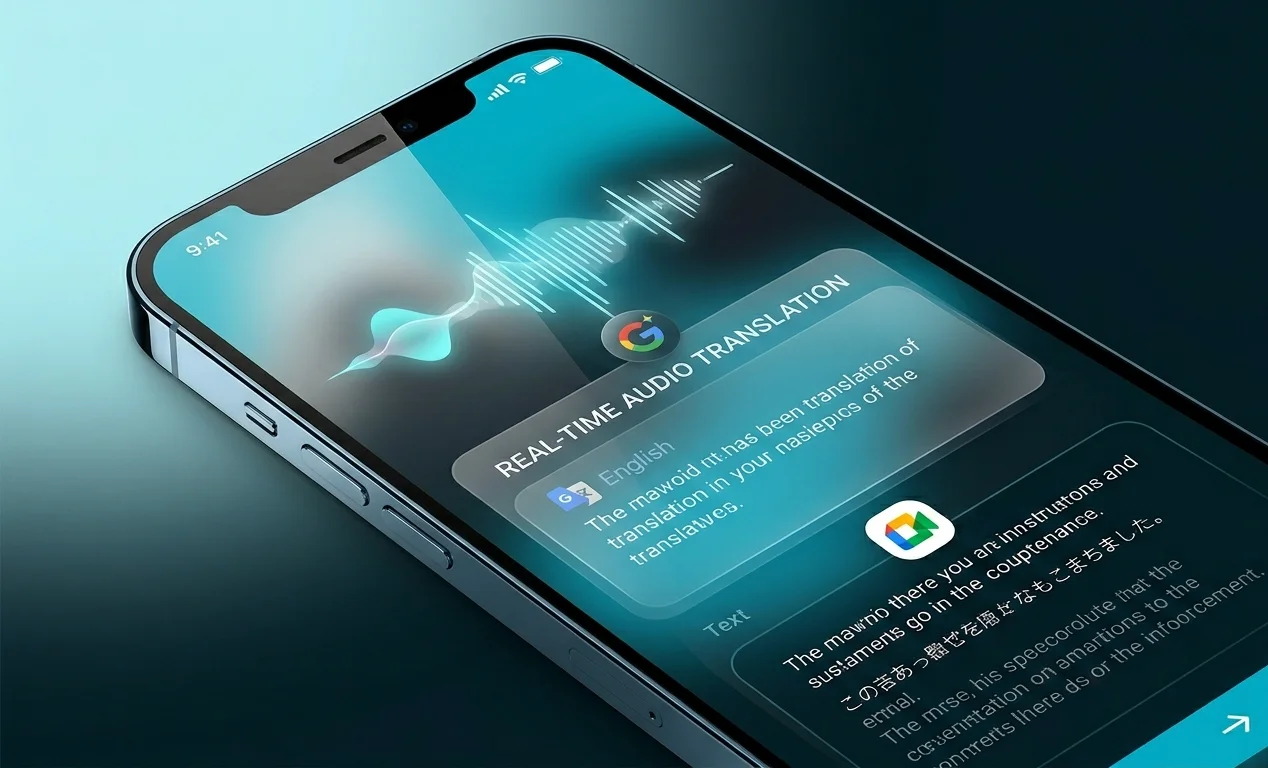
A New Era of Real-Time Machine Translation
Google has officially deployed Gemini 3.5 Live Translate, a specialized language model developed exclusively for real-time speech processing. This new technology is being integrated directly into the Google Translate mobile application and the Google Meet enterprise video conferencing platform. The primary technical milestone of this model is its ability to minimize audio transmission latency and more accurately recognize regional dialects, professional jargon, and speaker inflections.
Previously, simultaneous translation systems operated on a sequential principle. They waited for a logical pause in a sentence, transcribed the voice to text, translated it, and then synthesized the speech. The second-generation Gemini 3.5 Live Translate model utilizes end-to-end streaming analysis. This cuts the waiting time for the completed phrase to record lows, making digital dialogue feel as natural as human-to-human communication.
Technical Specifications and Model Architecture
Engineers optimized the model architecture to handle multimodal data efficiently. The AI analyzes not only the acoustic properties of the voice but also the context of preceding sentences, which is critical for languages with high levels of homonymy. Consequently, the system can distinguish between words that sound identical but carry different meanings depending on the topic of conversation.
To ensure stable operation within Google Meet, the model features an integrated background noise filtering algorithm. If a user is on a street, in an open-space office, or public transit, the system separates the speaker’s voice from ambient sounds before initiating translation. This significantly reduces AI hallucinations and prevents the insertion of non-existent words into the final text layout.
Integration into Google Meet and the Business Segment
Within the Google Meet video conferencing service, the new model functions in two modes. The first mode involves real-time caption generation on the screen for each participant in their native language. The second mode engages artificial voice synthesis, which speaks the translated text with minimal latency while attempting to replicate the original speaker’s tone and speech pacing.
For corporate clients, this update addresses the language barrier during international negotiations without the need for expensive live simultaneous interpreters. The model automatically detects when a different speaker takes the floor and adapts its vocabulary to the theme of the meeting, whether it involves legal consultations, a technical audit, or a marketing brainstorm.
Google Translate Mobile Application Updates
In the classic smartphone translator, the Live Translate mode has received a fully redesigned user interface. The device no longer needs to upload large volumes of audio data to remote servers for full processing. Part of the computational workload is executed directly on mobile device chipsets that support hardware AI acceleration.
This enabled a fluid two-way dialogue mode. A smartphone can be placed on a table between two speakers, and the system automatically splits the screen into two zones, displaying translations for each participant in real time without requiring anyone to constantly press a microphone button before speaking.
Data Security and Privacy Measures
During the presentation, developers paid special attention to private information protection. Because the model processes corporate and personal conversations in real time, Google applies end-to-end encryption to all audio streams. Audio data is not stored on company servers after the translation session concludes and is not utilized for training general commercial AI models, fully complying with European GDPR data safety regulations.
Availability and Rollout Schedule
Access to the Gemini 3.5 Live Translate model will roll out progressively. Developers and Google Workspace Enterprise subscribers will be the first to test the technology. For regular users of the free versions of Google Translate and Meet, the functionality will become available over the next few weeks. At launch, the model supports over forty major language directions, with plans to expand this list on a monthly basis.


10 Comments
250-400 ms latency is cool on paper of course but how will it work with our mobile internet somewhere on the road?? anyone believes in real 96 percent accuracy for Ukrainian with our dialects?
well finally no need to press that mic button constantly! google translate always lags when two people talk. wonder if google meet corporate plans will get much more expensive because of this
Live simultaneous interpreters must be sweating right now) minus one profession or will AI still hallucinate on legal terms? what do you think?
yeah tell me more about GDPR compliance safety)) google doesn't store yeah we take your word for it. they still leak data for ads anyway
it says processing is done on smart chipsets... is this like only for flagships with cool npu processors?? so regular 200 bucks budget phones miss out again and will heat up like an iron?
Has anyone tested the launch in workspace enterprise yet? does it really recognize surzhyk and specific slang as promised in the article or is it just marketing from google
splitting the screen in two on mobile is convenient of course but imagined two guys sitting in a restaurant staring at one smart)) isn't it easier to finally learn english?
Voice timbre copying is crazy dangerous. hello new scams like 'mom send money' with a generated voice... or is there some protection against this?
250ms latency is almost like real-time conversation. if this is true zoom is definitely losing to google meet for international teams. thoughts?
40 languages at launch is ok but wonder which ones exactly. hope european languages are of good quality there and not like the usual broken translation via english