
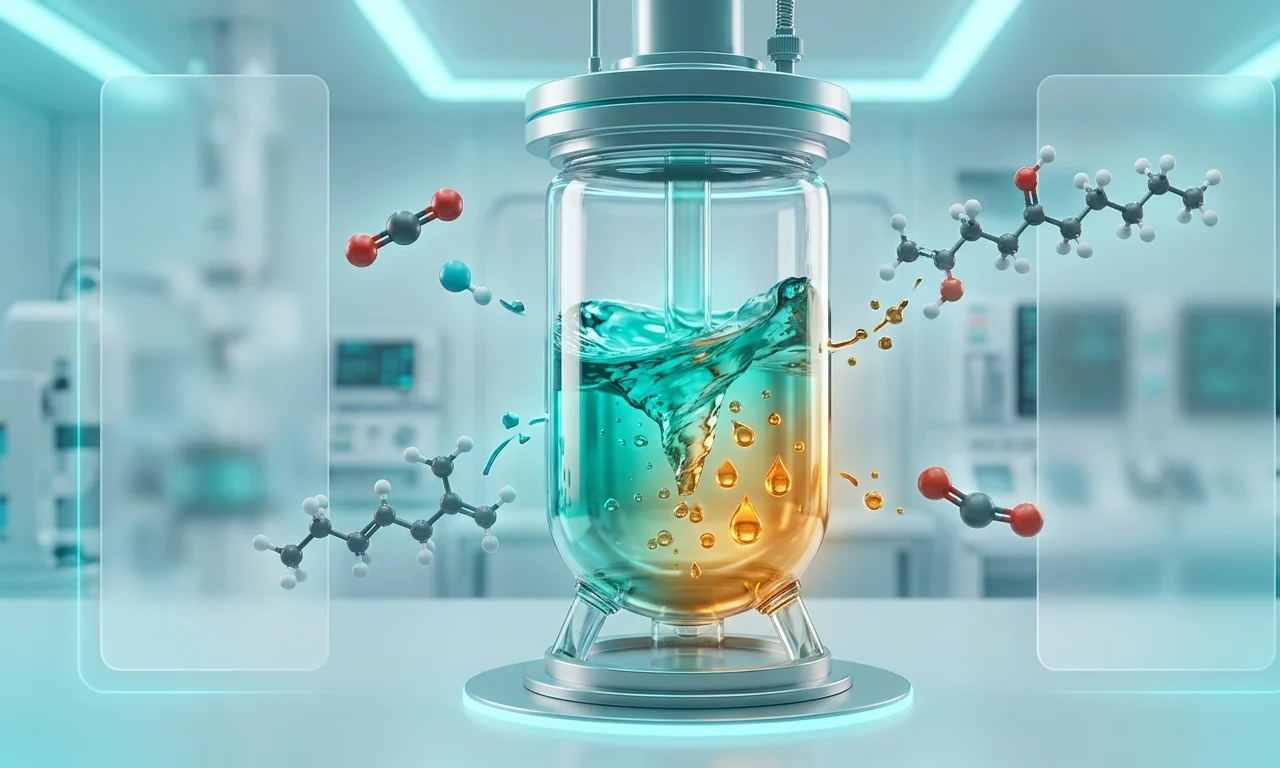
Mechanisms of Direct Conversion of CO2 into Hydrocarbons
The challenge of carbon dioxide utilization has evolved from a purely environmental issue into a matter of energy security. Modern catalytic reduction methods allow us to view atmospheric carbon as a renewable raw material for liquid fuel production. The key element of the system is the development of nanostructured catalysts based on iron, copper, and cobalt, which are capable of breaking the strong double bonds in the CO2 molecule at energy costs that do not exceed the market value of the final product.
The Role of Iron Catalysts in the Hydrogenation Process
Unlike the classical Fischer-Tropsch process, new methodologies focus on the direct production of high-octane gasoline components and aviation kerosene. The use of iron nanoparticles modified with alkali metals makes it possible to achieve selectivity for liquid hydrocarbons at a level of over 80%. This minimizes the yield of byproducts such as methane or ethane, which have lower market value and require complex storage systems.
Energy Balance and Hydrogen Sources
Successful conversion of carbon dioxide requires a stable flow of hydrogen. The most promising method is considered to be the use of electrolyzers powered by renewable energy sources (RES). In this way, liquid fuel becomes a kind of chemical battery for solar and wind generation. This solves the problem of RES intermittency, allowing surplus energy to be stored in a form familiar to transportation infrastructure.
Overcoming Thermodynamic Limitations
The process requires maintaining a constant pressure within 10-30 bar and a temperature range from 250 to 350 °C. Recent studies by scientists from Oxford and Stanford have shown that the use of tandem catalysts allows the operating temperature to be reduced by 40-50 degrees without loss of productivity. This significantly extends the service life of the reactors and reduces capital costs for the construction of industrial plants.
Economic Prospects for Scaling the Technology
As of today, the cost of one liter of synthetic fuel obtained from air ranges from 1.5 to 2.5 USD. This is more expensive than traditional gasoline; however, taking carbon taxes and green energy subsidies into account makes the projects profitable in the medium term. Companies like Carbon Engineering and Climeworks are already testing modular plants capable of capturing thousands of tons of CO2 per year.
- Utilization of existing logistics infrastructure (gas stations, tankers, pipelines).
- No need for internal combustion engine modifications.
- Possibility of creating local fuel hubs in regions without their own oil production.
In conclusion, the technology of converting CO2 to gasoline is critical for industries where electrification is currently impossible, particularly for heavy aviation and maritime shipping. Further improvement of catalysts and the reduction in the cost of electrolyzers will allow reaching price parity with fossil fuels within the next decade.


0 Comments