
Artificial intelligence is becoming an increasingly integral part of our lives. We’re accustomed to receiving instant answers to complex queries and creating texts and images. However, this convenience comes at the cost of colossal computing power and, consequently, significant energy consumption. Recently, Google openly shared for the first time the energy consumption of its AI models, like Gemini. These figures raise questions about the environmental footprint and the future of the technologies we love so much.
Why are SI chatbots so energy-intensive?
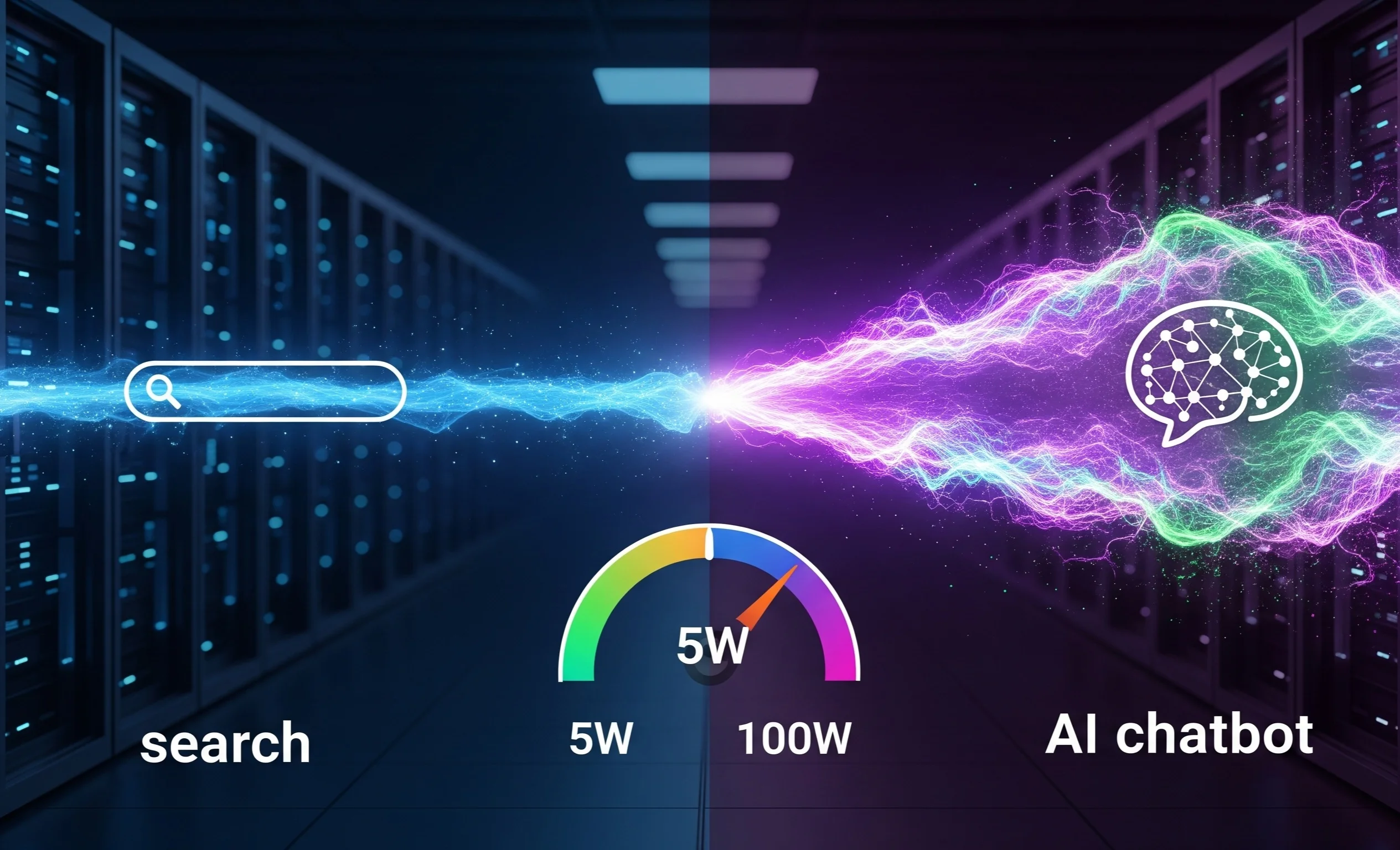
SI chats consume significantly more energy than traditional search. This is due to a fundamental difference in how they work. When you make a regular Google search, the system simply finds and returns already indexed information from billions of pages. It’s a fast and relatively simple process.
When you engage Gemini or other generative AI, a completely different process occurs. The system doesn’t simply search; it creates a new, unique answer by synthesizing data from a vast array of information. This process requires intensive work from powerful graphics processing units (GPUs) designed specifically for parallel computing. Powering these processors and their cooling systems in data centers requires enormous amounts of electricity.
What energy footprint does one request leave?
Data published by Google reveals a striking difference. While a single traditional search query consumes only about 0.3 Wh, a single request to a SI chatbot can consume between 1.5 and 3 Wh. That’s 5-10 times more!
While these numbers may seem small, their true scale becomes apparent when you consider the billions of queries Google receives every day. The overall energy consumption of cloud computing tools is projected to grow rapidly, placing significant strain on power grids and exacerbating global environmental problems. This is forcing tech companies to find innovative ways to minimize their carbon footprint.
The Future: How to Make AI More Eco-Friendly?
Google and other industry leaders recognize this problem and are actively working to address it.
- Algorithm optimization: Scientists are developing more efficient models that can generate answers with less computational effort.
- New equipment: Companies are investing in developing specialized chips and infrastructure that consume less energy.
- Green Energy: Google is actively converting its data centers to renewable energy sources such as solar and wind power.
This is a global challenge that requires a collaborative effort. Consumers, in turn, can also contribute by using AI tools more mindfully. While completely abandoning AI technologies is impossible, understanding their true costs is the first step toward creating a more sustainable and environmentally friendly future.




0 Comments