
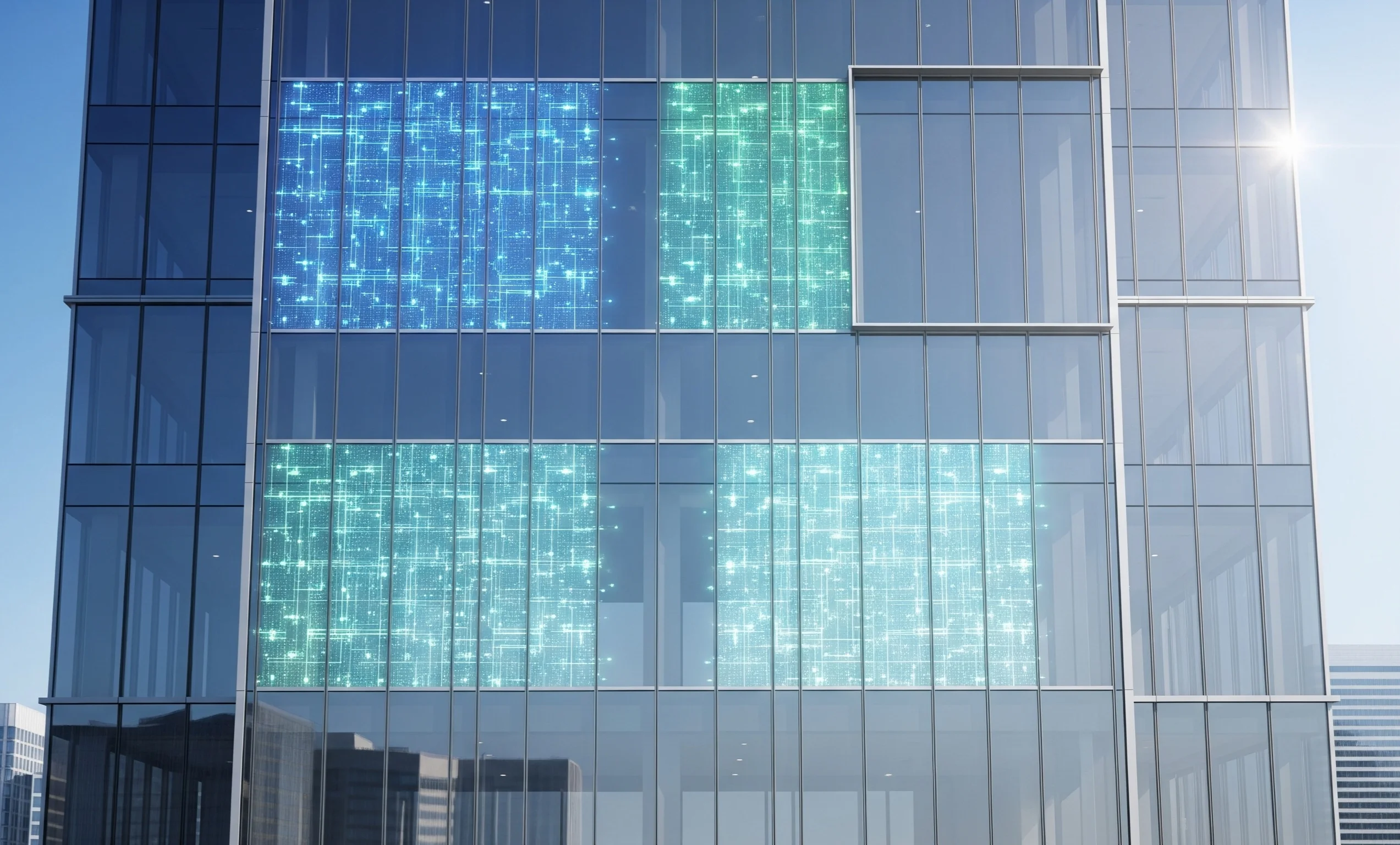
When we imagine solar energy, we immediately imagine massive arrays of panels in deserts or on rooftops. But what if every window in an office building or skyscraper could generate electricity while remaining completely transparent? This idea is no longer science fiction. New transparent solar panels have the potential to transform billions of square meters of glass facades in cities into powerful sources of renewable energy. This technology has the potential to completely transform architecture and urban planning, turning buildings not only into consumers but also into active generators of electricity.
How transparent solar panels work
Unlike traditional silicon panels, which are opaque because they absorb the entire spectrum of light, transparent panels operate on a different principle. They use special materials known as perovskites and organic compounds. These materials have a unique property: they absorb only parts of the solar spectrum invisible to the human eye, namely ultraviolet and infrared radiation.
The technology, also known as transparent photovoltaics, is applied as a thin layer to the window glass. When sunlight passes through, the invisible spectrum is absorbed by the material and converted into electricity. Thus, the window remains transparent and fulfills its aesthetic and functional purpose while simultaneously generating energy to power the home or sending it to the grid.
Challenges and prospects of technology
While the idea seems ideal, there are serious challenges ahead for the widespread use of transparent solar panels.
- Efficiency: Currently, the efficiency of transparent panels is around 10-15%, which is significantly lower than that of traditional opaque panels (over 20%). However, given the vast potential application area, even low efficiency on windows can yield significant overall energy savings.
- Durability: Organic materials are less resistant to environmental influences than silicon. Researchers are actively working to increase the lifespan and sustainability of these elements.
- Cost: These innovative materials are currently expensive to produce, but the price will likely decrease as scale increases.
Despite these obstacles, the technology’s promise is incredible. Scientists estimate that the glass surfaces of all the world’s skyscrapers could generate tens of thousands of megawatts of energy, significantly reducing the city’s carbon footprint.
The Future: Energy-Generating Cities
Imagine a city where every façade, every window, and even every smartphone screen can generate electricity. This technology allows for the creation of so-called “generator buildings” that can partially or completely meet their own energy needs. This not only reduces utility costs but also facilitates the decentralization of energy networks.
Solar panels on windows are more than just a technology; they’re a step toward an architectural revolution, making buildings more environmentally friendly and energy-independent. This is a crucial component of a future where green energy will be not just an alternative, but the norm.




0 Comments