
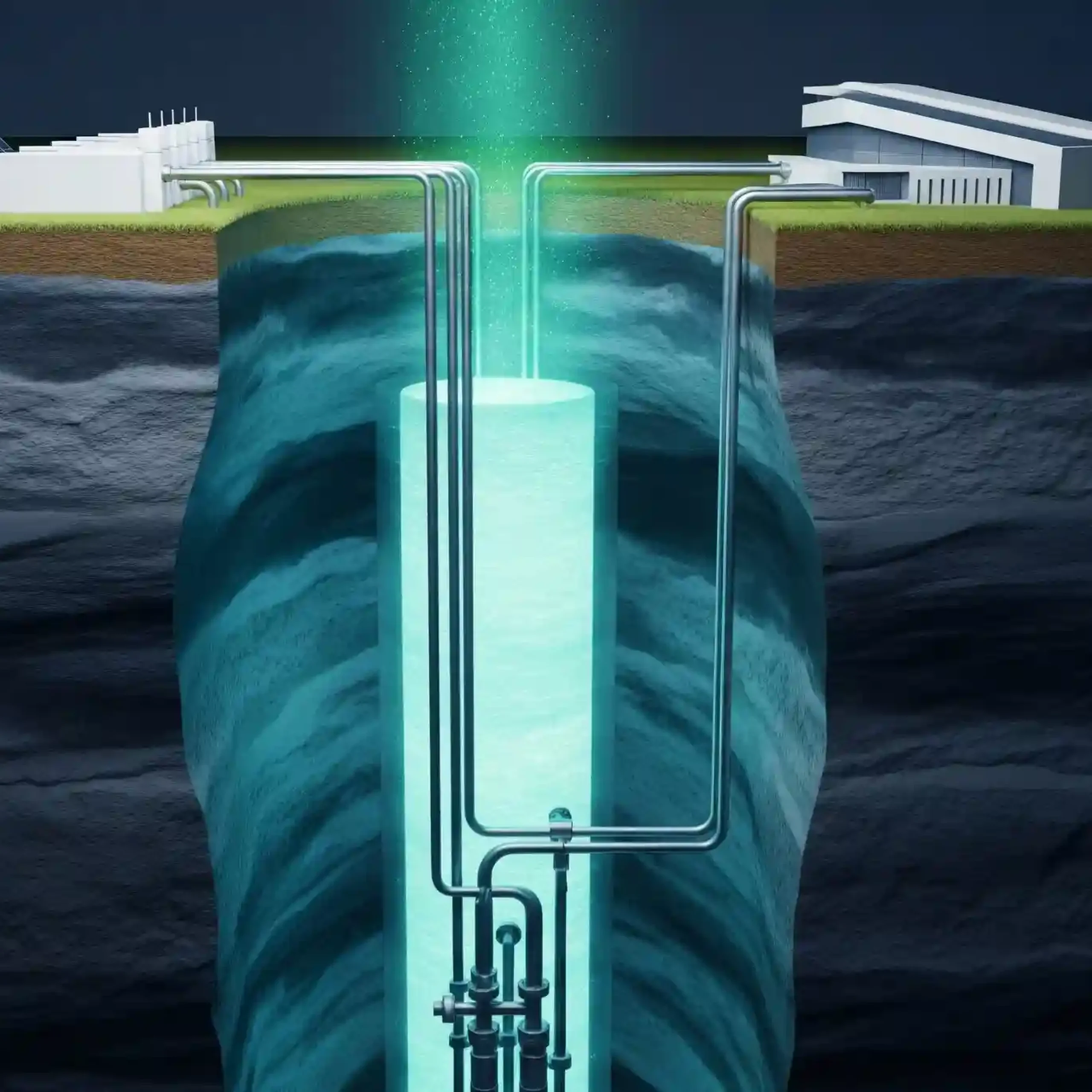
ACES Delta’s massive project in Utah
The United States is taking a decisive step toward decarbonizing its energy system by beginning construction on the world’s largest long-term energy storage facility. This innovative project, known as Advanced Clean Energy Storage (ACES) Delta, is located in Delta, Utah. Its primary goal is to create a gigantic reservoir for clean hydrogen produced from renewable sources. This is a critical step in addressing the main challenge of solar and wind energy-their intermittency. The overall idea is to convert excess renewable energy into green hydrogen, store it underground, and then use it to generate electricity when needed.
The ACES Delta project is a joint venture between energy giants Mitsubishi Power and Chevron U.S.A. Inc., forming New Energies Company. This alliance underscores the global significance and appeal of clean hydrogen technologies. The U.S. government has also supported this initiative, with the Department of Energy providing a $504.4 million loan guarantee in 2022. This support demonstrates the national strategic importance of building a robust hydrogen infrastructure.
Salt Cave Technology: Skyscraper-Sized Storage Facilities
A key element of ACES Delta is the use of unique geological formations-salt domes. These salt formations, among the few in the western United States, are home to two massive underground caverns. These artificial cavities are carved by dissolving salt with fresh water (a process called counting). Each cavern is colossal in size compared to a tall skyscraper and is capable of storing over 5,500 metric tons of working hydrogen. The total storage capacity at launch will exceed 300 GWh of clean energy.
- Hydrogeological advantage: Salt is an ideal material for storing gases under high pressure because it has exceptional hermetic properties and protects the hydrogen from leaks.
- Durability: These storage systems can operate for decades, providing long-term and seasonal energy storage that is not possible with standard battery systems.
- Scale: To store the equivalent amount of energy in lithium-ion batteries would require more than 40,000 standard shipping containers, making salt caverns a much more efficient and cost-effective solution at this scale.
Green hydrogen as the fuel of the future
The hydrogen stored in the ACES Delta caverns is classified as “green” because it is produced through water electrolysis. The electrolyzers, which have a total capacity of 220 MW, are powered by clean electricity generated by solar and wind farms in the region. This ensures a minimal carbon footprint and supports national climate goals. The complex’s capacity allows for the production of approximately 100 metric tons of clean hydrogen per day.
The primary consumer of this green hydrogen is the neighboring 840 MW IPP Renewed Project power plant operated by the Intermountain Power Agency. This power plant has been specifically retrofitted to run on hydrogen fuel. In the first phase, starting in 2025, the turbines will run on a mixture of 30% green hydrogen and 70% natural gas. According to the ambitious plan, by 2045 the power plant will be completely powered by 100% clean hydrogen, thereby eliminating all carbon emissions from its electricity generation process.
Impact on the Western US energy market
ACES Delta will give the Western US power grid unprecedented flexibility and reliability. The ability to store large amounts of energy for months at a time will help offset seasonal fluctuations in renewable energy production. For example, excess solar energy produced in the spring can be stored as hydrogen and used during peak summer months, when electricity demand is highest. ACES Delta thus transforms intermittent renewable energy sources into dispatchable and reliable energy that can be fed into the grid as needed. This opens up new prospects for energy security and accelerates the energy transition.
This construction isn’t just about technology, but also about economics: the project creates hundreds of jobs during the construction phase and provides long-term operational employment. ACES Delta serves as a model for future hydrogen hubs across the United States, demonstrating the technical and economic viability of large-scale clean hydrogen storage. This is a true energy revolution, paving the way to net-zero emissions.




0 Comments