
- Why are microwaves a game changer?
- The Semiconductor of the Future: The Power of Gallium Nitride (GaN)
- Incredible efficiency: ecology and savings
- Applications that will change our lives
- 5G and 6G mobile communications
- Radar and defense systems
- Satellite communications and space
- Interfaces for quantum computing
- The future of microelectronics is already here
The world is on the threshold of a true technological breakthrough. Scientists have unveiled the world’s first microwave microchip, which significantly outperforms traditional counterparts. This innovation promises more than just a minor improvement, but a complete game-changer in high-frequency electronics, opening new horizons for wireless communications, radar, and computing.
Why are microwaves a game changer?
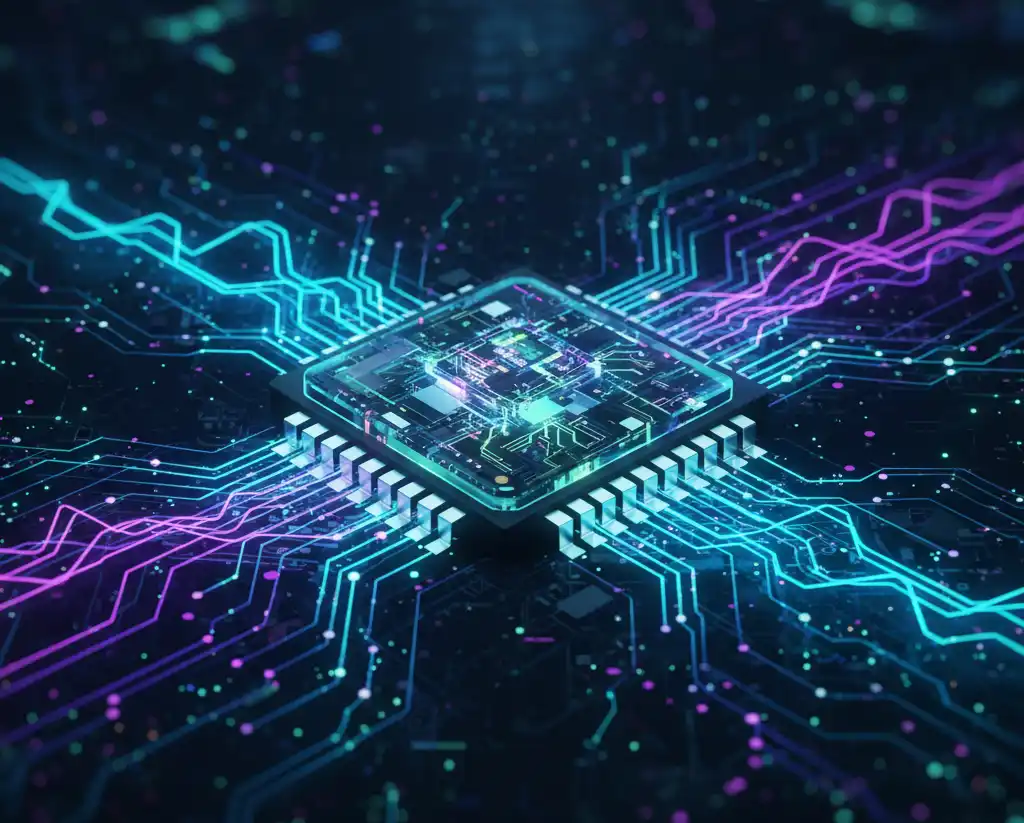
Traditional microchips, primarily based on silicon (Si), have reached their physical limits in terms of speed and ability to operate at high frequencies. The new chip utilizes microwave frequencies (300 MHz to 300 GHz) for processing and transmitting data. Using microwaves allows information to be processed at significantly higher frequencies, which directly translates into increased speed and reduced latency, which are critical for modern communication systems.
This new microchip technology is an example of a so-called monolithic microwave integrated chip (MMIC), which integrates all necessary components (transistors, resistors, capacitors) on a single semiconductor substrate.
The Semiconductor of the Future: The Power of Gallium Nitride (GaN)
The secret to this fast microchip’s incredible performance and reliability lies in its choice of material. Instead of silicon, the developers focused on gallium nitride (GaN). GaN is a semiconductor that belongs to the so-called “wide-bandgap” materials.
- Higher operating temperature: GaN chips can operate efficiently at significantly higher temperatures than their silicon counterparts, reducing the need for complex and expensive cooling.
- Higher breakdown voltage: This allows the chip to operate at higher powers, which is vital for high-power transmitters in radar and satellite systems.
- Electron Speed: Electrons move significantly faster in GaN, allowing for higher switching frequencies and therefore greater bandwidth.
The use of gallium nitride microchips is a key element in today’s semiconductor breakthroughs, as the material provides the necessary combination of speed, power, and durability.
Incredible efficiency: ecology and savings
One of the new chip’s most impressive advantages is its energy efficiency. Being an efficient microchip, it consumes significantly less power than traditional counterparts when performing the same tasks. This advantage has a twofold positive effect:
- Reduced Operating Costs For data centers and telecommunications companies, this means millions of dollars in savings on power and cooling.
- Environmental Contribution: Reducing the energy consumption of large computing systems and communication networks helps reduce carbon emissions, making technology greener.
The advantages of GaN over silicon are obvious in this context: lower energy losses due to heat, high power amplification efficiency.
Applications that will change our lives
The emergence of such a powerful component opens the way to the implementation of the most daring projects in various industries.
5G and 6G mobile communications
The implementation of 5G and 6G technology requires components capable of operating at ultra-high millimeter-wave frequencies. The new microwave chip is ideal for base stations and end devices, delivering record-breaking throughput and minimal latency, essential for technologies such as autonomous vehicles and remote surgery.
Radar and defense systems
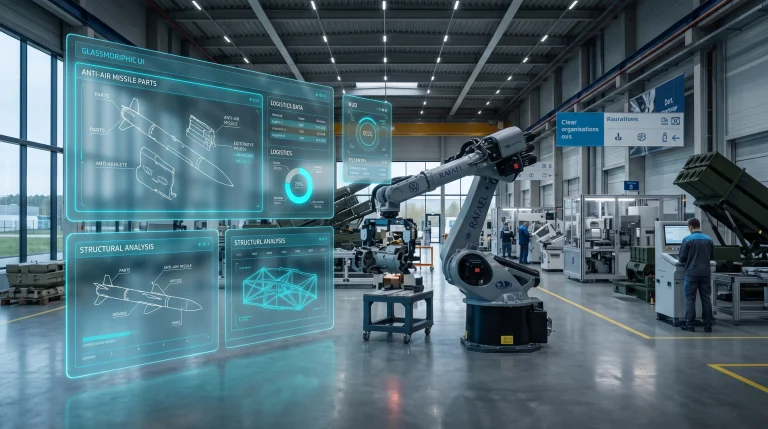
Next-generation GaN-based radar chips enable the creation of more compact, yet significantly more powerful and accurate radars. This is important for aerospace technologies, airspace control systems, and improved security.
Satellite communications and space
Thanks to their lighter weight and high efficiency, these chips are ideal for satellite communications microchips. They will reduce the size and power consumption of satellites, making their deployment into orbit more cost-effective.
Interfaces for quantum computing
There is high potential for using the world’s first microwave integrated circuit chip as an interface between classical electronics and sensitive quantum components, which could accelerate the development of quantum computing.
The future of microelectronics is already here
The creation of this chip is the result of years of work by engineers and scientists seeking ways to overcome the limitations of the silicon era. Although the specific institutions and names of the researchers are often overshadowed by the commercial potential in the early stages, their contribution to innovation in electronics is invaluable.
This component may not enter mass production for several years, but it already defines the future of microelectronics: fast, energy-efficient, and inextricably linked to the microwave spectrum. This ushers in an era where data transfer rates could increase tenfold, and our devices will last longer and have a smaller environmental impact.


0 Comments