
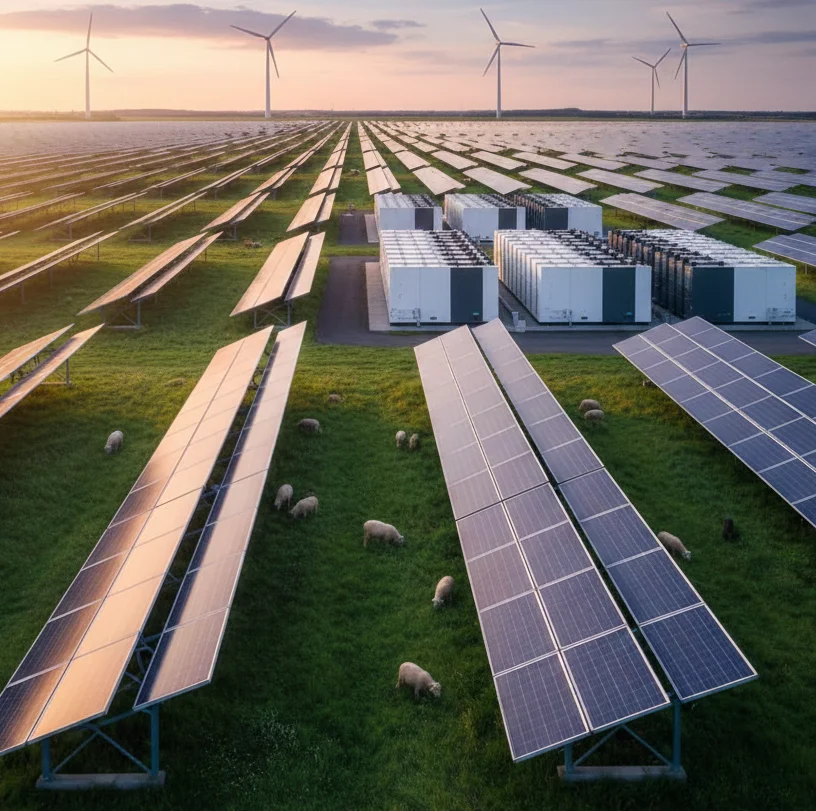
Learn how Denmark is strengthening energy independence with a new hybrid solar park and AI energy management technologies.
Denmark boosts energy independence with world’s largest solar park
Denmark has officially opened a groundbreaking facility that marks a new era in the Northern European energy sector. It is a massive integrated park combining solar power and advanced energy storage systems. This project, costing hundreds of millions of US dollars, is a key element in the country’s strategy to achieve complete climate neutrality. Thanks to the facility’s scale, Denmark not only covers its own needs but also creates a reliable foundation for the stability of the region’s entire energy system.
The scale and technical capacity of the project
The new energy hub is located on a vast territory spanning hundreds of hectares. The park is based on highly efficient, state-of-the-art solar panels capable of generating colossal amounts of clean electricity. The total investment cost of the project is estimated at over USD 250,000,000, making it one of the most expensive and important infrastructure projects in the country in recent years. The use of modern AI systems allows for real-time monitoring of each panel’s efficiency and forecasting of generation volumes based on weather conditions.
- The total capacity of solar generation exceeds 300 MW.
- The installed capacity of BESS battery systems is more than 150 MWh.
- The use of double-sided panels increases efficiency by 15% compared to conventional analogues.
Battery systems as a guarantee of stability
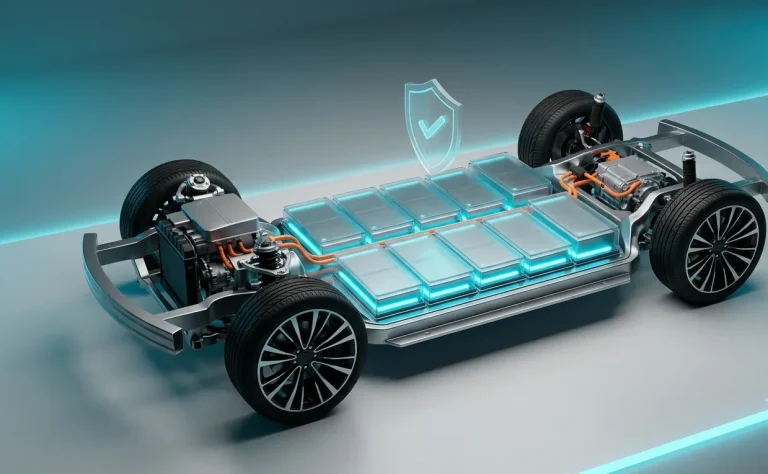
One of the main challenges of renewable energy has always been the instability of generation. However, a Danish project addresses this issue with an integrated Battery Energy Storage System (BESS). Huge arrays of lithium iron phosphate batteries store excess energy during the day, when the sun is brightest, and release it to the grid during peak hours or at night. This avoids sudden power surges and ensures consumers receive green energy around the clock.
Importantly, the management systems for these batteries are based on sophisticated AI algorithms. They analyze electricity market prices, weather forecasts, and grid conditions to make decisions about charging or discharging at the most opportune moments. This approach makes the project not only environmentally friendly but also highly cost-effective, allowing for a return on investment in record time.
Environmental impact and biodiversity
In addition to energy efficiency, significant attention is paid to the environmental aspect. According to preliminary estimates, the park will reduce carbon emissions by over 180,000 tons annually. This is equivalent to taking tens of thousands of internal combustion engine vehicles off the road. The project also demonstrates a new approach to land management: agrophotovoltaics. Special grasses are planted between the rows of panels to promote soil regeneration, and sheep are used to maintain the grounds, supporting local farming and biodiversity.
The path to complete energy independence
The launch of this facility is part of Denmark’s global plan to phase out fossil fuels by 2030. In a context of geopolitical instability, power generation is becoming a matter of national security. The energy produced by this park has already been contracted by major tech corporations through PPAs. This underscores the high level of business confidence in renewable energy. Denmark is once again proving that the transition to clean energy is not just a dream for the future, but a reality being created today through innovation, AI, and strategic planning.


0 Comments